

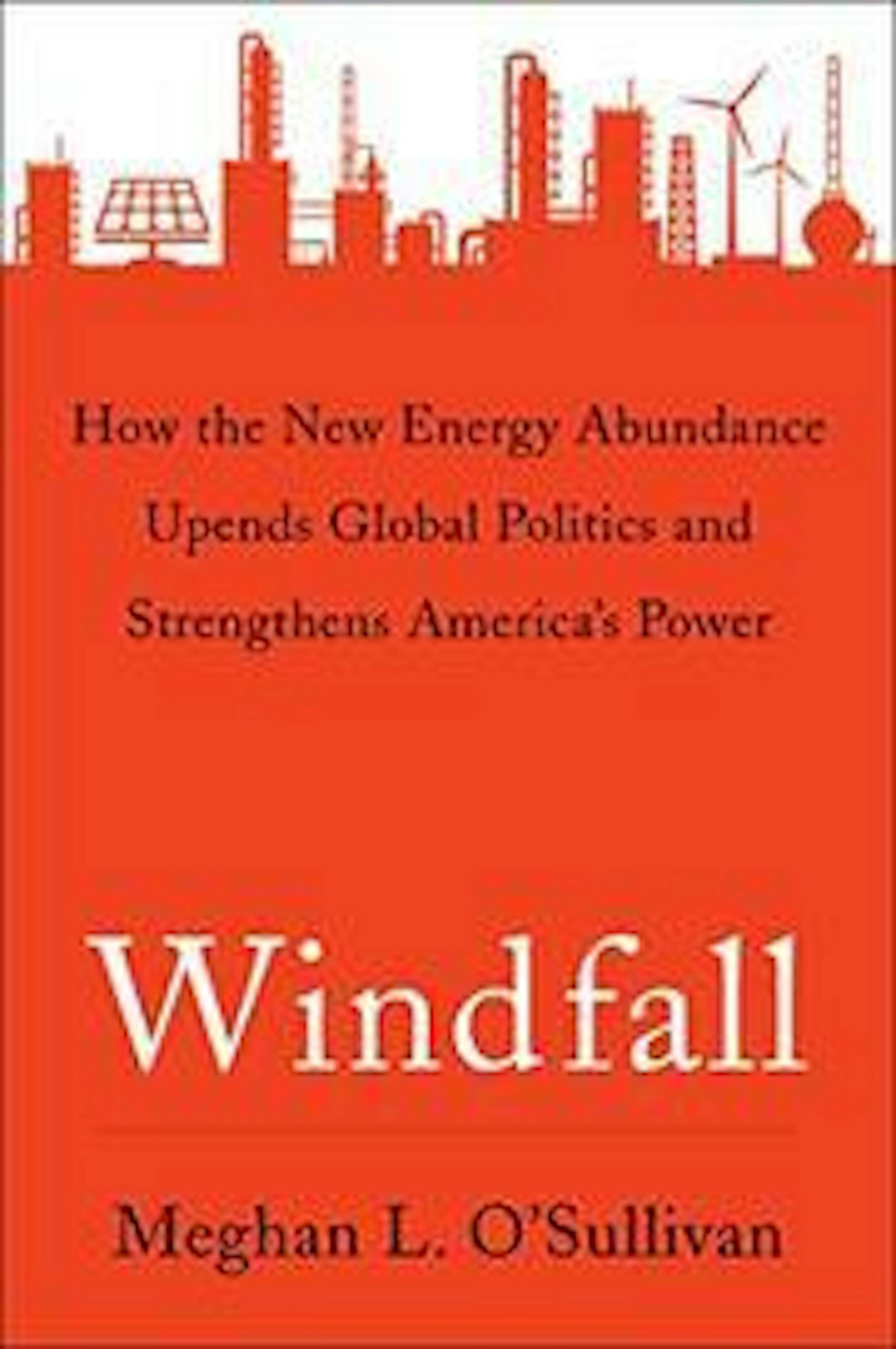
'Windfall'
Meghan L. O'Sullivan, Simon & Schuster, 479 pages, $29.
The energy revolution is less about renewables like wind and solar power than about how the oil and gas sector itself is changing. A Harvard professor and former assistant to President George W. Bush, Meghan L. O'Sullivan, has dissected the intricacies of this industry to offer a riveting and comprehensive geopolitical theory in "Windfall." Declining oil prices, along with the widespread ability to extract shale gas through fracking, has moved the U.S. from being "the world's thirstiest consumer of overseas oil to a position of greater self-sufficiency," O'Sullivan writes. Falling energy prices have also stabilized Europe's economy, helped Japan manage the aftermath of the Fukushima nuclear disaster, allowed China to more aggressively pursue its new Silk Road strategy across Eurasia, kept Russia from becoming an energy superpower and weakened the prospects for energy-rich sub-Saharan African countries. Though the U.S. is now the world's largest energy producer, it can never be the power Saudi Arabia once was, simply because of the free economy. At the same time, the energy revolution has laid the basis for a more politically and economically unified North American continent. For this reason, O'Sullivan criticizes Barack Obama for alienating Canada with his delays of the Keystone XL pipeline and Donald Trump for alienating Mexico with his insults and talk of a "wall." Rather than the usual policy pablum, "Windfall" is a smart, deeply researched primer on the subject.
NEW YORK TIMES



