

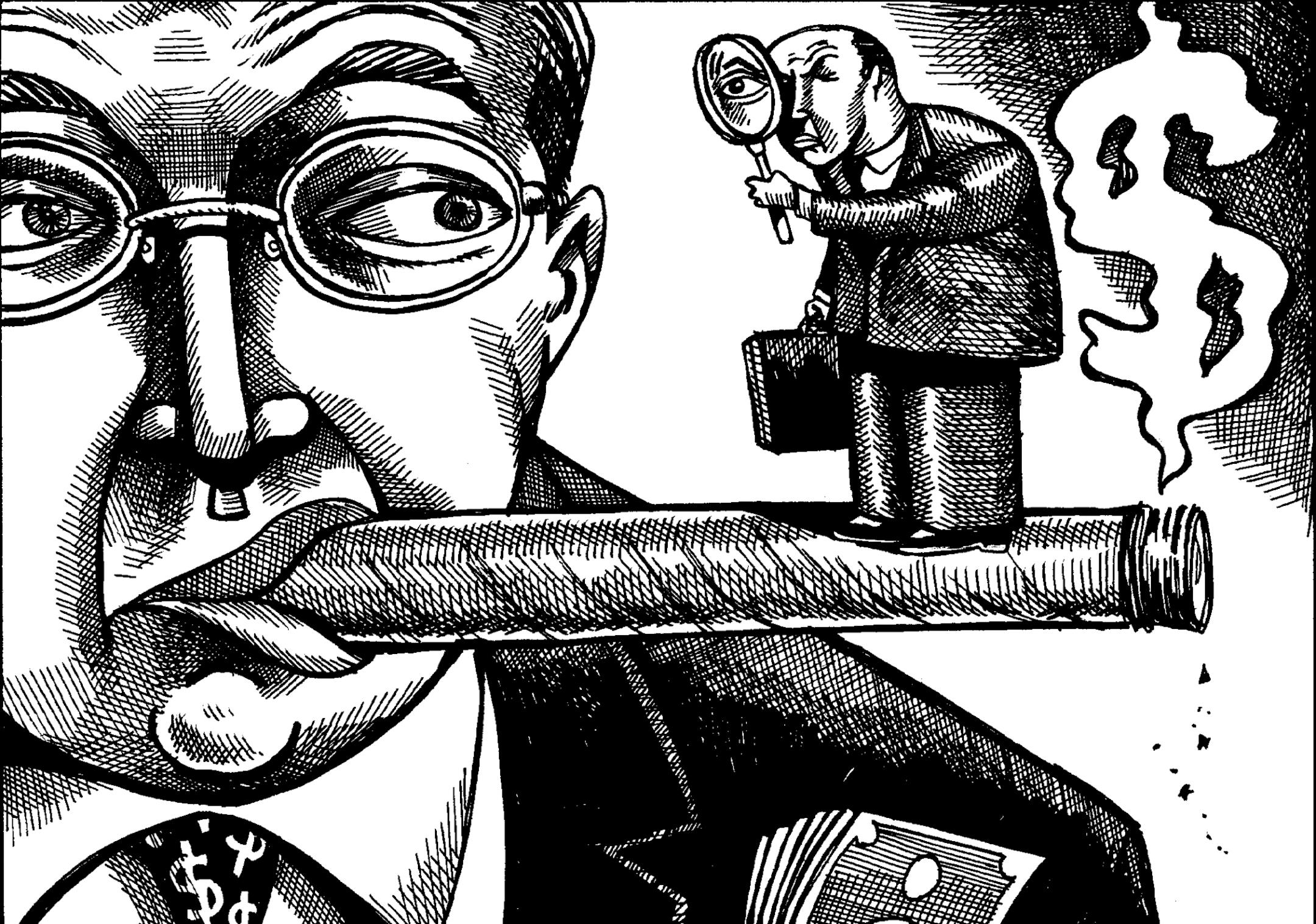
One of the most disturbing realities of the 2008 financial crisis is that no Wall Street executives have been held accountable. After searching more than five years for the reason some people have gotten away with the financial equivalent of murder, I think I have finally figured it out:
It's the revolving door, stupid.
The chance for senior government officials to make millions after their public service ends convinces them — subliminally or not — to pull their punches. No doubt that's why Jimmy Cayne, the former chief executive officer of Bear Stearns & Co., continues to enjoy playing bridge and golf, his $400 million-plus fortune, his sprawling mansion in Elberon, N.J., and his duplex at the Plaza Hotel.
It also explains why Dick Fuld, former CEO of Lehman Brothers Holdings, was able to form Matrix Advisors to consult on mergers and acquisitions, even though he had been a trader, not an M&A banker. Even if the firm has no clients, it doesn't much matter: Fuld testified before Congress that his 2000-2007 Lehman compensation was about $310 million. He later conceded it could have been $350 million. The real number is closer to $520 million, according to people who prepared and studied Lehman's public filings.
When Stan O'Neal resigned from Merrill Lynch in 2007, less than a year before it almost went bankrupt, he was given a parting gift of $161.5 million and a board seat — which he still holds — at Alcoa.
The roster of executives being rewarded for bad behavior goes on and on.
Why have prosecutors allowed Wall Street executives to slither away into the 1 percent — or one-tenth of 1 percent — without paying a financial penalty or serving time? After all, as the Financial Times reported, about 3,500 bank executives went to jail after the 1980s savings-and-loan crisis, which wasn't nearly as devastating as the 2008 debacle.
Not a single bank executive is wearing an orange jumpsuit today. "The Justice Department failed," former New York Gov. and Attorney General Eliot Spitzer told "Frontline" a year ago. "They didn't ever try to bring together one coherent narrative, laying out the entirety of the story against one of the major players and demand sanctions that are meaningful."


