

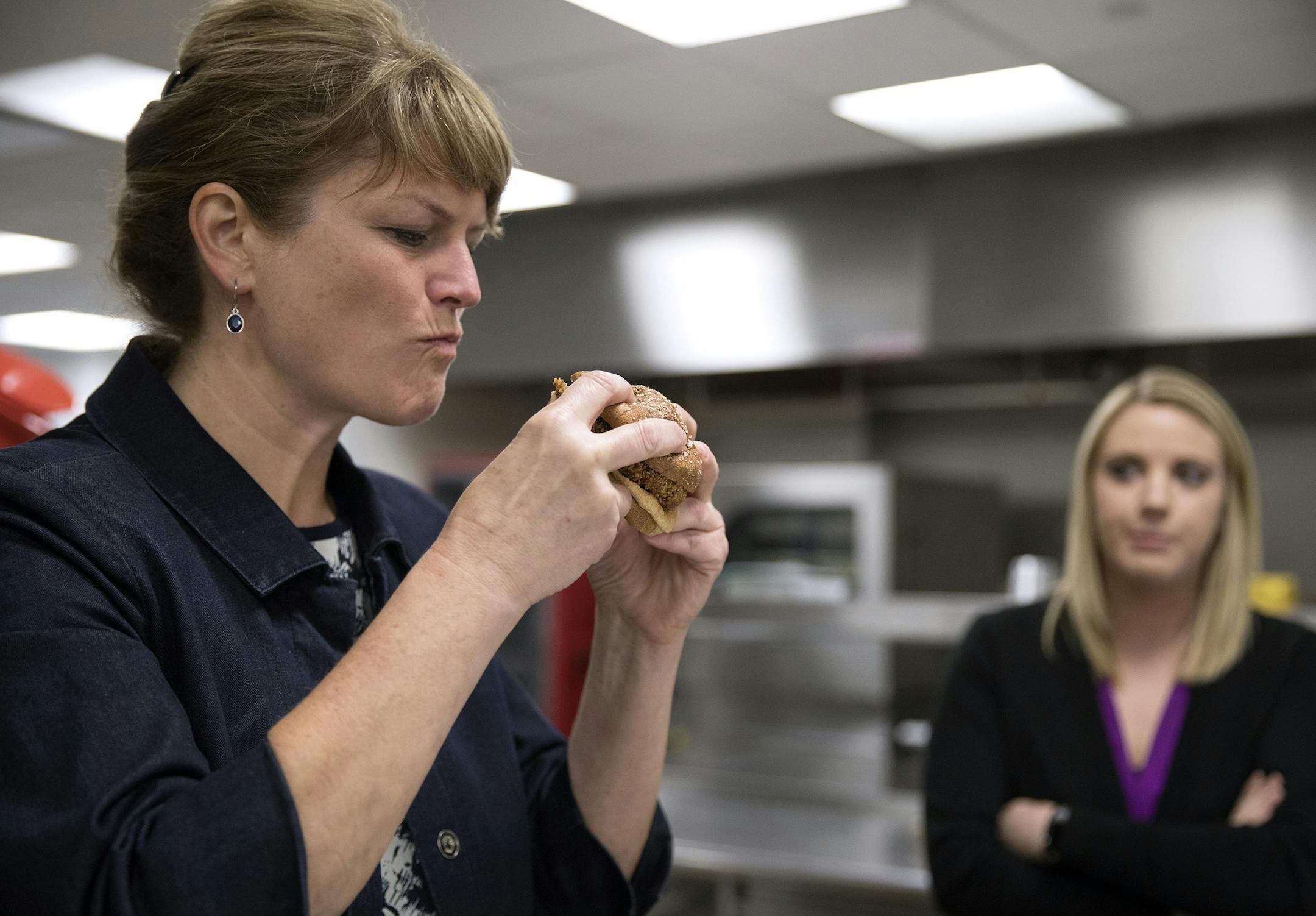
CHICAGO – Kale has had quite a run.
Less than a decade ago, the leafy green vegetable was used primarily for decoration on salad bars. Now kale, known for its health benefits, is so ubiquitous that even McDonald's uses it in salads.
Za'atar, a Middle Eastern spice blend, may not be as familiar to many Americans, but it plays a starring role in one of the salads that Starbucks recently rolled out in Chicago as part of its new lunch menu. As Americans increasingly demand exotic flavors, spices like za'atar are expected to become more common on menus.
Identifying up-and-coming food trends is equal parts art and science, and it's a process that some in the food industry pay a lot of attention to.
"The Cronut went from nothing to Time magazine in no time; others peak and fall off," said Stacie Sopinka, vice president of innovation and product development at US Foods, a Rosemont, Ill.-based food distributor.
Food trends are influenced by a wide range of factors, from fashion and pop culture to health fads. They are sometimes created by chefs, often in the world of fine dining, and then mimicked and re-purposed by other restaurateurs. Sometimes, it's a consultant or distributor working with a big brand to develop a product that fills menu holes for a food company.
Menu trends
Datassential, one of several companies that track trends, calls that pattern the "menu adoption cycle."
Trends in the inception phase often start in fine-dining establishments and independent ethnic restaurants or markets, where the food item is considered unique in the way it's prepared, presented and tastes. Piri piri sauce, a spicy and tangy topping from Portugal, and togarashi, a Japanese spice blend, are in that phase now.



