

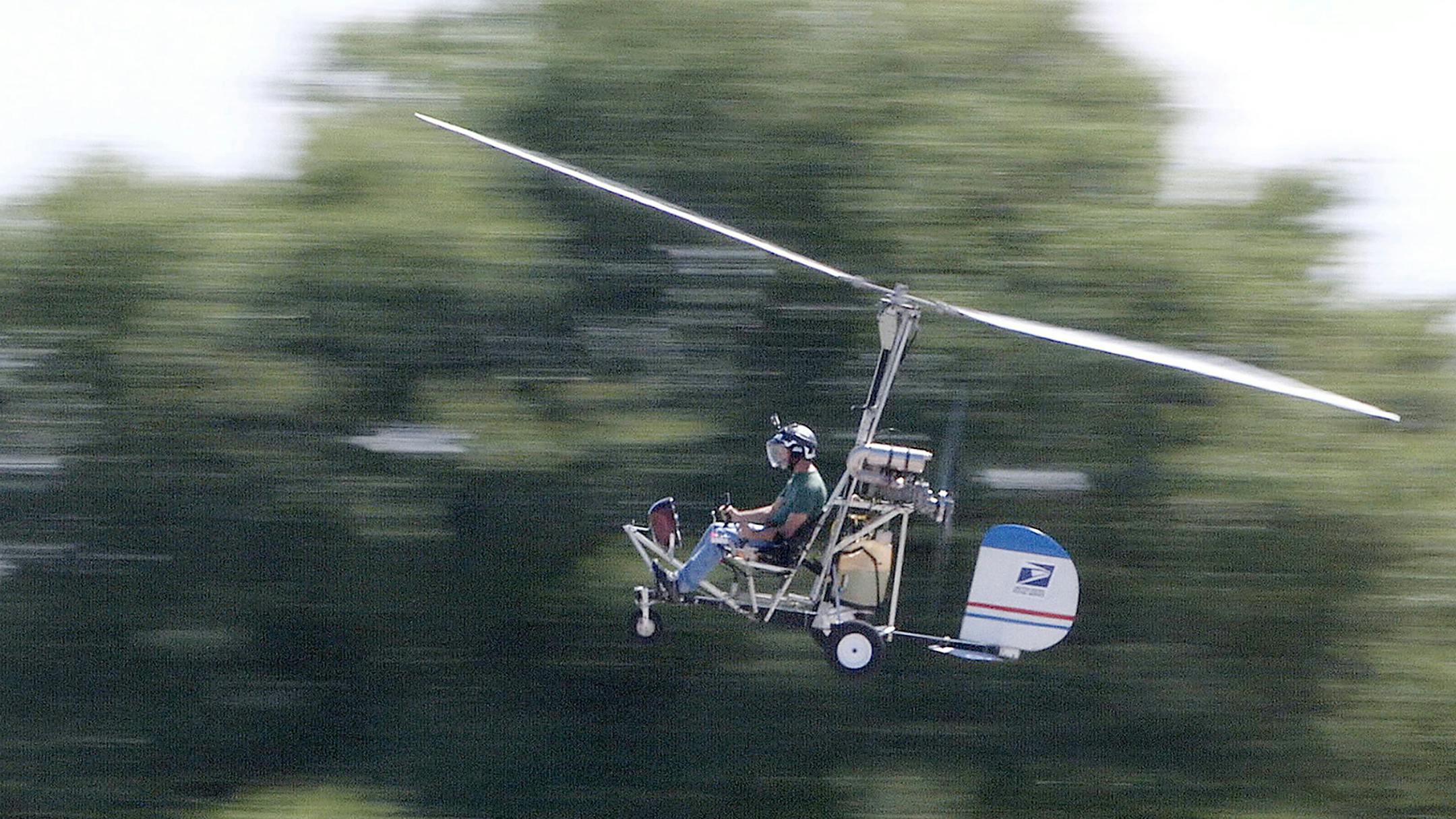
When I return to Washington for my arraignment in federal court this week, it will be by car, not gyrocopter. My flying days are over, perhaps forever. Accepting responsibility for my actions means I accept their consequences, which I always took seriously. As my freedom rests in the court's hands, my hope is that Americans will understand why I took the risk to deliver them a message: We the people must pay attention to democracy.
Everyone is entitled to an opinion about my flight over the National Mall last month, but I did not commit this peaceful protest thoughtlessly. The most important requirements were met: No one was hurt, no property was damaged and the message was delivered. It was a message Americans agree with.
A poll by the Global Strategy Group indicates that 91 percent of Americans see the corrosive influence of money in our political system as a problem that demands attention. And in a Gallup tracking poll, voters identified frustration with government as their No. 1 concern in recent months, ahead of the economy and jobs.
Evidence of what those polls mean is quietly emerging around the country five years after the Supreme Court's Citizens United decision. Tens of thousands of Americans have protested, marched, written their elected representatives and local media, and quietly built a movement. Sixteen states and 650 cities have called on Congress to propose a constitutional amendment overturning Citizens United. Three other states have called for an unprecedented Article V constitutional convention.
None of that happened because a billionaire said it should. It happened because people understand the threat that unlimited money in the electoral process poses to our democracy. Our disgust for the problem has led to a search for solutions, such as disclosure laws recently passed by the Republican legislature in Montana and in six other states (California, Delaware, Hawaii, Massachusetts, North Carolina and Vermont) since 2014. Citizens helped pass small-donor public financing in Montgomery County, Md., and Chicago overwhelmingly passed a citizen's advisory calling for the same solution. Voters in Tallahassee, Fla., and the legislature in New Mexico passed strict ethics and lobbying reforms after a bipartisan citizens' campaign called out the price we all pay for corruption and pay-to-play politics, connecting political dysfunction to people's family budgets.
President Obama can get in on the act, too, shifting focus from the problem of money in politics to solutions by ending pay-to-play dark-money dealings in the federal contracting process. In April, Americans rallied in 30 states urging the president to act.
It is clear these issues will be among the most important in the 2016 election, when every candidate for any office needs to answer one simple question: Which approaches to reducing money's corrupting influence on our democracy do you support? Journalists, especially at the local level, need to ask tough questions, then report the truth and let people decide.
Sadly, most Americans don't know about these solutions or how to engage. That's why I chose civil disobedience, taking 535 stamped letters and my message to the seat of power where the problem is. Big money is a threat to our democracy just as security threats are.


