

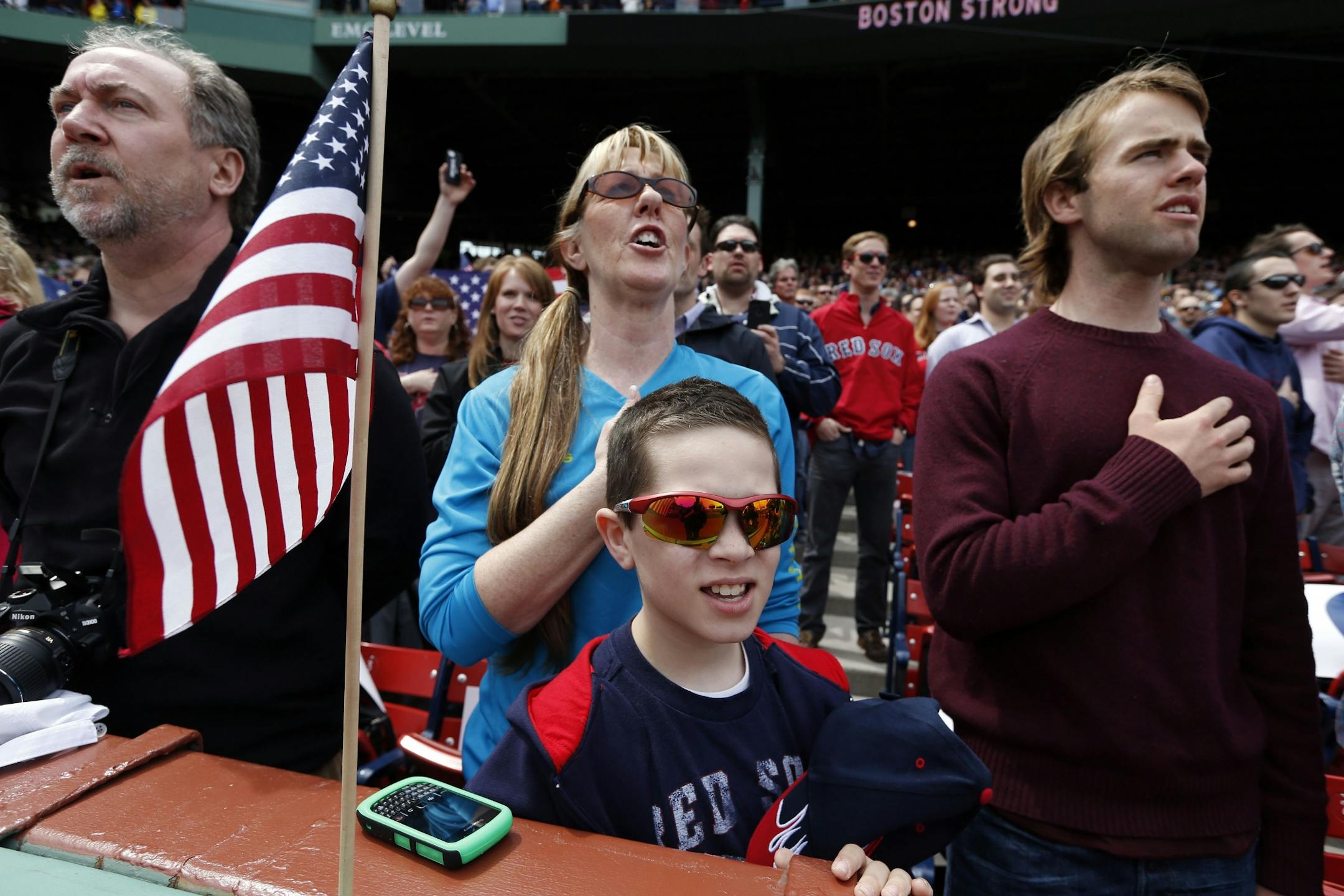
I am a Methodist minister and a Washington Nationals fan. I was there on Opening Day in 2005 at old RFK Stadium in Washington, and I try my best to plan my summer around Nats home games. I have only one issue with the ballpark experience, and it's not with the beer prices. It's with "God Bless America."
In a recent column, Washington Post writer John Kelly described the odd feeling of not knowing whether to stand during the singing of this song in the middle of the seventh inning. Like Kelly, I don't want to come off as anti-American if I remain seated.
I stand for the "The Star-Spangled Banner," the acknowledgment of returning soldiers, and for "Take Me Out to the Ballgame." Because I'm a minister, it might seem odd for me not to stand for "God Bless America," too. But I sit to stand up for my religious beliefs.
One hot Sunday afternoon last season, I did not rise for "God Bless America." In a beer-soaked tone of voice that wasn't pleasant, a gentleman several rows behind me told me to stand up. I reminded him that I don't have to.
This incident made me think more about the question: I love this country and don't want to live anywhere else. But being pressured to stand up at a baseball game for a song that's essentially a prayer seems, well, un-American. It feels like being pushed into the river for a baptism I didn't choose. It's an empty ritual, and one that I think doesn't hold much theological water.
What we join together to say, sing and stand up for says something about us as a people. I think it matters. At ballparks across the country, we are expected to participate in what can be described only as a prayer to ask God's blessings on our nation. As nice as blessings are, singing this song doesn't feel like it has integrity the way signing our national anthem does.
I'm reminded of the admonition not to pray just to be seen by others. More important, though, I'm concerned that this is a myopic way to exercise faith. I imagine that the God I believe in isn't interested in dispensing special nationalistic blessings. (Or, perhaps more to the point, blessings for our bullpen, error-free fielding and sufficient run support.) When we ask for blessings to be bestowed only on "us," we are in danger of seeing ourselves as set apart from the world. Faith is global, and one nation doesn't get any more or less of God than any other.
Asking for God's blessing for "us" or "me" ignores greater needs in our world. We should ask a bigger question: How can we get this blessing to all? I want God walking with and standing beside every single person on this Earth - and every country.


