If you've ever wanted to patent a homemade invention, Dan and Kim McDonald's experience with the Aardvark is both a cautionary and inspirational tale.
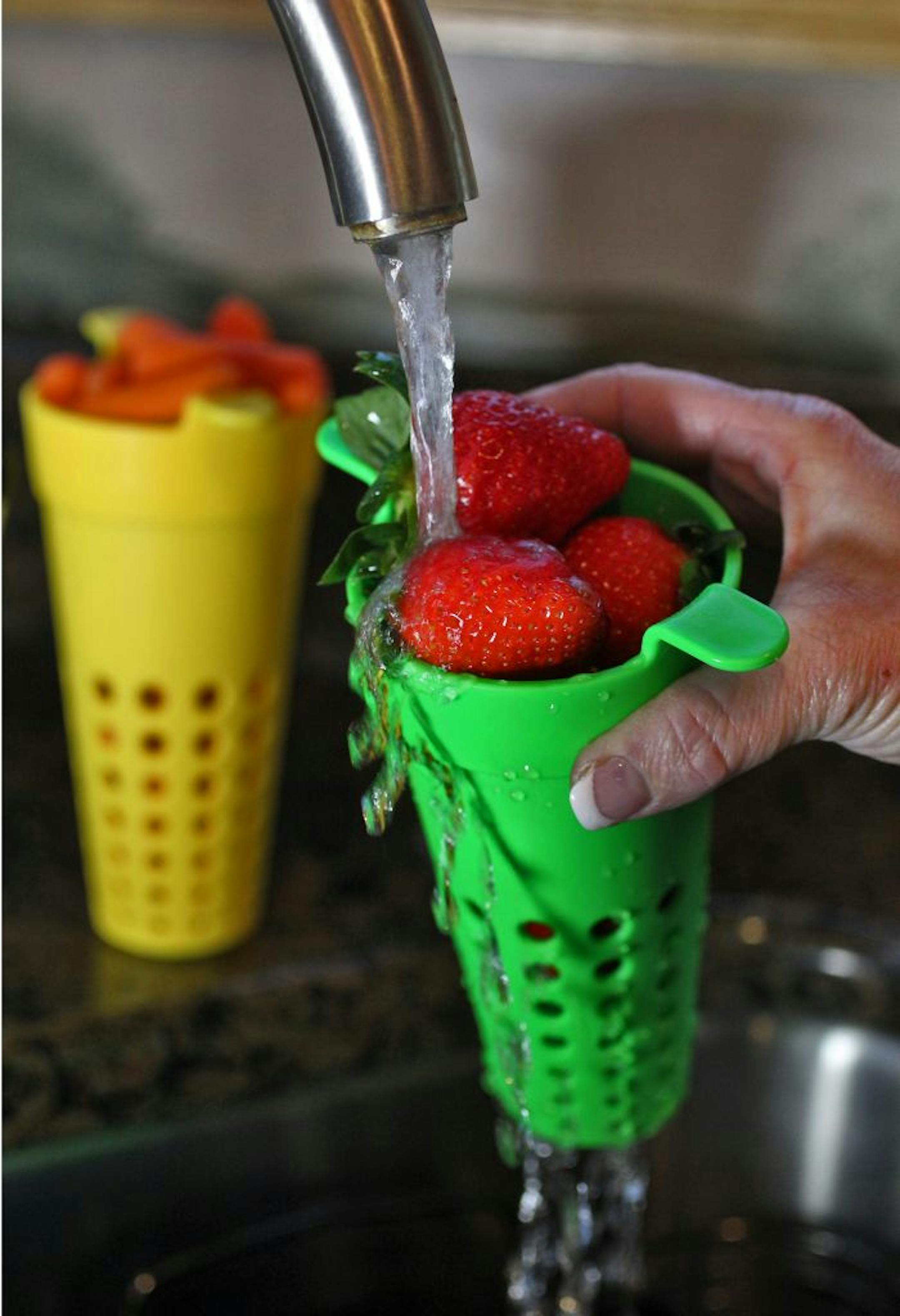
Dan invented the Aardvark, a kitchen strainer in the shape of a tapering, blunt-ended cone, so he could make root beer floats that didn't erupt in a volcano of foam. He named it after the aardvark, or anteater, an odd-looking African animal with a tapering blunt-ended nose. The couple sells the $9.99 strainer through their two-person company, Float Pro LLC, which they run out of their Shoreview home.
While a kitchen strainer might seem too common to be patented, Dan McDonald is a Minneapolis intellectual property attorney and trial lawyer whose skill at obtaining patents is a bit above average. Among other things, he had the legal expertise to argue with the U.S. Patent and Trademark Office when the agency initially was unconvinced the strainer merited a patent.
It wasn't an easy argument because, at least on the surface, McDonald's invention seemed to lack two of the five requirements for obtaining a patent: It didn't appear to be novel (different from what's already known) or to be what patent law calls "nonobvious" (meaning that it breaks new ground instead of just tweaking an invention that already exists).
"The Patent Office rejected some of our claims," McDonald said. "But I convinced them that the Aardvark makes root beer floats in a better way, and that nothing else has this kind of design."
Here's McDonald's breakthrough, developed to quickly provide his five children with root beer floats: Normally, root beer floats are made by putting ice cream in a glass and adding root beer, which generates foam that often overflows the glass. With the Aardvark, the strainer is filled with ice cubes and inserted in the glass. Root beer is cooled by pouring it over the ice cubes and draining it into the glass, a process that removes some of the root beer fizz. When the strainer is removed and ice cream is added to the cooled root beer, less foam is produced.
McDonald also discovered that the strainer could chill white wine. The wine was poured over the strainer full of ice cubes, then the cubes were removed to avoid diluting the wine. The same technique could also protect people with sensitive teeth from contacting ice in chilled drinks. Other uses included rinsing single servings of fruits or vegetables.
Surprisingly, there weren't any strainers on the market designed to do those things while fitting inside a glass, McDonald said.