White House economic adviser says Pacific trade deal must get done by year's end

White House adviser Furman says a ratification vote should occur while leaders are aligned.

March 31, 2016 at 1:44AM
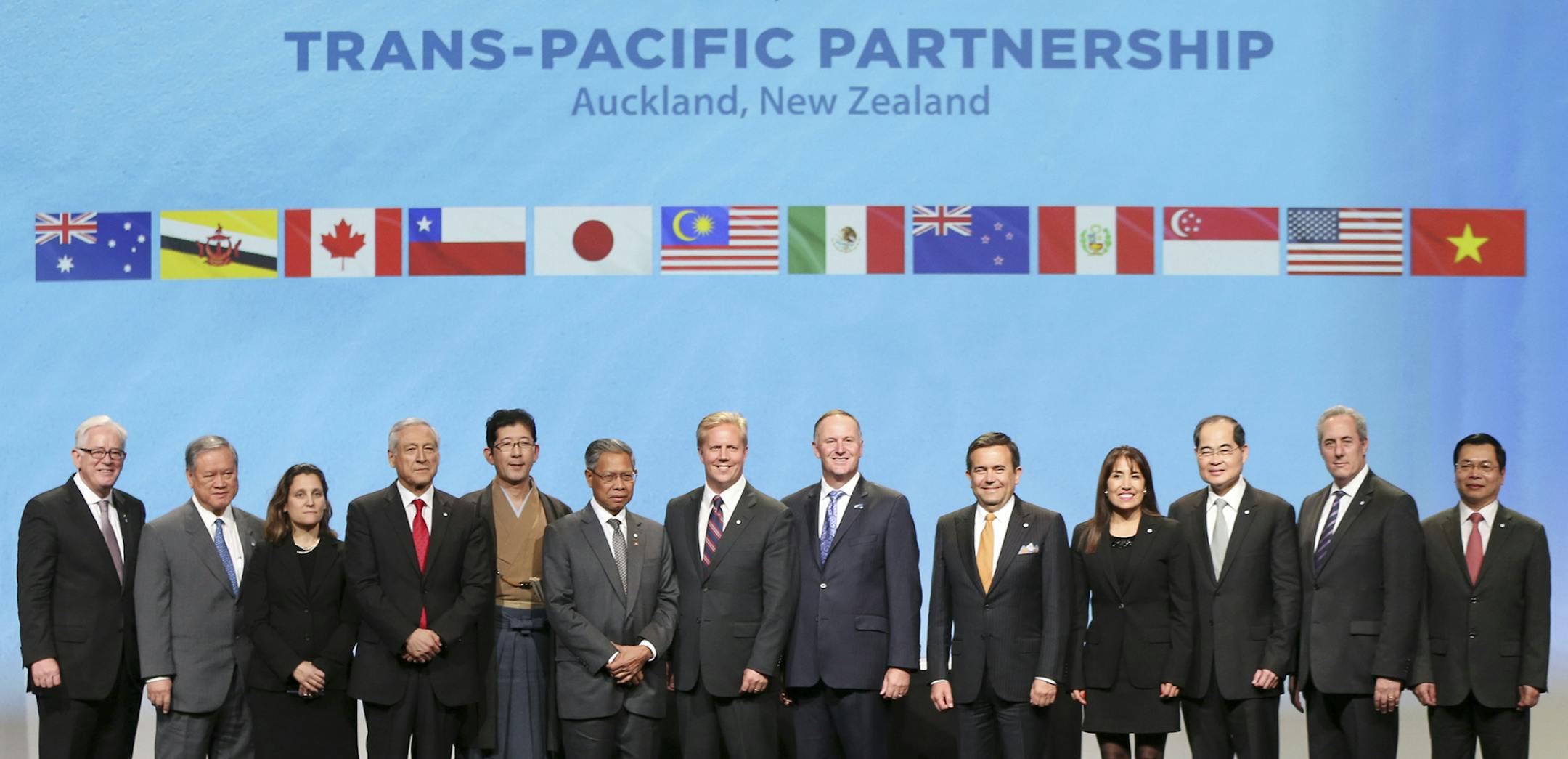
Trade delegates pose for a photograph after signing the Trans-Pacific Partnership Agreement in Auckland, New Zealand, Thursday, Feb. 4, 2016. Trade ministers from 12 Pacific Rim countries including the United States have ceremonially signed the free-trade deal. (David Rowland/SNPA via AP) NEW ZEALAND OUT ORG XMIT: MIN2016031115122667
Trade delegates at the signing of the Trans-Pacific Partnership Agreement in New Zealand last month. For the trade pact to take effect, the U.S., Japan and at least four other countries have to ratify it. (The Minnesota Star Tribune)

With all four leading presidential candidates expressing opposition to a Pacific trade deal that is one of President Obama's last economic priorities, the chief White House economic adviser said Wednesday in Minneapolis that the window for finalizing the deal is already closing.

"You have a president, a leader in the Senate and a Speaker of the House who all support getting it done. We should make sure we're doing it while we have that alignment," said Jason Furman, the head of the Council of Economic Advisers.

Senate Majority Leader Mitch McConnell has said he will revisit the sweeping 12-nation trade agreement, called the Trans-Pacific Partnership, in the lame-duck session after the November election. It must be ratified by Congress for it to take effect in the United States. The U.S. and Japan and four other original signatories must ratify the deal for it to go into effect.

In a meeting with the Star Tribune editorial board, Furman described the tariff-reducing trade pact as a solution to "structural" problems in the economy like slow wage growth and low productivity growth. He said the deal will help U.S. businesses more with exports than hurt them through greater import competition.

"The United States is a very open economy already," he said. "We have tariffs that average 1.4 percent on the goods that come into our country, and we have essentially no discriminatory, non-tariff barriers."

By contrast, goods made in the United States already face high barriers in many Asian markets — including TPP signatories Japan, Malaysia and Vietnam — and the deal would reduce or eliminate those, Furman said. The deal also creates a fairer market for American companies by forcing its trade partners to adhere to more stringent environmental standards, impose a minimum wage and recognize unions in their countries.

Unions and the political left have reliably opposed the agreement, but the surprising rises of both Donald Trump and Bernie Sanders in the presidential primary contests have revealed broad American skepticism about the effect of trade on the economy. Furman admitted that globalization's impact has been "mixed" for the United States economy, particularly blue-collar workers.

"I relate to trade being a difficult issue," he said. "Globalization has caused a lot of challenges for the U.S. economy. It has led to manufacturing job loss. It has contributed to inequality."
But trade has benefited consumers by offering cheaper goods and more variety, Furman said. It's also created more exports-related jobs in the U.S., which generally pay better than jobs unrelated to international trade.

And it's important, he said, to distinguish between objections to trade overall and the Trans-Pacific deal, which is a distinct agreement with countries with whom the United States already trades.

"No one's voting on globalization. You're voting on specific things. It's the Trans-Pacific Partnership. What are the details? They're about cutting tariffs, non-tariff barriers, raising labor standards, raising environmental standards, and about taking advantage of our comparative advantage," he said. "We're getting the facts out about the agreement, and not debating the bigger, more amorphous question, which is not the relevant question."

Furman was accompanied Wednesday morning by U.S. Sen. Amy Klobuchar, D-Minn., who is usually supportive of Obama's agenda. She and the state's other U.S. senator, Al Franken, also a Democrat, have expressed skepticism about TPP, however. Last May, both voted against extending Obama's so-called "fast-track" authority, which allows the administration to negotiate trade deals, including TPP, and leaves Congress unable to change the finished product.

Adam Belz • 612-673-4405 Twitter: @adambelz

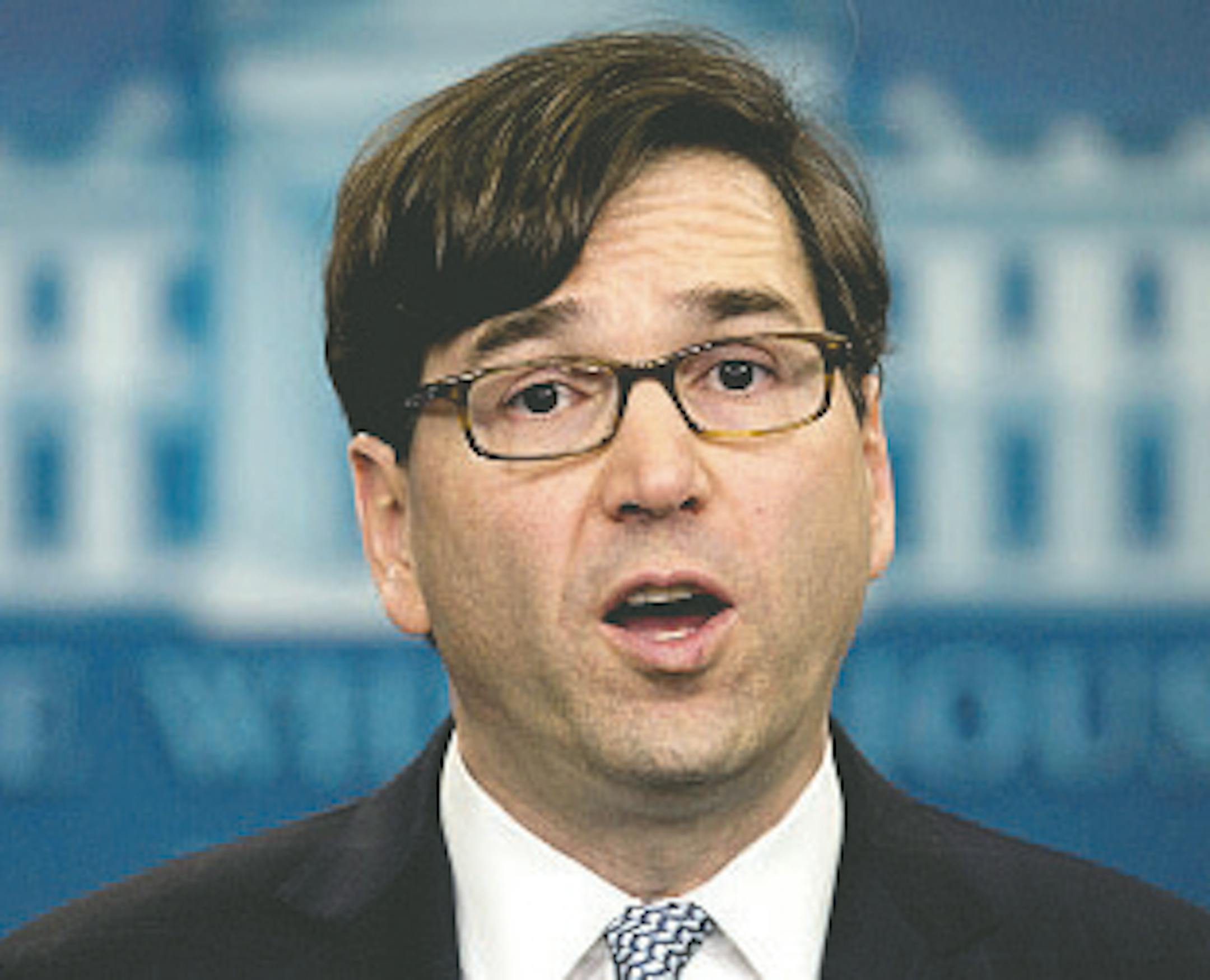
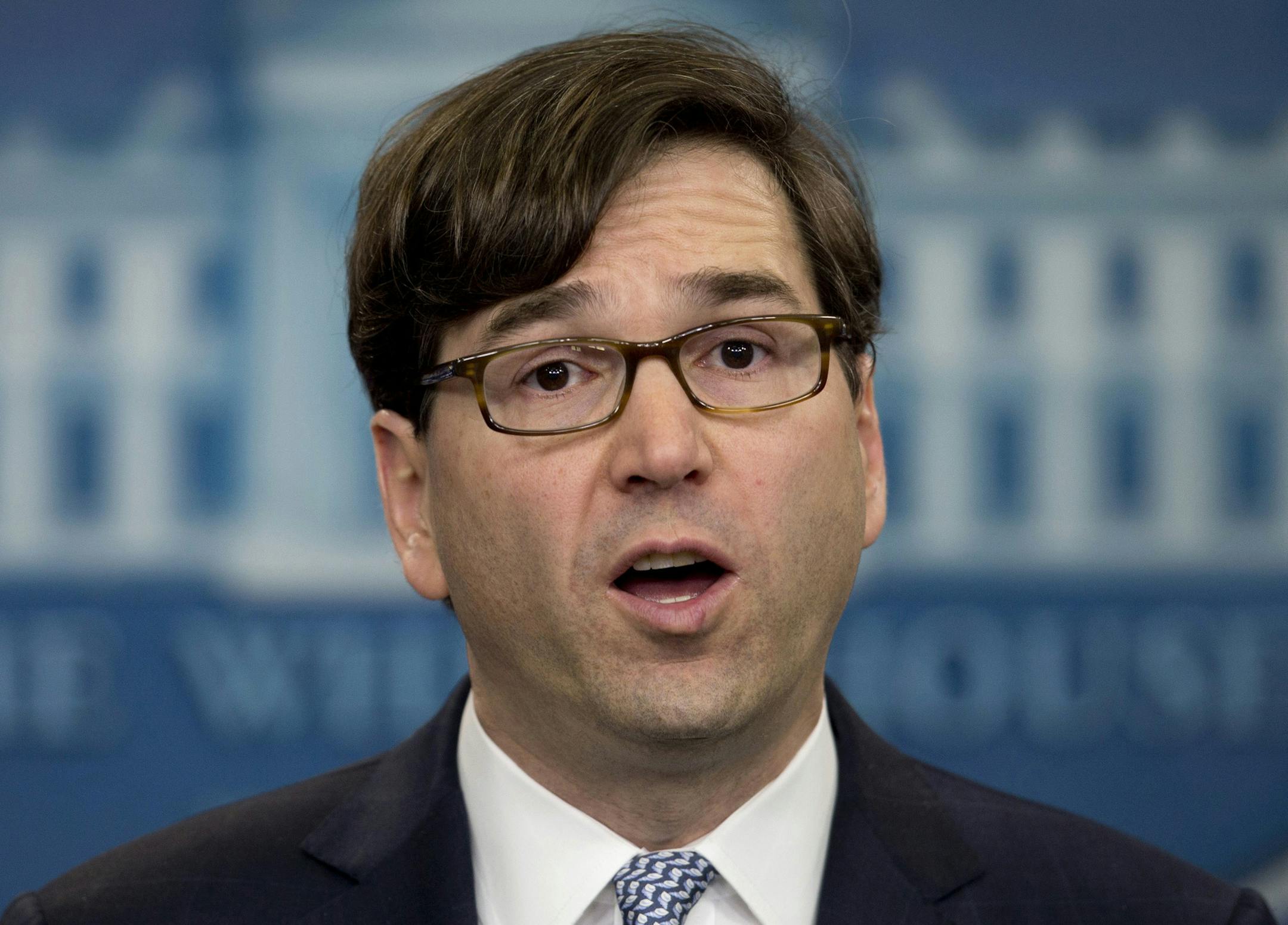
FILE - In this Feb. 4, 2014, file photo, Jason Furman, chairman of the White House Council of Economic Advisers, speaks during a daily news briefing at the White House in Washington. A White House veto threat appears to have put on ice a congressional effort to permanently renew a handful of generous tax breaks for businesses and individuals. Officials say that the plan, brewing behind closed doors on Capitol Hill, favored corporations over the working class. "The president has consistently stat
Jason Furman, chairman of the White House Council of Economic Advisers, in a 2014 file photo. (The Minnesota Star Tribune)
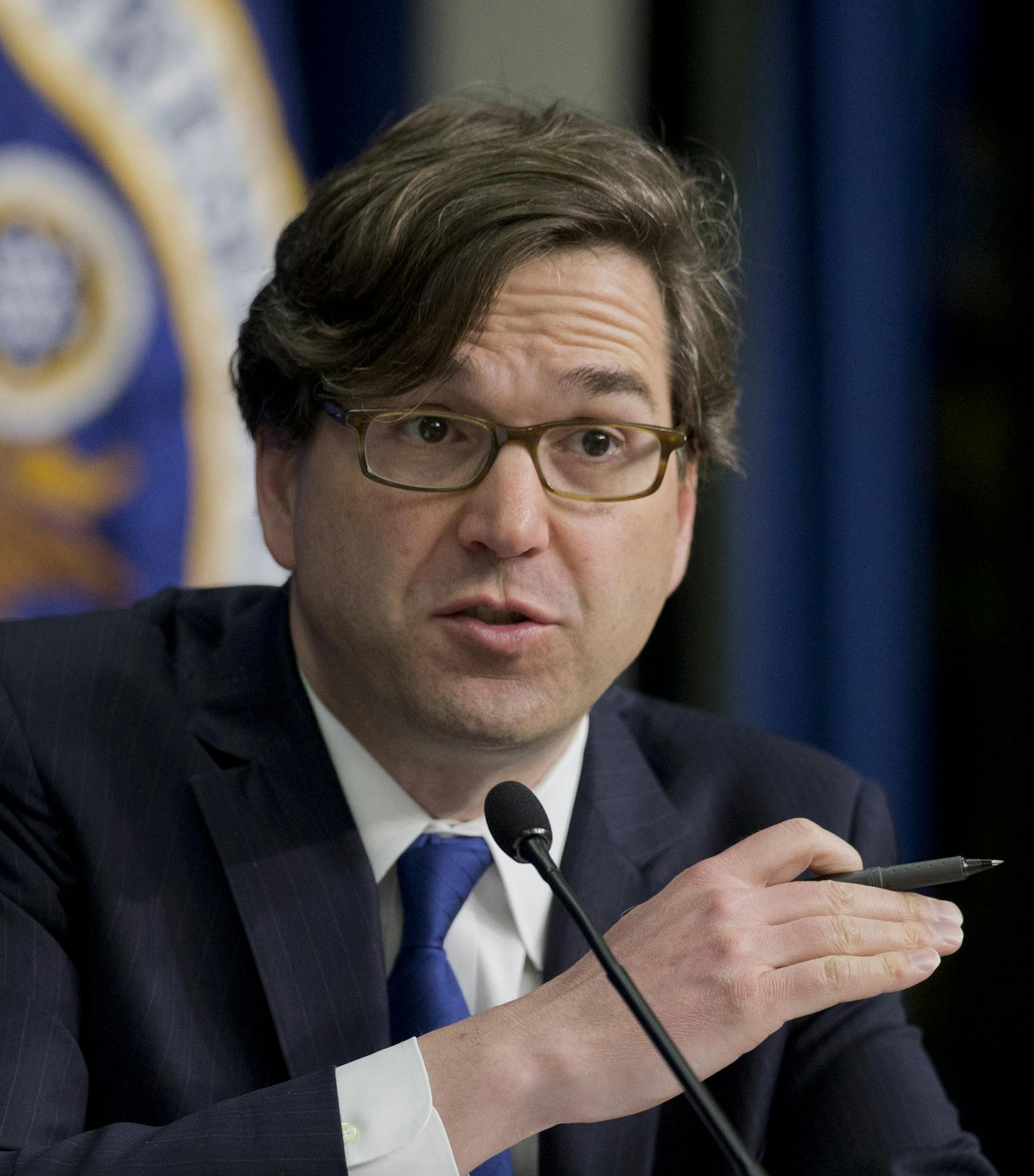
Council of Economic Advisers Chairman Jason Furman, talks about President Barack Obamaís Fiscal Year 2016 Budget, during a news conference at the Eisenhower Executive Office Building in the White House complex in Washington, Monday, Feb. 2, 2015. Obama sent Congress a record $4 trillion budget Monday that would boost taxes on higher-income Americans and corporations and eliminate tight federal spending caps to shower more money on both domestic and military programs. It would provide middle
Jason Furman, chief White House economic adviser, believes a trade deal vote must happen by year’s end. (The Minnesota Star Tribune)
“It’s the Trans-Pacific Partnership. What are the details? They’re about cutting tariffs, non-tariff barriers, raising labor standards, raising environmental standards, and about taking advantage of our comparative advantage.” Jason Furman, the head of the Council of Economic Advisers (The Minnesota Star Tribune)
about the writer

about the writer

Adam Belz

Reporter

Adam Belz was the agriculture reporter for the Star Tribune.

See Moreicon

More from Business

See More
Hennepin Healthcare Clinic and Specialty Center,l 8th Street between Park Av and Chicago Av.
The Minnesota Star Tribune

Minneapolis-based Hennepin Healthcare says it also will suspend contributions to some worker retirement plans while pausing $24 million in capital projects.

The newly renovated Parkway Theater is next door to the new restaurant El Burrito Mercado.
card image