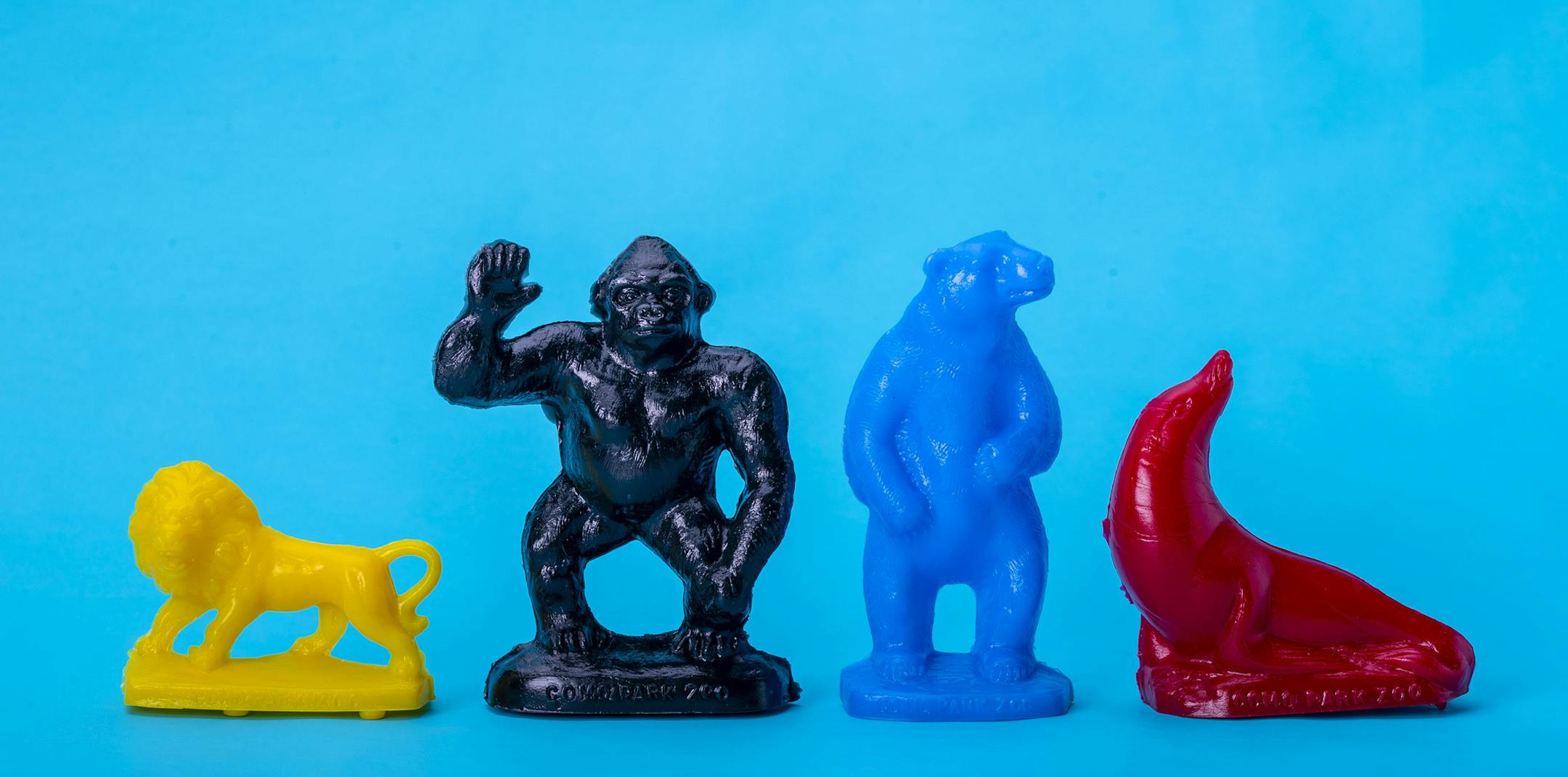
It’s the smell many of us remember, the warm waxy scent that’s a memory trigger of childhood, evoking recollections of school field trips to the museum, vacations to amusement parks, family outings at the zoo.
It is the memory of quarters begged from parents, clutched in sweaty fists before being shoved into a jukebox-sized vending machine that calls itself the Mold-A-Rama and bills itself as an “automatic miniature plastic factory” — one that you could watch at work.
Through a clear, bubble-shaped top, you see the hydraulic pistons push two halves of a metal mold together. Temperature and pressure dials twitch as chilled water, compressed air and molten plastic hum through tubes. Then the pistons open to reveal a small, freshly molded plastic souvenir: a zoo animal, a spaceship, a statue of a president.
The toy drops into a hopper and you pick it up, still warm, like a freshly baked cookie, except that it smells like a warm crayon. This, you think, is way better than a squashed penny.
Mold-A-Rama machines have been a Minnesota mainstay for decades. Once they could be found just about everywhere: in dime stores, movie theaters, train stations, the State Fair, the Mall of America and every tourist attraction worthy of the name.
But over the years, they gradually disappeared. Now the only public place in the state where you can find the nearly 60-year-old machines is St. Paul’s Como Park Zoo, where they’ve churned out hundreds of thousands of souvenirs over the decades.
For collectors, there’s nothing more retro-cool than these 3-D printers of the baby boomer generation. Getting a plastic gorilla, lion, polar bear or sea lion is reason enough to visit the zoo, even if they have to travel hundreds of miles to do it.
For the most mold-manic fans, it’s not enough to just collect a souvenir. They want their own memory-making machine.