

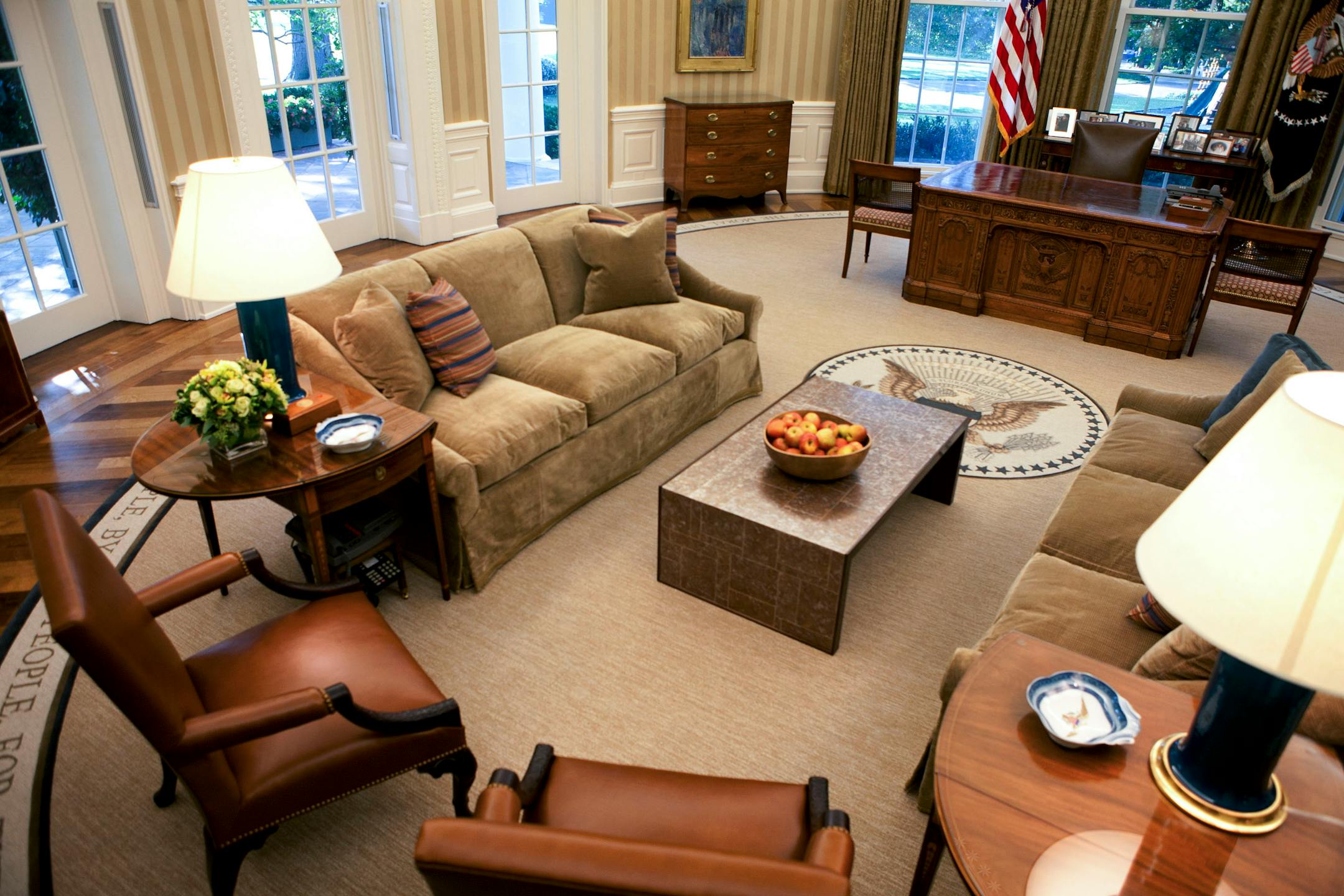
It happens only on the rarest of occasions. But there have been moments when the Oval Office is truly between its masters.
And I have been there, standing alone in the Oval Office doorway, on two occasions — precisely at noon, on two of those few quadrennial Inauguration Days when the United States has been peacefully transferring the power of the presidency from one political party to another.
It was an assignment I gave myself, back on January 20th of 1977 and 1981. Because, back in that more innocent era, I wanted to witness just whatever there was that could be seen or felt when the Oval Office was between its presidents. Those were the moments when that gleaming white oval-shaped room we egocentrically considered the center of global power and influence was being empowered only by the constitutional spirit that — and we felt sure of this! — fuels the world's greatest democracy.
And now we aren't even sure about that. Today, our nation's capital doesn't look or feel like the capital of a great democracy. It looks and feels more like we are trapped inside the military fortressed, steel-fenced, barbed-wired Green Zone that our experts designed to protect a trembling Baghdad from being overrun by its own homegrown terrorists. Because that's just what we saw happen to our Capitol.
But now, I thought we might want to shift our time machine into reverse and revisit those gentler days, when America peacefully transferred the power of its presidency from the Republican Nixon-Ford years to the presidency of Democrat Jimmy Carter. And then when we peacefully transferred the Oval Office from Carter to Ronald Reagan.
It is noon, Jan. 20, 1977: The most striking thing about the Oval Office at this moment is its stunning silence and sheer beauty. This is, after all, where we recently heard Richard Nixon plotting his Watergate criminal cover-up. I'm looking at the ornate desk where Jerry Ford had just pardoned his boss. I wouldn't have been there except for the help of Ford's decent, even-handed chief of staff — yes, young Dick Cheney. But now this place of dark deeds gleams from a noontime sun that glistens off the Rose Garden's meringue-like snowy glaze that pours through the doors and tall windows. The surreal brilliance of the silent Oval Office belies the notion that this was ever a place of dark deeds. From a TV down the hall, I hear the new tenant's voice:
"I, Jimmy Carter, do solemnly swear …"
A side door opens and Nell Yates, a secretary who has been working there since Eisenhower, walks in, glances at Jerry Ford's old wooden desk; it is bare except for two long stemmed pens. She shakes her head, leaves and returns with books that she places at the desk's front left corner, shifting them until they are just right. They are three volumes of Alexander Hamilton's bound papers, two volumes of "Woodrow Wilson: Life and Letters." But what they are didn't matter; getting rid of the desk's uninviting bareness is what mattered. "At least now it makes you want to come in and do some work," she explains.


