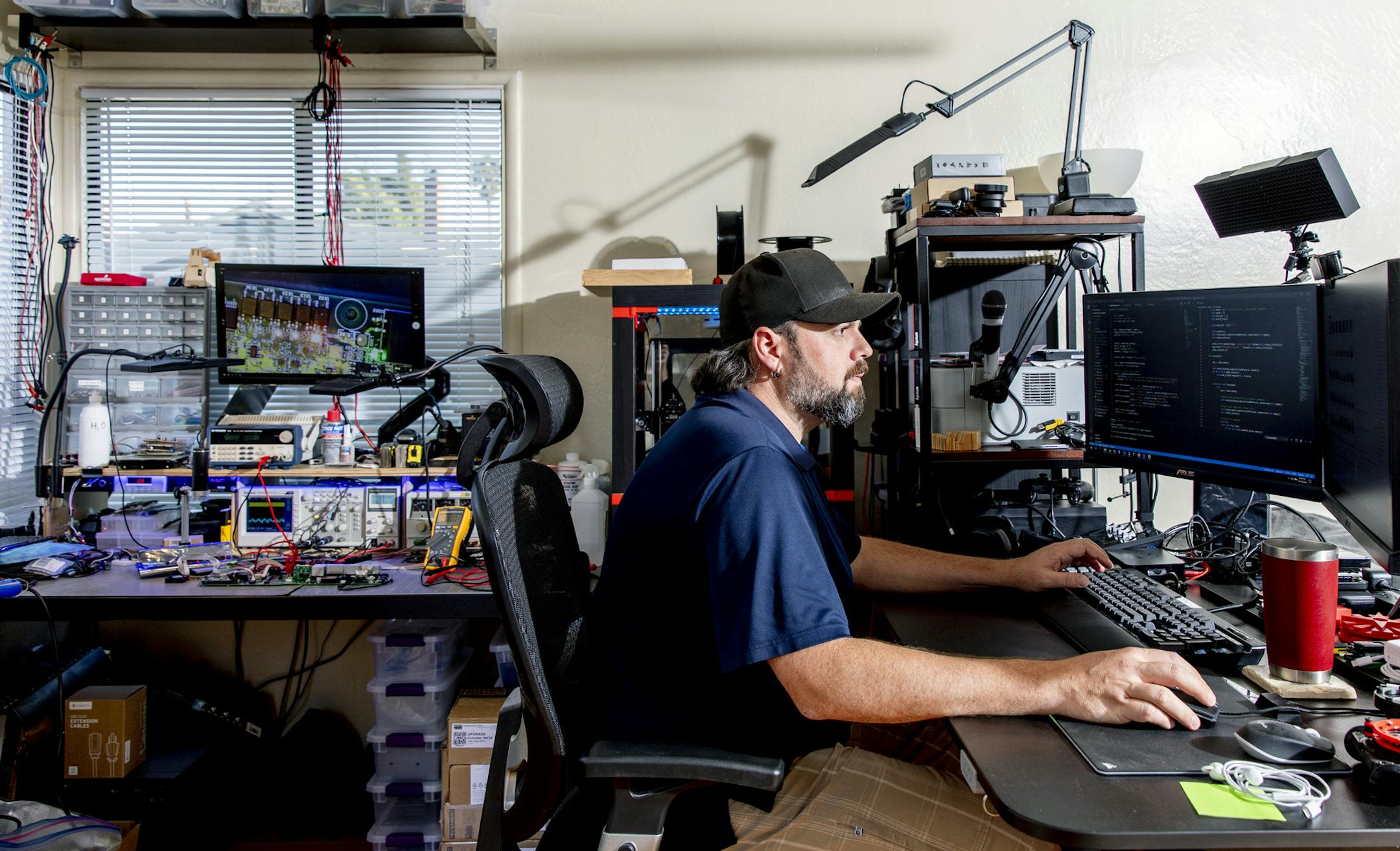
SAN FRANCISCO – It is the folksiest of Silicon Valley origin stories: Tech startup makes it big after a wide-eyed entrepreneur builds a prototype in his garage. But Colin Wessells could never have imagined that a pandemic would force him back into the garage just to keep his company going.
Wessells, 34, is one of the founders and the chief executive of Natron Energy, a startup building a new kind of battery. In March, when social distancing orders shuttered his company's offices in Santa Clara, Calif., he and his engineers could no longer use the lab where they tested the batteries. So he packed as much of the equipment as he could into an SUV, drove it home and re-created part of the lab in his garage.
"It was only a fraction of the test equipment," Wessells said. "But we could at least run some new experiments."
Designing and creating new technology — never easy tasks — have become far more difficult in the pandemic. This is particularly true for companies building batteries, computer chips, robots, self-driving cars and any other technology that involves more than software code. While many American workers can get by with a laptop and an internet connection, startup engineers piecing together new kinds of hardware also need circuit boards, car parts, soldering irons, microscopes and, at the end of it all, an assembly line.
But Silicon Valley is not the home of ingenuity for nothing. When the pandemic hit, many startup engineers in the area, like Wessells, moved their gear into their home garages so they could keep innovating. And if it wasn't the garage, then it was the living room.
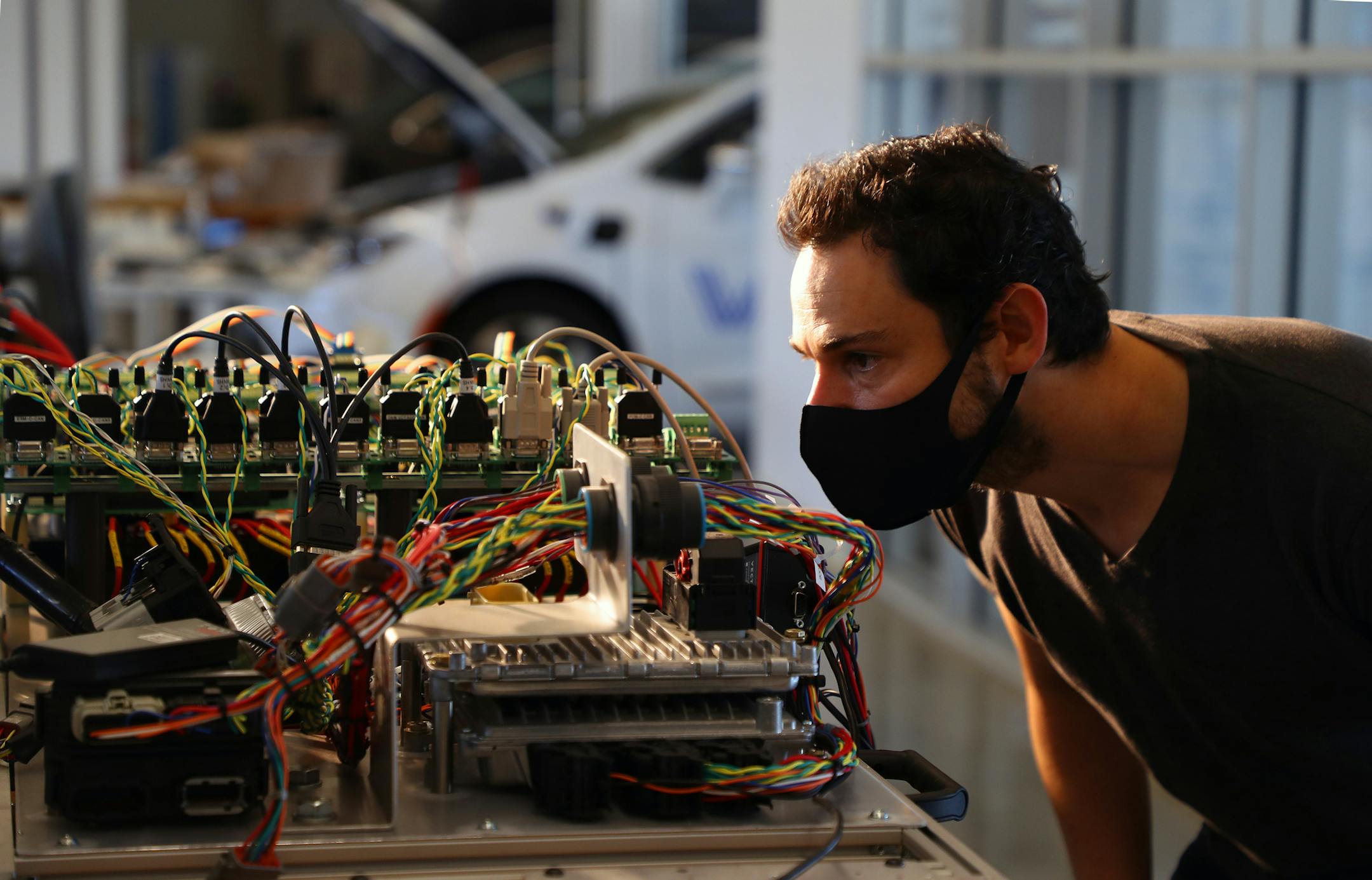
Voyage, a self-driving car startup in Palo Alto, Calif., initially bought various self-driving car parts and shipped them to two engineers so they could work at home. The startup sent them lidar sensors (the laser sensors that track everything around the car) and inertial measurement units (the devices that track the position and movement of the car itself) so they could keep testing changes to the car's software.
But Voyage did not just rely on the at-home setups. In some cases, it arranged for engineers to log on to their home computers for remote access to a collection of car parts set up at the company's offices.
Called "the HIL" — short for "hardware in the loop" — this was basically a car without wheels, complete with steering rack and braking system.