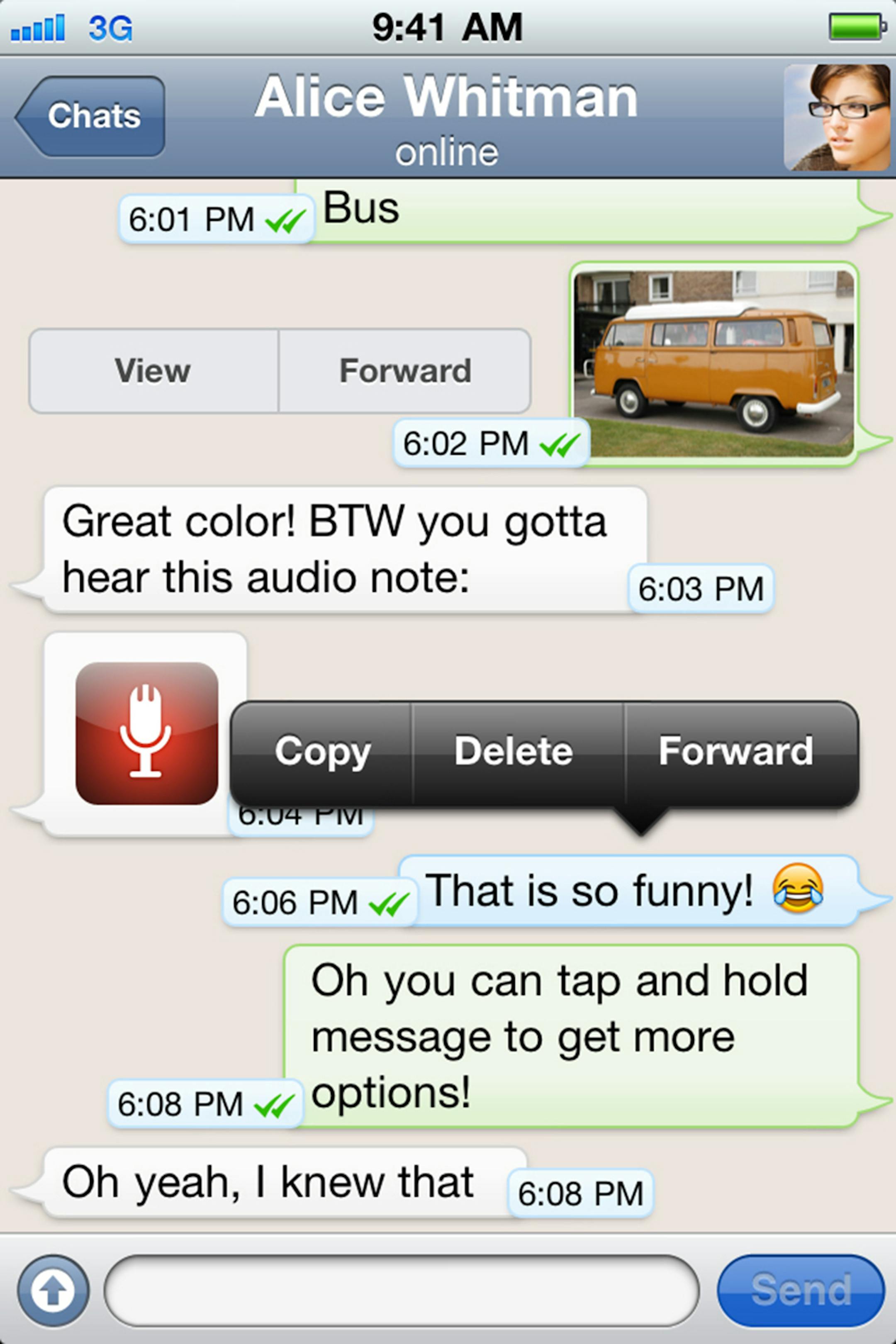
Its chief executive claims it has more users than Twitter. It's rumored to have just rebuffed a $1 billion buyout offer from Google.
So what's up with WhatsApp? And how has a San Francisco start-up that many Americans still have never heard of come to lead a fast-growing field of mobile messaging services that are shaking up the phone and Internet industries?
Easy, says Andreas Sanchez, a junior at San Francisco State University who has used a number of such services. "I can text, I can send pictures, I can call, all through Wi-Fi," he said. "They make it fun for people my age — and, I guess, any age."
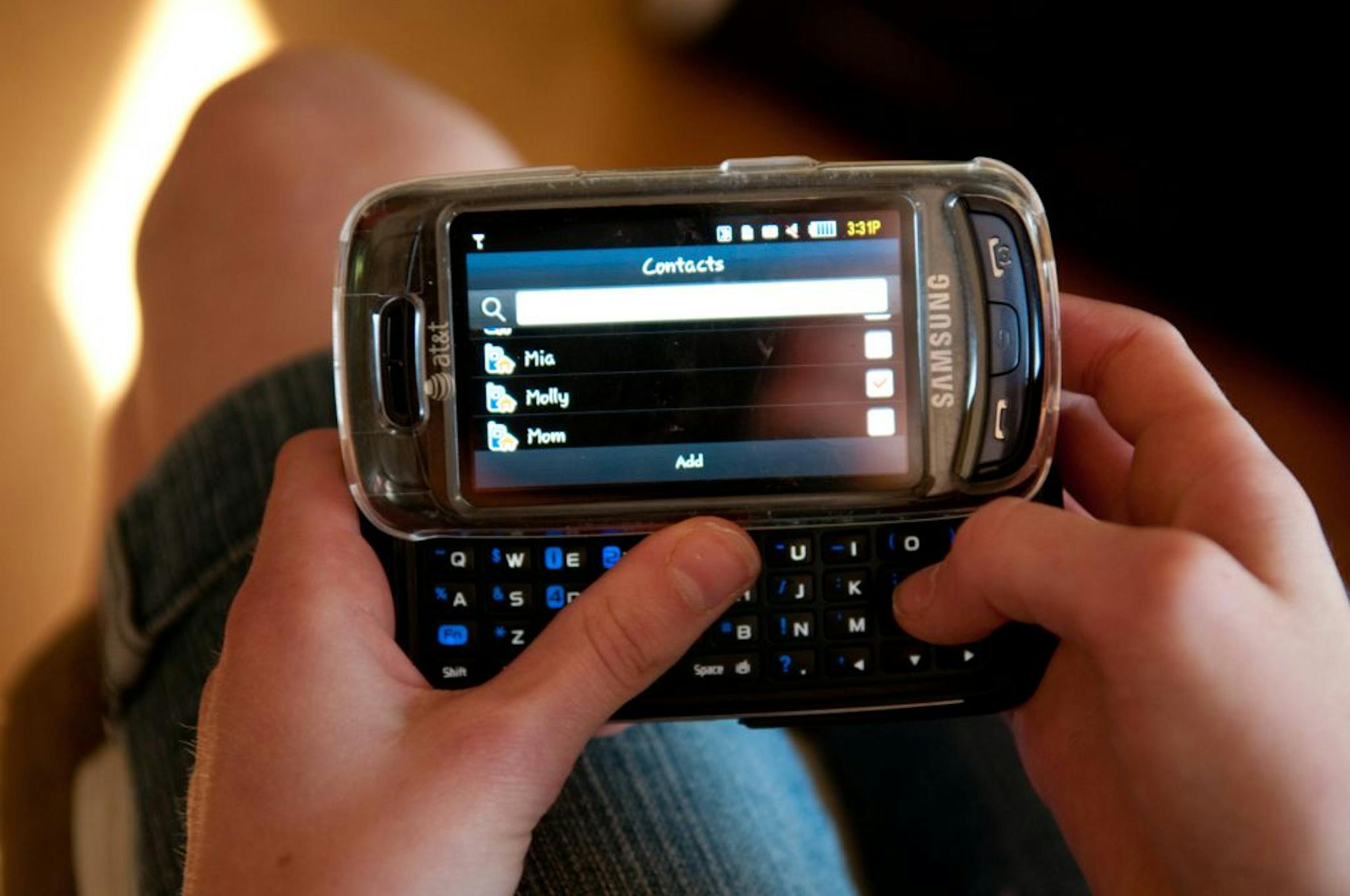
The popularity of online messaging, especially among younger Internet users, has sparked a boom in apps — such as WhatsApp, WeChat, TicToc and Tango — that operate on a mix of advertising and subscription models. By sending messages over the Internet, often via Wi-Fi or mobile data networks, these services let users avoid the text-messaging fees charged by carriers like Verizon or AT&T.
And WhatsApp, by many measures, is at the head of the class.
The company was launched in 2009 by two former Yahoo executives who, unlike the founders of other recent sensations like Facebook and Pinterest, wouldn't be carded at the local bar. Jan Koum, 36, and Brian Acton, 40, remember not only the dot-com boom but how it went bust.
People who know both men say it's a big part of why they've tried to build the 40-worker company with a minimum of hype.
In a rare interview, Koum and Acton said via e-mail that traditional text messaging is a 20-year-old technology. "We are in the middle of the smartphone revolution," they wrote, "and it is just beginning."