

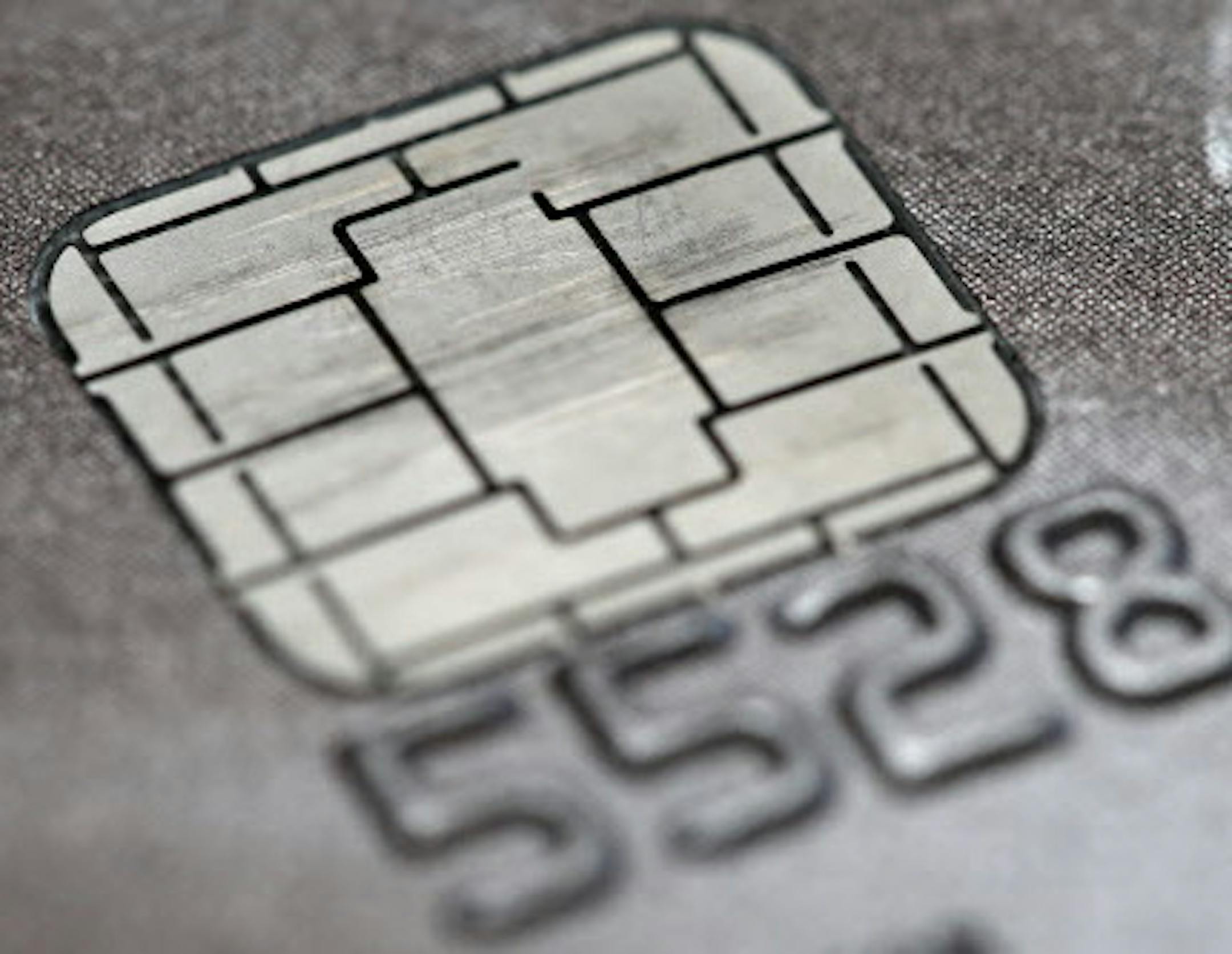
NEW YORK – Credit cards in most Americans' wallets are pretty much antiques. They're easy to counterfeit, thanks to magnetic strips that rely on basically the same 1960s technology used in cassette tapes.
At last they're getting an upgrade with EMV chips, used almost everywhere else in the world. The first day of October is an important date in making that happen. Some questions and answers:
Q: What's an EMV chip?
A: It is a small computer chip in the credit card that lets the card and the card reader engage in a digital conversation to authenticate the transaction. EMV chips (after Europay, MasterCard and Visa, which created the standard) can't be copied and counterfeited the way a magnetic strip can.
Q: What happens Thursday?
A: Card issuers and retailers are gradually switching to EMV. October marks a shift in liability for fraud that is designed to prod retailers to move faster. Usually card issuers are responsible for the costs of credit card fraud. After Oct. 1, retailers that haven't upgraded to EMV point-of- sale terminals will be liable for fraud at their stores. Card issuers are still liable for fraud on cards that don't have it.
Q: If I don't have a chip in my card, is that bad?
A: Not for you. Someone else, either the card issuer or the retailer, will still be liable for fraud that happens on your account. And you've got plenty of company. By the end of the year, only about 36 percent of Americans' credit cards will have EMV chips, Javelin Strategy and Research estimates. That should jump to 67 percent by the end of 2017. Debit cards are even further behind: Just 13 percent will have EMV chips by the end of the year.


