

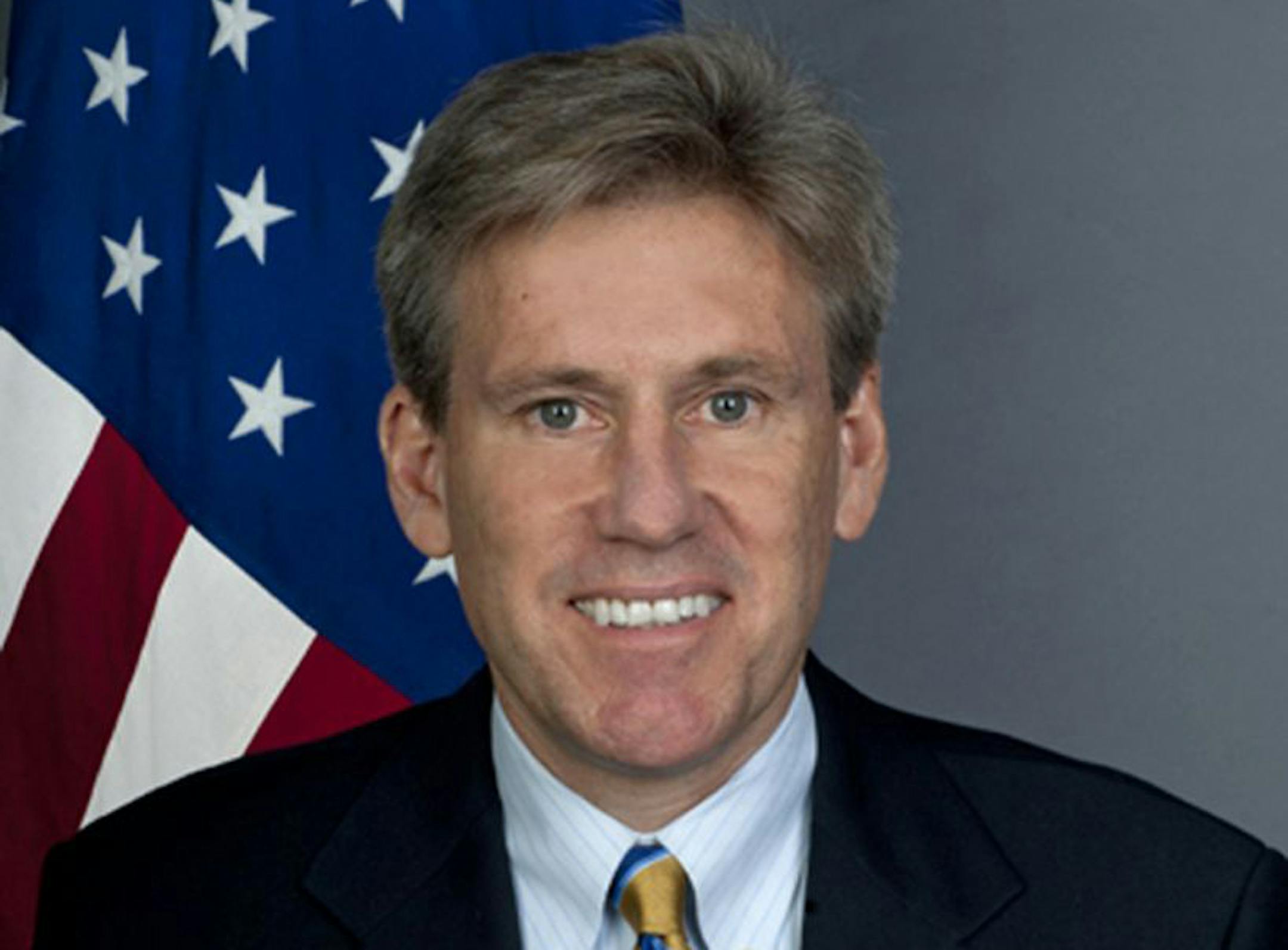
The last time I saw Chris Stevens was in May, at his swearing-in ceremony for his first post as ambassador, in Libya. We'd been friends since he was a junior diplomat on the Iran desk, when we used to gab for hours about Tehran's cryptic politics. We later met up in Mideast hot spots, from Syria and Saudi Arabia to the Palestinian territories. He always had funny tales about diplomatic mischief.
During an earlier tour in Tripoli, when Moammar Gadhafi was still in power, Chris once grabbed the camera off a Libyan intelligence goon on his tail, turned and, with a big smile, took the guy's picture. Then he gave the camera back. The lanky Californian could be both charming and disarming, even as he made his point.
Chris was posted in Jerusalem during the second intifada, when Palestinians were blowing themselves up on Israeli buses and Israeli troops were raiding West Bank villages. In a bit of unorthodox public diplomacy, Chris and a junior officer went outdoors during a rare snowstorm and started lobbing snowballs at each other. Young Palestinians and Israeli border guards on opposite sides of the divide joined in. It broke the tension, at least temporarily.
His antics were misleading, however. Chris fast became one of America's savviest envoys.
In April 2011, two months after the Libyan uprising erupted, he was dispatched on a cargo ferry from Malta to Benghazi to set up a U.S. liaison office to the rebels, working out of a hotel room. Colleagues dubbed him the expeditionary diplomat.
"He very quickly developed these amazing circles of contacts," recalled Jeffrey Feltman, a former colleague and now an undersecretary at the United Nations.
More than anyone else, Stevens soon convinced Washington that the Transitional National Council (NTC) had the political bona fides to pick up the pieces after Gadhafi's 42-year rule.
His assessment has so far proved accurate. When Libyans went to the polls in July, the majority rejected hard-line Islamists as well as separatists. And many NTC officials won the popular vote.


