

When the bizarre disappearance of Malaysia Airlines Flight 370 captured the global imagination like episodes of "Lost," an international military search and rescue response was swift. Two months and a dying black box ping later, no expense has been spared in the effort to find 240 passengers now presumed dead.
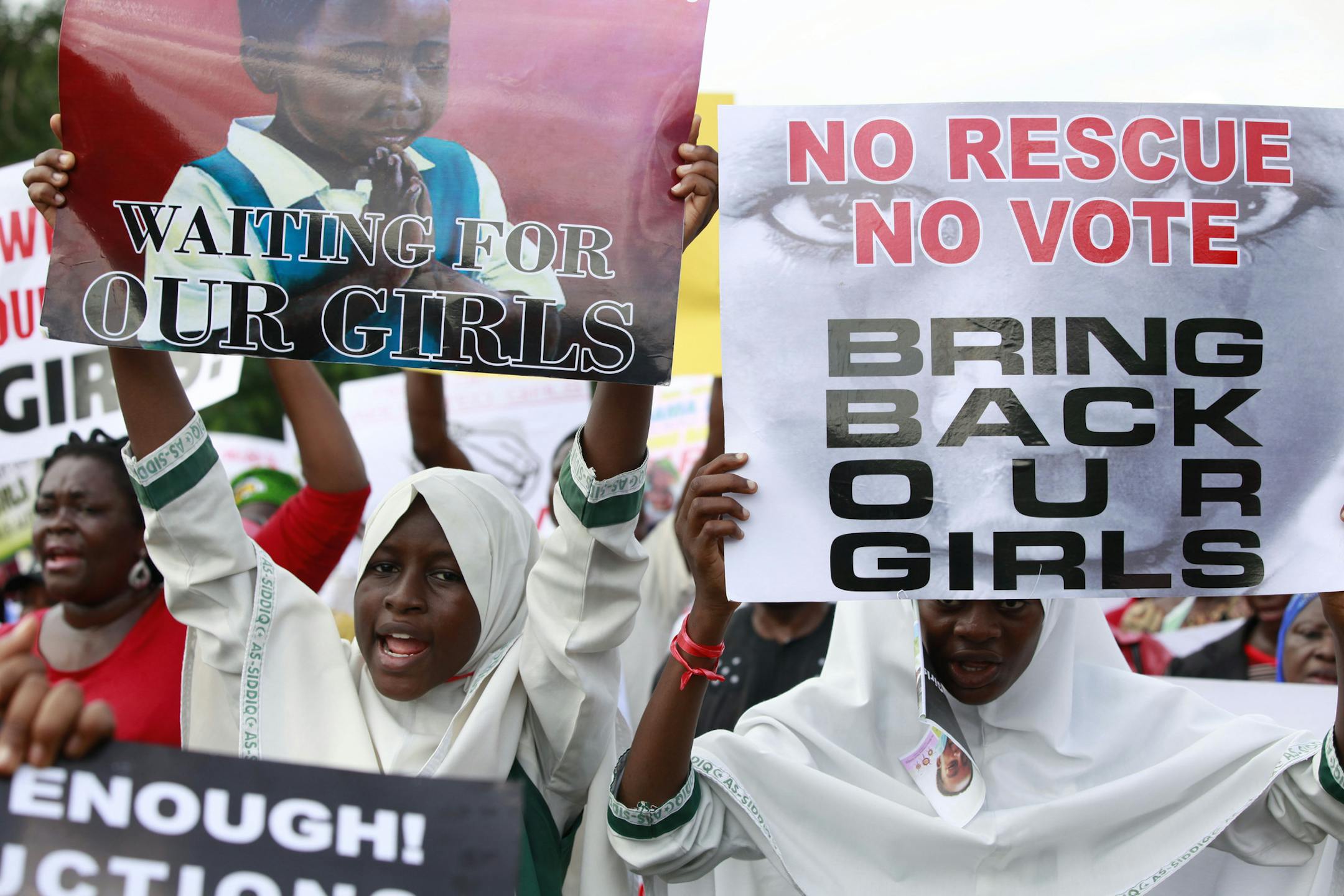
Weeks going on a month after the horrific mass kidnapping of 275 Nigerian schoolgirls by Boko Haram militants, the milquetoast worldwide response can't get much past the news ticker. While the reactions range from Twitter feeds accompanied by #BringOurGirlsBack to bubbling hate for the perpetrators, the perceived inability of Nigerian armed forces to match the passion comes at a time when conflict in the country's north is turning a grisly corner.
The tragic kidnappings have put a renewed spotlight on Nigerian President Goodluck Jonathan. Nigeria's leadership finds itself in a tough spot, not at all helped by authorities who seem powerless since Jonathan imposed states of emergency over the northeastern states of Borno, Yobe and Adamawa.
Nigeria is now Africa's largest economy, with gross domestic product rising from $263 billion in 2012 to an impressive $510 billion in 2013 that's quickly surpassed longtime continental leader South Africa. But the oil-rich economic superstar can't even provide ample security for its population of 175 million, much less offer confidence to the rest of the world that Africa's largest oil producer can protect its biggest commodity.
"The Nigerian authorities have wasted three weeks apparently doing very little to get these schoolgirls released," said Richard Downie, deputy director and fellow for the Center for Strategic and International Studies Africa Program, adding that "the captives could be anywhere by now."
Downie, a critic of Jonathan's response to the kidnappings, says that if authorities want to find the girls, they will require help from local communities in the Northeast, the area most affected by Boko Haram.
"Individuals within those communities may have the intelligence that will help the Nigerian military find the kidnappers," he says. "Instead of further alienating them, the government should be talking to them, reaching out to them, and showing that its No. 1 priority is to rescue these girls."
It's not as if Nigeria's military is ill-equipped to handle security: Its armed forces are among the largest on the continent, at 500,000 active-duty and paramilitary personnel combined. Its defense budget is nearly 2 percent of GDP, and it enjoys one of the more modern weapons arsenals in all of Africa. Still, that's not translating into Boko Haram's destruction.


