

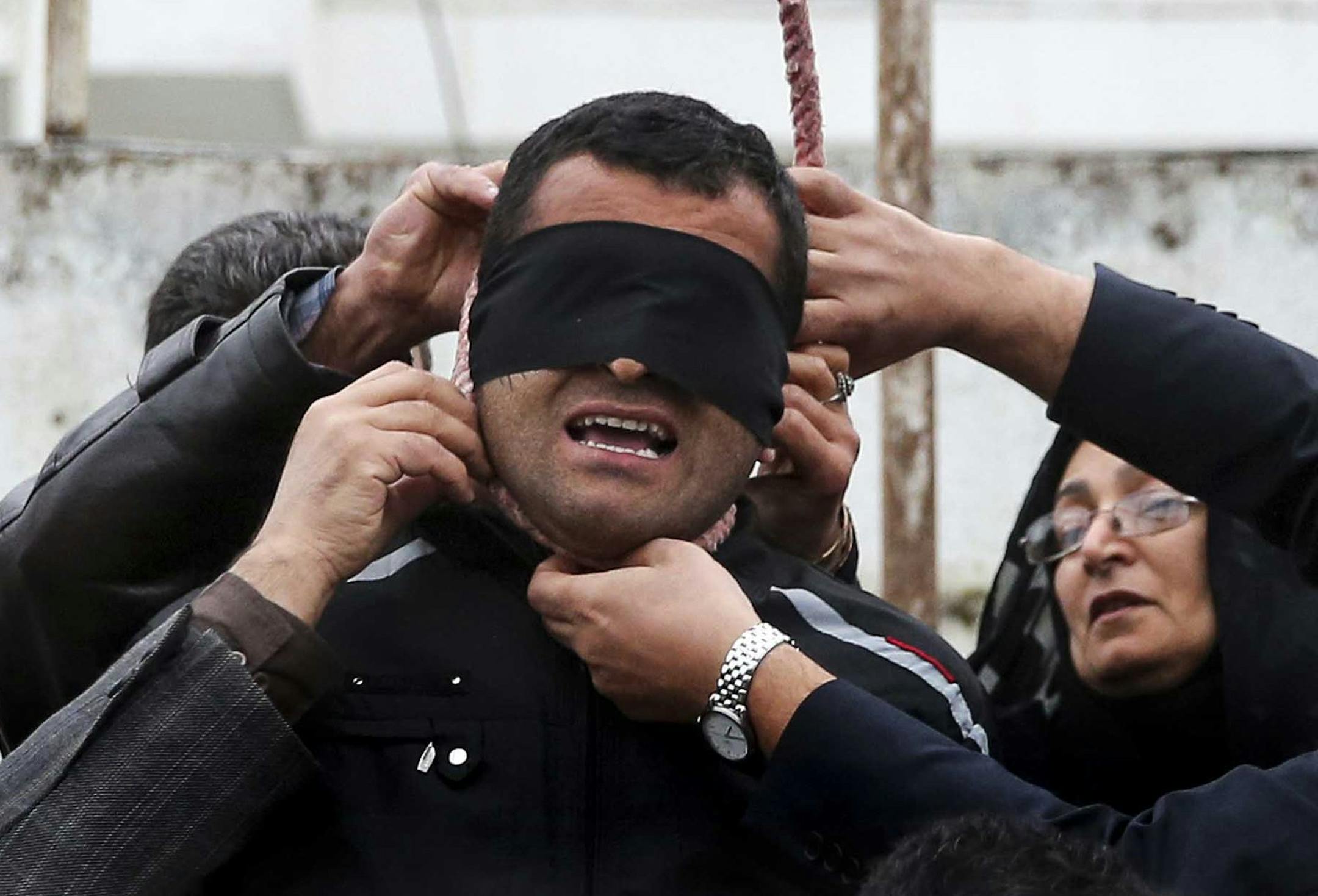
Iran is a death-penalty machine. More than 600 people were executed there last year, according to the United Nations, many of them in public hangings before crowds filled with children.
So far this year, there have been an estimated 188 executions. That number would have been 189 had it not been for the family of Abdollah Hosseinzadeh, an 18-year-old knifed to death in a street fight seven years ago.
Islamic sharia law gave the young man's mother, Samereh Alinejad, the right to extract revenge by participating in the execution of the man who killed her son. As the convicted murderer stood in the gallows, a noose around his neck, she was called forward to help kick the chair out from under him and administer the ultimate punishment.
Instead, she shocked the crowd by first slapping his face and then publicly forgiving him. After her husband removed the noose, Alinejad and the killer's mother embraced, both of them sobbing. At least one of their sons had been spared.
Our fundamental choice about capital punishment doesn't get more stark than in this story, which was caught on video and went viral on the Internet and on social media.
That's because for all the purported justification of capital punishment — claims of closure and discredited notions of deterrence — executions touch all of us personally. In a metaphoric sense, an execution requires each of us to look the killer in the eye and kick out the chair.
We insulate ourselves from this uncomfortable fact through distance. We assign the deed to others, minions of the state, who strap the convicted person into the electric chair or jab the needle into his or her arm.
We hide the executioner behind a screen, prohibit photos, nod our heads over media accounts as we carry on with our lives. There's a reason we give a blank bullet to the firing squad: That way, each marksman can believe his wasn't the fatal shot.


