Minnesota artists talk about what makes a good portrait

President Trump demanded his portrait in the Colorado State Capitol be taken down, an example of how hard the work can be.

The Minnesota Star Tribune
August 1, 2025 at 12:00PM
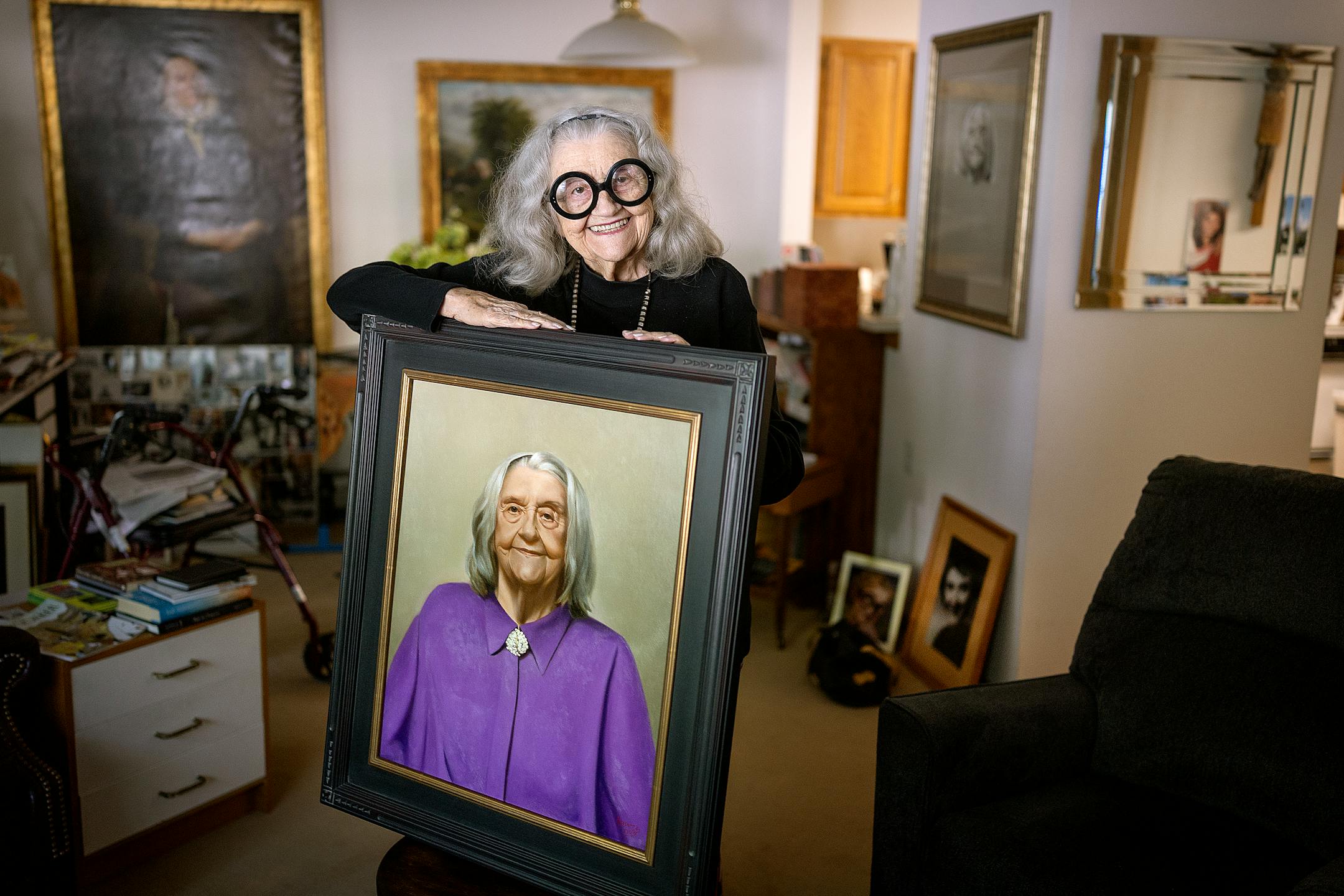
Doris Simonett, 95, was all smiles with a portrait of herself in St. Paul in mid-July. The portrait was painted by Little Falls, Minn.-based artist Charles Kapsner. (Elizabeth Flores/The Minnesota Star Tribune)

Doris Simonett, 96, wore chunky black-framed glasses, funky pants, a loose black shirt and a big smile.

Copies of the New York Times and the New Yorker were piled on the side table in her apartment, and the walls were covered with art. There are portraits of Doris and her late husband, former Minnesota Supreme Court Associate Justice John E. Simonett, painted during a trip to Europe. There’s one of Doris’ father that she painted.

Across from a photograph of a younger Doris was a more recent painted portrait of Doris. Classically trained Italian fresco painter Charles Kapsner painted it last fall. Kapsner is an old friend of hers from Little Falls, Minn.

We talked with Minnesota artists who paint portraits about what makes a good portrait.
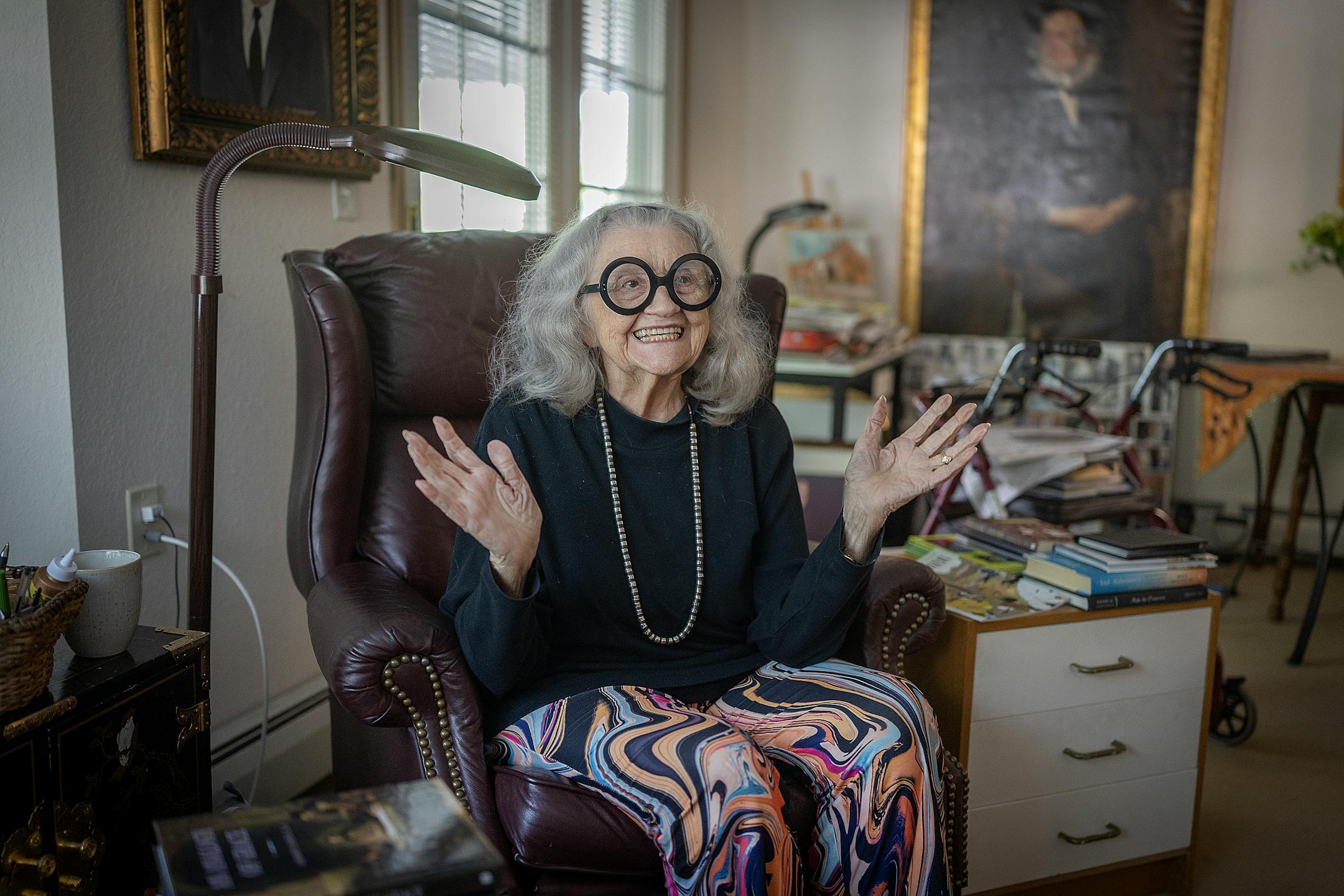
Doris Simonett, 96, was all smiles as she talked about the art in her St. Paul apartment. (Elizabeth Flores/The Minnesota Star Tribune)

“What’s really most important is … catching the essence of that person,” Kapsner said. “In the case of Doris and myself, we had this just long history.”

Portraiture can be very difficult, Kapsner said.

“People might see themselves very differently than what the artist does — and even if you have an incredible photograph," he added.

Simonett said she never thought about having her portrait painted. Her five children commissioned the portrait to celebrate Doris.
“He painted the blouse black, and it was a little somber, I thought,” her daughter, Martha Simonett, said. “Then mom thought about it, and she said ‘Let’s change the color.’”

Black became lavender.

“I was kind of shocked ― I don’t think of myself as having all those wrinkles and stuff,” Doris Simonett said of her portrait. “I think of myself as I used to be, you know?”

A picture says a thousand words. But a portrait? It could bare your soul.

One of the most famous portraits of all time, the Mona Lisa, has its own room at the Louvre. People commission portraits for weddings and funerals but also for friends, family and pets.

There are portraits of politicians, judges and CEOs. Artist Kehinde Wiley painted a portrait of former President Barack Obama. President Donald Trump demanded that a portrait of him in the Colorado State Capitol be taken down because it “distorted” his image.

Portrait-obsessed artists

In artist Suzann Beck’s studio in northeast Minneapolis’ California Building, portraiture rules.

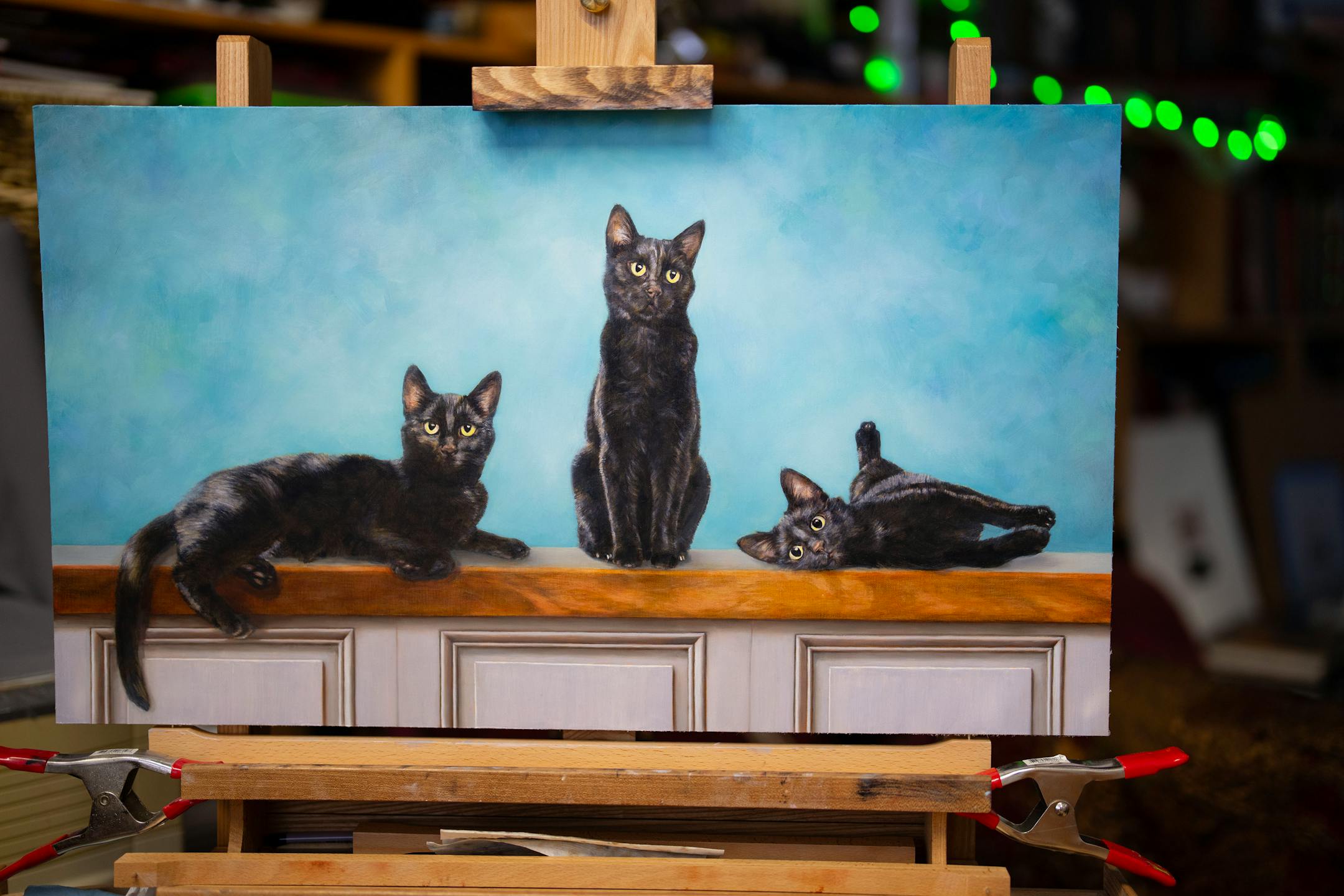
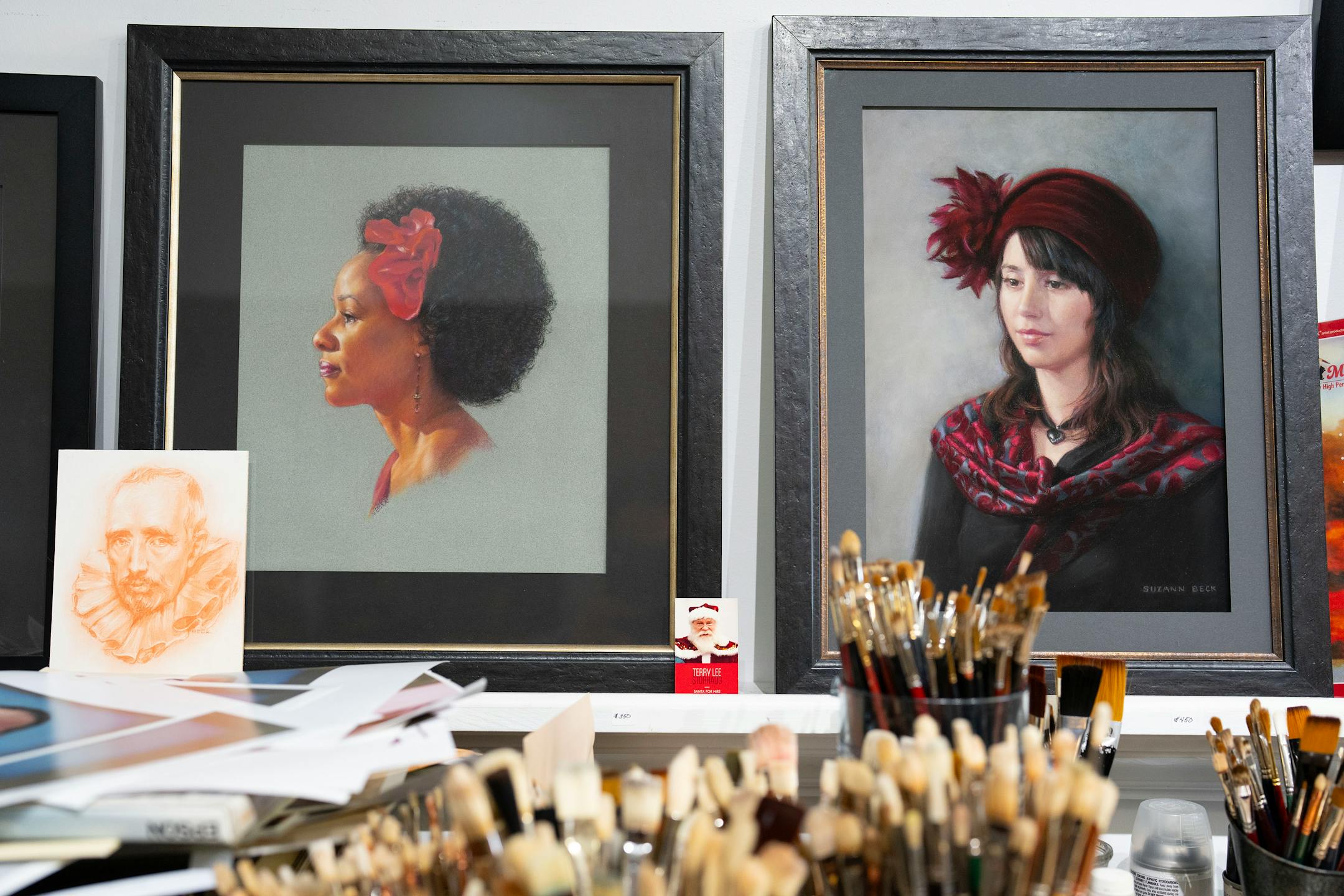
A pile of prints of a recent funeral portrait commission were scattered near framed portraits of a Black woman with a flower in her hair and another of a dainty blue-eyed cat.

A collection of portraits by Suzann Beck are on display in her studio in the California Building. (Alex Kormann/The Minnesota Star Tribune)

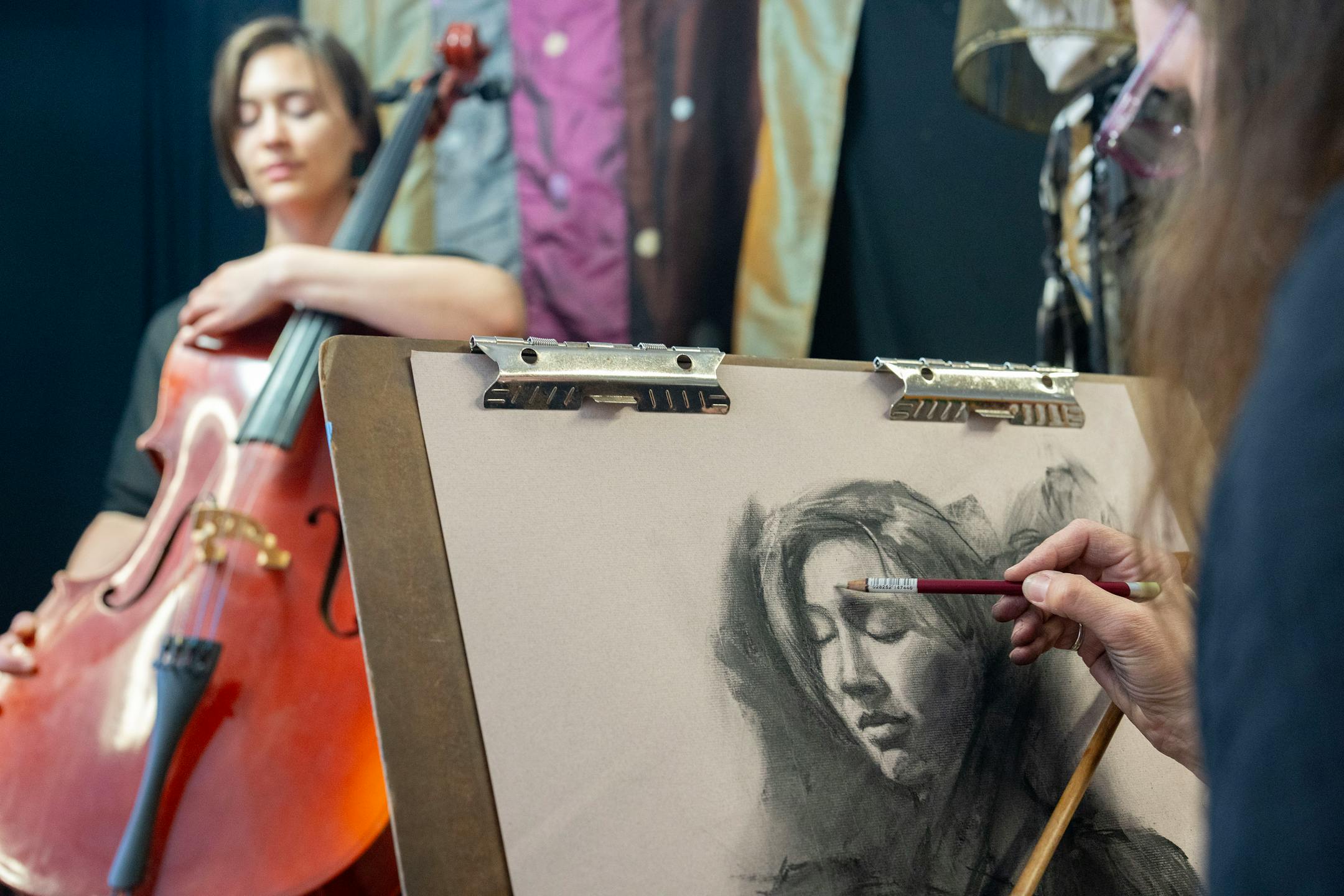
On a steamy July afternoon, Beck was busy drawing a live portrait of Sarah Joy Bruce, a professional cellist.

“The strings are always the hardest,” Beck said.

She concentrated, looked at Bruce, switched tools, drew a few more lines.

Artist Suzann Beck uses charcoal to make a portrait of cellist Sarah Joy Bruce. Beck has been in her studio in the California Building since 2011. (Alex Kormann/The Minnesota Star Tribune)

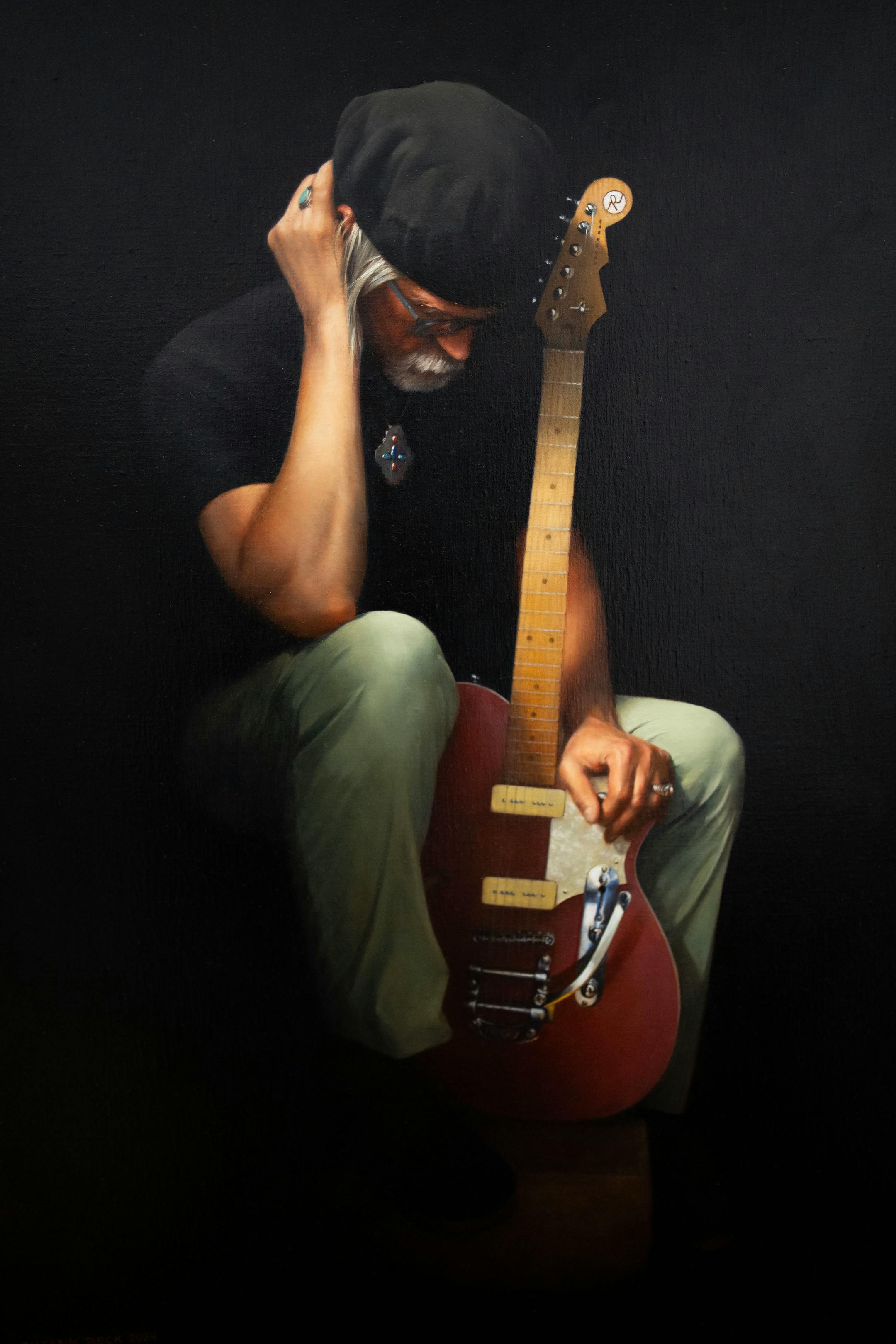
At the front of the studio, there was a nearly finished portrait of Mojo Coffee Gallery owner Marko Fields with his guitar.

Beck always has been drawn to painting people but didn’t get around to it until ending her 30-year career in graphic design and marketing.

Artist Suzann Beck painted a portrait of Mojo Coffee Gallery owner Marko Fields. (Alex Kormann/The Minnesota Star Tribune)

“I guess there was a painter inside screaming to get out because I would go to the museums and see the European portraits,” she said. “Then I would always get this urge to go home and do it myself.”

She mostly paints portraits on commission.

“When [the person commissioning the portrait] knows the subject, I find that likeness or accuracy is the most important thing,” she said. “If you’re doing a portrait that is going to have public appeal, I think narrative is the asset that’s most important.”

Artist Suzann Beck continued working on a pet portrait in her studio. (Alex Kormann/The Minnesota Star Tribune)

“I have a high degree of accuracy, and so when that’s important people come to me,” she added.

Accuracy is important, but so is flattering the subject.

Artists Jon Swihart and Kimberly Merrill moved from Los Angeles to Savage, Minn., in late 2022, seeking a quieter lifestyle. In Santa Monica, Calif. they hosted epic, monthly artist community potlucks in their backyard. In Savage, there’s little more sound than cars whizzing down mostly empty streets.

Swihart, a California native, fell into portraiture accidentally. He started painting portraits in the late ‘70s and early ‘80s, but kept it mostly quiet because portraiture is often associated with “selling out,” he said.

But the commissions kept coming.

Today, his star-studded clients include actor Clint Eastwood, former U.S. Supreme Court Associate Justice Sandra Day O’Connor and architect Frank Gehry, to name a few.

“Especially when I’ve painted famous people, I realize they’re just as self-conscious or wanting approval as I am,” Swihart said. “I painted Walter Cronkite years ago, and when I was working on it his secretary called me and was talking really quietly, and she said: ‘You know, Walter asked if you could tame his eyebrows.’ I was like, ‘That’s what he’s self-conscious about!’”

For corporate portraits, like a recent painting of the CEO of FedEx, Swihart noted that it’s about “painting somebody the way people see them, the way they imagine them to be …I have to make them look confident. I can’t paint the vulnerable side of them. People don’t want to see that.”

Growth in portraiture

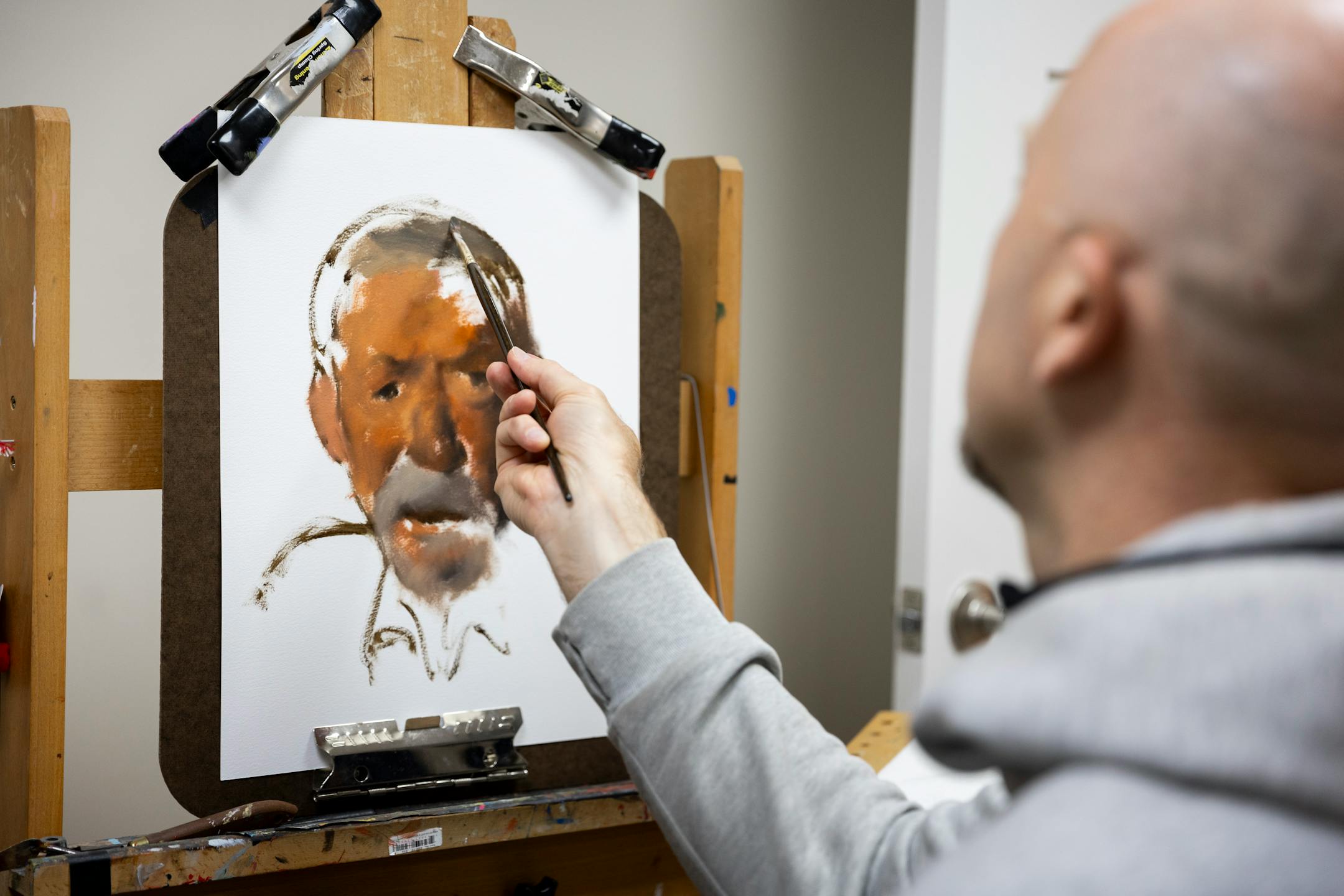
Artist Jonathan Aller dabbed bits of orange paint onto a portrait he was painting in his newly remodeled basement studio in the south Minneapolis home he shares with his family.

Artist Jonathan Aller paints a portrait in his basement studio. (Rebecca Villagracia)

Aller grew up in Miami, and his family hails from Chile and Brazil. As a kid, his dream was to become an animator for Disney but that changed when the industry shifted toward computer animation.

Aller changed course and studied in Florence, Italy for three years, learning from masters of European art history. It was there that he met his wife, who is from Minnesota. They returned together and started a family.

Aller also holds a master of fine arts from the Minneapolis College of Art and Design (MCAD).

“I’m drawn to portraits,” he said. “There’s something about a portrait, you know, through the eyes of a portrait of a sitter, that you can get so much from them.”

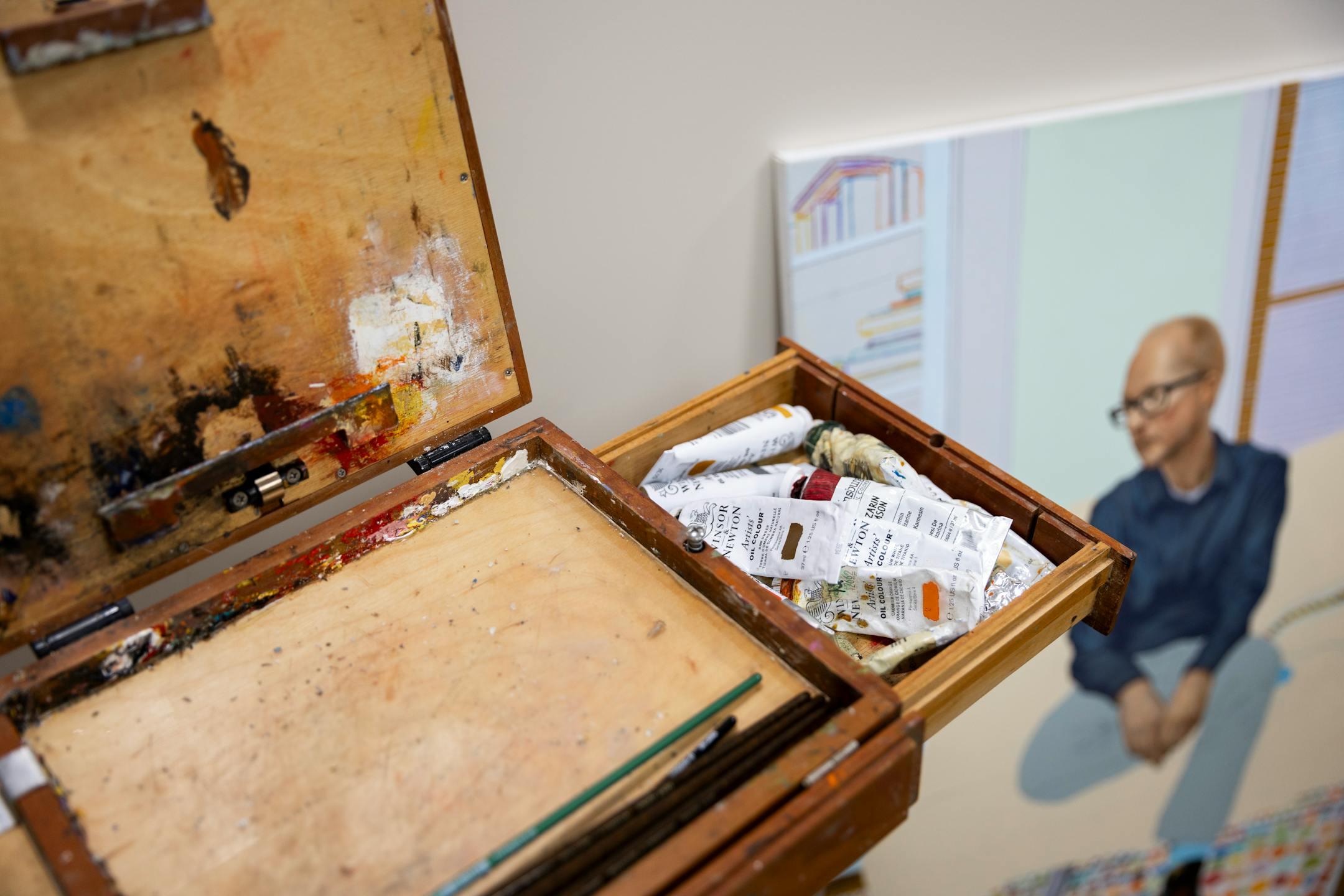
Inside Jonathan Aller's artist studio, a portrait and oil paints. (Rebecca Villagracia)

He pointed to a portrait of a guy sitting on a bed, his face hyper-realistic, his eyes pointed downward and glasses on his face. In the portrait he slumped his shoulders a little, appearing somber, but then a carpet with colorful dots and a pair of bright socks lifted the mood of the painting.

“This was a guy I actually met through the city bus,” he said. “The more I talked to him, he told me he had Argentinian roots, and he just looks like, you know ― we’re both very light complexion but we’re Latino, and I felt kind of this connection with him already.”

Sometimes portraits are sparked by that simpatico ― but other times, it’s simply about timing.

It was a busy evening at MCAD’s annual art auction and recent bachelor of fine arts graduate Wren Clinefelter, who uses they/them pronouns, drew three-minute sketches of anyone who wanted to pose.

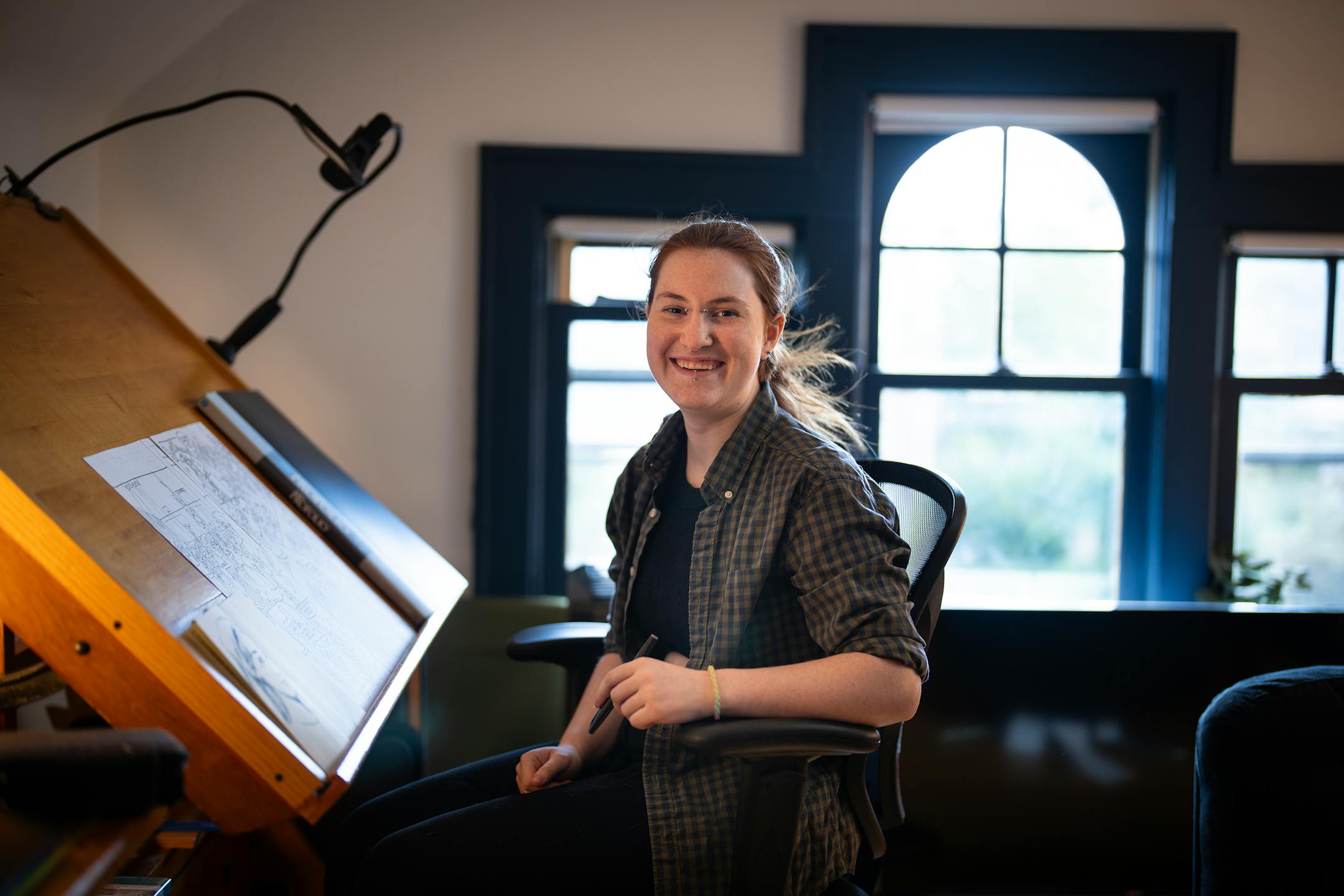
Artist Wren Clinefelter at home in their third-floor studio in south Minneapolis. (Leila Navidi/The Minnesota Star Tribune)

It was much calmer on a July morning in their air-conditioned third-floor studio in south Minneapolis. Studio cat Wisty, a tabby, gently rubbed up against Clinefelter’s legs. Rather than warm up for the day by drawing portraits based on images from their Pinterest (“the algorithm knows me,” they said), they started drawing the cat.

The warm-up sessions are important, especially when it comes to the sort of live portraiture events they’ve started exploring since graduating with a BFA in comic illustration.

Artist Wren Clinefelter draws a portrait of their cat Wisty on a digital drawing tablet. (Leila Navidi/The Minnesota Star Tribune)

“People would come stand behind me and watch me work,” Clinefelter said. “That was something I had some experience of. In elementary school, people would be like: ‘Can you draw me?’ And then a crowd of people would gather around my desk. It was very surreal ― it’s like wow, I’m doing the same thing I was doing in third grade, but I’m getting paid to do it.”

about the writer

about the writer

Alicia Eler

Critic / Reporter

Alicia Eler is the Minnesota Star Tribune's visual art reporter and critic, and author of the book “The Selfie Generation. | Pronouns: she/they ”

See Moreicon

More from Stage & Arts

See More
card image