

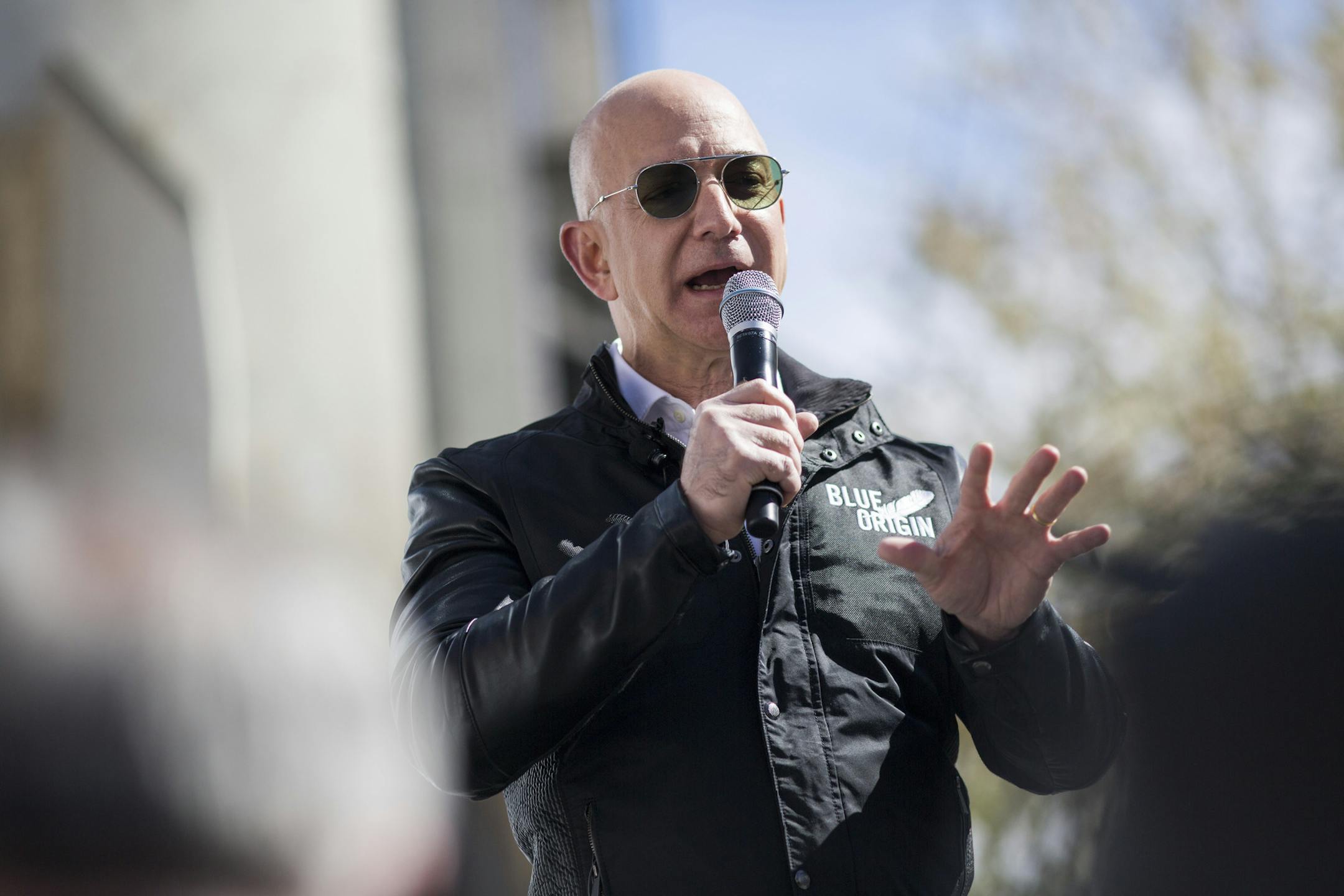
On June 16, in a move that shook the grocery industry, Amazon agreed to purchase Whole Foods for $13.7 billion. Yet just a day before, Jeff Bezos, Amazon's founder (and the owner of the Washington Post, where this article first appeared), made an announcement that could prove an even greater disruption to a different sector: philanthropy. Bezos' philanthropic activity has been surprisingly modest, at least relative to his vast wealth; the Whole Foods revelation boosted his net worth and vaulted him into second place in Forbes' rankings of the world's billionaires.
But in a tweet, Bezos hinted that he was reassessing his "philanthropy strategy" and asked his more than 222,000 followers for advice on how to implement it. His goal was particularly striking, different from the long-term investments — in the Post and in Amazon, for instance — that had occupied much of his time. For his giving, he sought a "short term" focus. "I want much of my philanthropic activity to be helping people in the here and now … at the intersection of urgent need and lasting impact," he declared. Bezos cited a homeless shelter in Seattle, Mary's Place, to which Amazon recently granted rent-free space in one of its headquarters buildings, as an example.
For many within the philanthropic sector, which I study, this was crazy talk. Philanthropists are supposed to pursue "systems change," long-term impact and the extirpation of root causes. Think, for instance, of Mark Zuckerberg and Priscilla Chan's $3 billion effort to cure "all disease in our children's lifetime." As one philanthropic consultant insisted in an online column in Forbes, short-term giving has never led to lasting social change, and Bezos' flawed strategy is based on a "longing for instant personal gratification that clouds judgment." Or as another Forbes writer argued, "The problem with the short-term perspective is that it positions philanthropy as charity rather than a mechanism for shaping a more just, equitable world."
For at least a millennium, charity — the effort to relieve immediate suffering through alms giving or corporeal works of mercy — was understood to be the way to use material resources to do good in the world. Yet by the 16th century, as the ranks of the poor grew throughout Europe, many commentators from a rising mercantile elite began to insist upon traditional charity's inadequacies. By the time modern philanthropy emerged at the turn of the last century in the United States, with large-scale fortunes channeled into private foundations, its champions declared its supremacy over charity.
Whereas charity was wasteful and prompted by sentimental impulses, modern philanthropy would be efficient. Whereas charity tended to symptoms, philanthropy would address root causes. Charity's imperatives were religious, while philanthropy borrowed its logic from the laboratory and the boardroom. Charity was parochial, while modern philanthropy would turn its attention to regional, national and even global problems. Charity might temporarily improve the condition of the poor, but philanthropy would abolish poverty itself.
That critique has kept much of its power in the present day. Many of the most sophisticated analysts of contemporary philanthropy maintain that it must root its legitimacy in a willingness to take risks and maintain a long-term vision; that is, it must distinguish itself from charity, as well as from government and the private sector.
But Bezos' tweet is one intimation that charity might be making a comeback. This probably won't mean that homeless shelters around the nation will soon be flush with money. But it does suggest a mounting challenge to philanthropy's moral hegemony by a powerful, alternative ethic.
One of the reasons for the possible rehabilitation of charity is especially paradoxical, given philanthropy's technocratic pretensions. Over the past decade, as groups have become more sophisticated at assessing the impact of their work, and as digital payment systems have advanced throughout the developing world, a number of carefully designed field experiments have affirmed the effectiveness of unconditional cash transfers to the poor. Such charitable transfers challenge assumptions, dating back centuries, that impoverished recipients will squander money given directly to them. It turns out that the poor often know much better than outside experts how to improve their own condition.


