

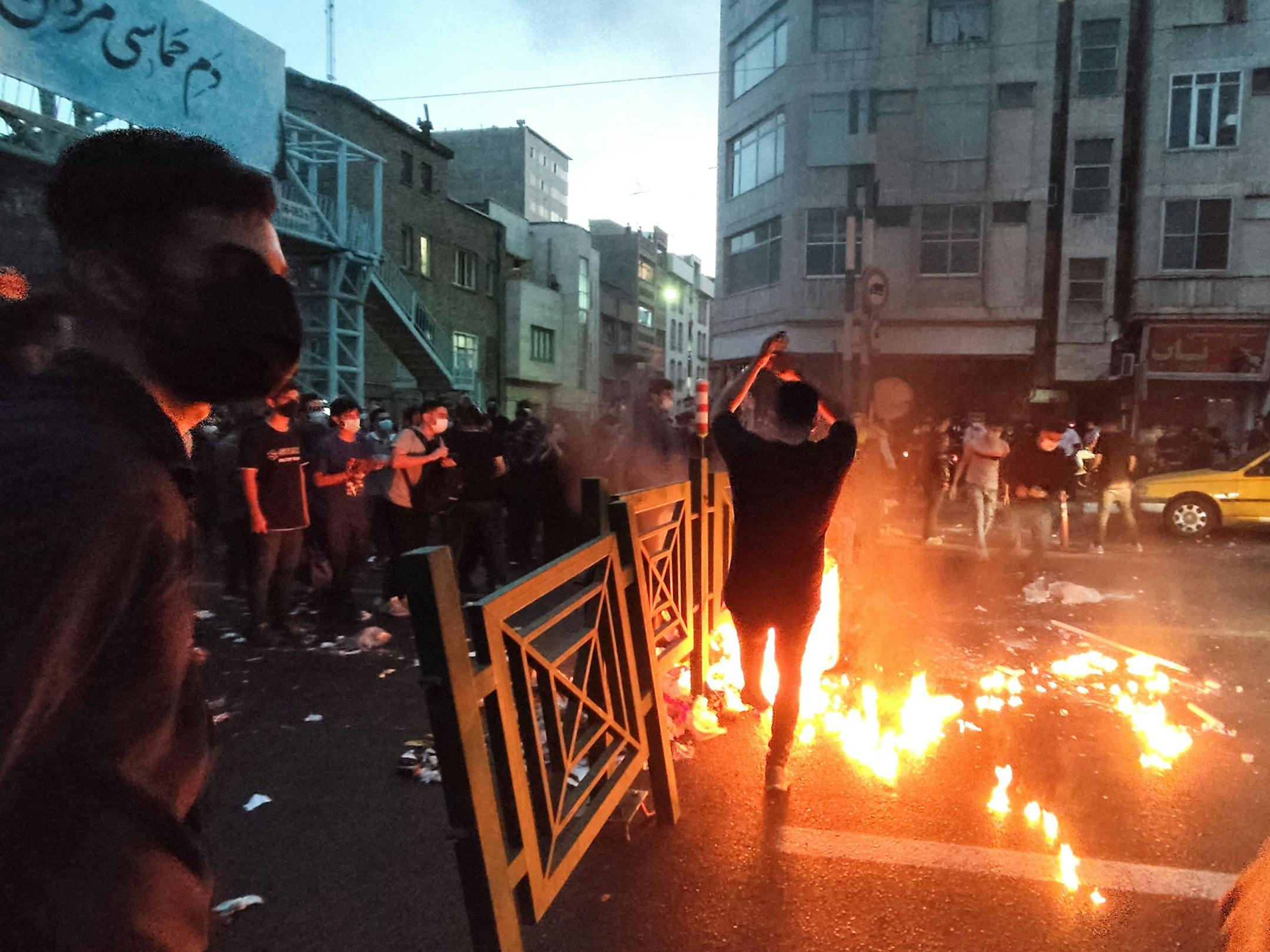
The Iranian regime's brutal killing of 22-year-old Mahsa Amini — who was reportedly brutally beaten after she was detained for showing too much hair — has triggered nationwide protests, led by the nation's granddaughters against the grandfathers who have ruled their country for over four decades.
It's premature to assess whether these protests will meaningfully change Iran's politics, or whether they are simply another crack in the edifice of a rotting regime whose lone source of diversity is whether the beards and turbans of its ruling men are black or white. Yet one conclusion can already be drawn: Amini's killing, and Iranian society's response to it, should permanently alter how the outside world interacts with Iranian officials.
And that shift in awareness should also include a fundamental reassessment of its own Iran policy by the Biden administration.
Amini's case was not isolated. According to human rights groups, every year millions of women are stopped and harassed in Iran for "improper hijab," and numerous Iranian women are serving double-digit prison sentences for refusing to veil. This system of institutionalized violence has little to do with presumed Iranian religious traditions; authentic cultural norms don't need to be imposed by the threats of a police state.
Compulsory hijab is one of the three remaining ideological pillars of Iran's theocracy, along with "Death to America" and "Death to Israel."
That helps to explain why the regime is so loath to take a soft line on the issue of dress codes. Iran's supreme leader, Ayatollah Ali Khamenei, clearly believes that compromising on the regime's ideological pillars — including hijab — will only hasten its collapse.
"If we want to prevent our society from being plunged into corruption and turmoil," Khamenei has said, "we should keep women in hijab." It is a product of the same mentality that blames female sexual assault victims for dressing immodestly. Such antiquated views deserve no deference, whether espoused from Texas, Tokyo or Tehran.
The week of Amini's death, CBS News correspondent Lesley Stahl interviewed hard-line President Ebrahim Raisi, who predictably raised doubts about the Holocaust and denied his well-documented role as a hanging judge who sentenced thousands of dissidents to death in the summer of 1988. Stahl wore a headscarf throughout the interview and admitted: "I was told how to dress, not to sit before he did, and not to interrupt him." These outmoded rules of engagement should no longer be acceptable.


