

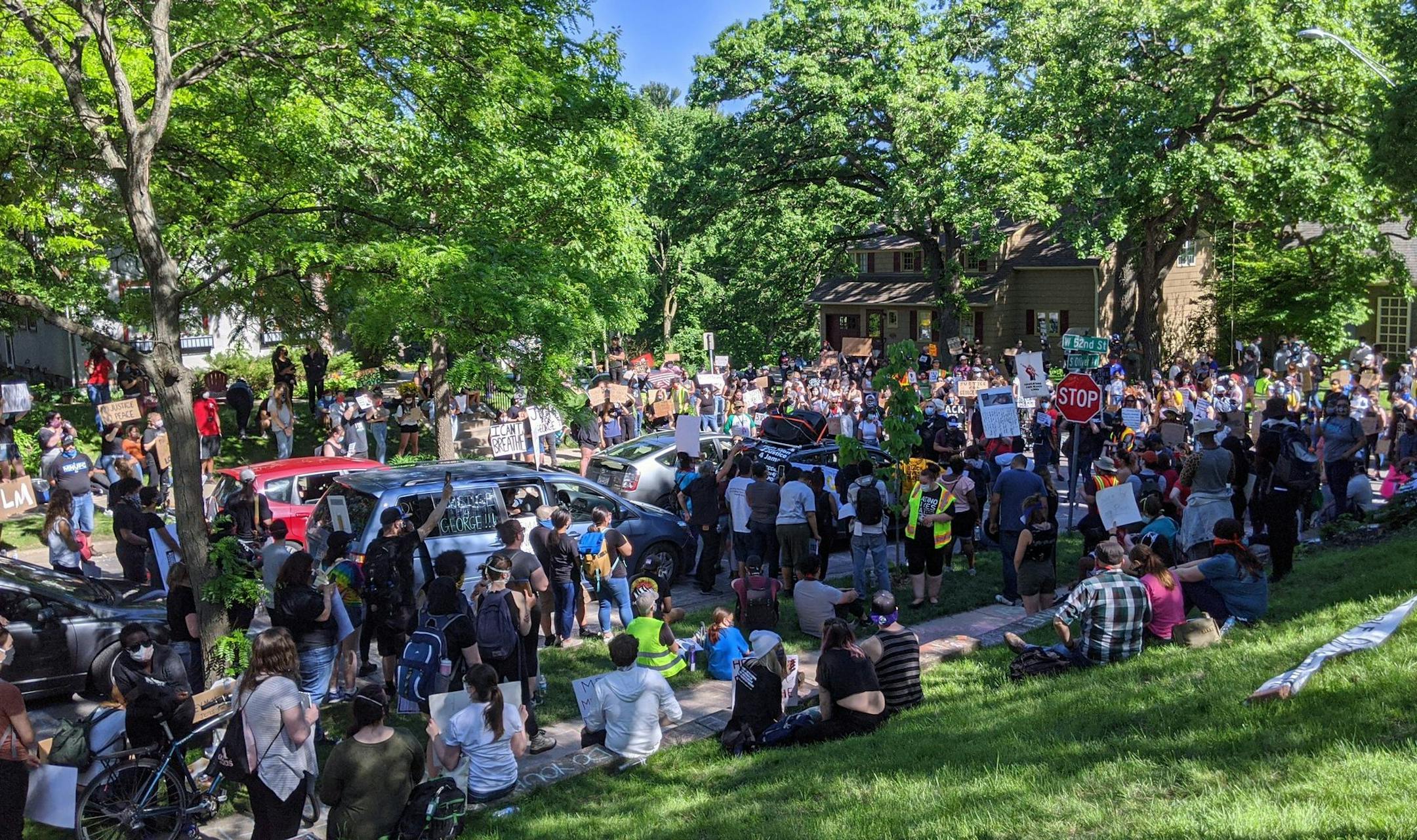
What do Mayor Jacob Frey, Hennepin County Attorney Mike Freeman, Hennepin County Commissioner Marion Greene, numerous Minneapolis City Council members, Minneapolis Charter commissioners, past Minneapolis school board candidates and ex-Minneapolis Police Federation President Bob Kroll have in common?
Not much, except that they were all recent targets of crowd swarms near their private homes. Or former homes in the case of Freeman, who quickly moved from Lynnhurst in southwest Minneapolis due to alleged vandalism and earsplitting "surprise parties" on his block. ("After protests, Freeman got protection and sold his home," April 2).
There is nothing illegal about these visits in their simplest, safest form. It's a guaranteed right in many respects and necessary in certain circumstances, such as a pandemic lockdown allowing no in-person assemblies.
But these kinds of direct attacks have been escalating in frequency and intensity for years, particularly in our progressive political era in Minneapolis.
To this armchair observer, the act (or activism) is getting tiresome and physically, and philosophically, dangerous. It's also comically counterproductive if someone calls the cops to break up an "abolish-MPD" action.
Minnesotans seemed to get a chuckle over three nonwhite City Council members hiring private security for protection during a police defunding debate. I'm not amused.
My neighboring South Side council members, Andrea Jenkins and Alondra Cano, who share the deep stewardship pains of George Floyd Square along their common ward boundary on Chicago Avenue, have taken some very bold steps and faced agonizing choices under extreme stress. I may call their decisions nuanced. You may call them flip-flops. We should not call these servants heartless ghouls and race traitors, or threaten these highly accomplished women and their families for trying their best to fulfill a solemn duty to all the people all the time.
In 2021, we're sure to lose some of the unlucky 13 council members. For all their imperfections (details available on request), we may not be better off for losing institutional experience we have too little of already.


