

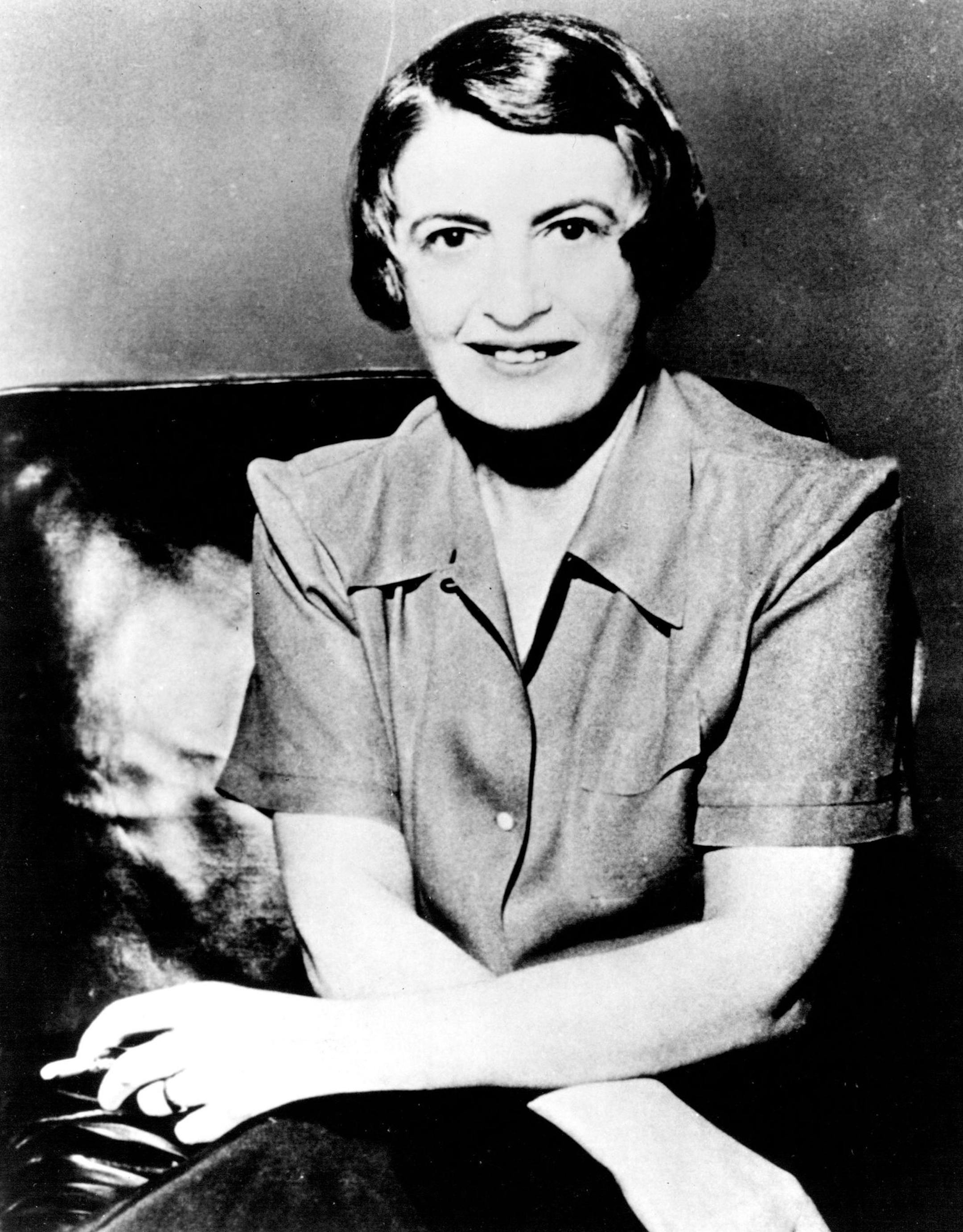
Ayn Rand is dead. It's been 35 years since hundreds of mourners filed by her coffin (fittingly accompanied by a dollar-sign-shaped flower arrangement), but it has been only four months since she truly died as a force in American politics.
Yes, there was a flurry of articles identifying Rand lovers in the Trump administration, including Rex Tillerson and Mike Pompeo. Yes, Ivanka Trump tweeted an inaccurate Rand quote in mid-February. But the effort to fix a recognizable right-wing ideology on President Trump only obscures the more significant long-term trends that the election of 2016 laid bare.
However much Trump stylistically seems like the Rand hero par excellence — a wealthy man with a fiery belief in, well, himself — his victory signals the exhaustion of the Republican Party's romance with Rand.
In electing Trump, the Republican base rejected laissez-faire economics in favor of economic nationalism. Full-fledged objectivism, the philosophy Rand invented, is an atheistic creed that calls for pure capitalism and bare-bones government with no social spending on entitlement programs such as Social Security or Medicare. It's never appeared on the national political scene without significant dilution. But there was plenty of diluted Rand on offer throughout the primary season: Marco Rubio, Rand Paul, Carly Fiorina and Ted Cruz all espoused traditional Republican nostrums about reducing the role of government to unleash American prosperity.
Yet none of this could match Trump's full-throated roar to build a wall, or his protectionist plans for American trade. In the general election, Trump sought out new voters and independents, using arguments traditionally associated with Democrats: deploying the power of the state to protect workers and guarantee their livelihoods, even at the cost of trade agreements and long-standing international alliances.
Trump's economic promises electrified rural working-class voters the same way Bernie Sanders excited urban socialists. Where Rand's influence has stood for years on the right for a hands-off approach to the economy, Trump's "America first" platform contradicts this premise by assuming that government policies can and should deliberately shape economic growth, up to and including punishing specific corporations. Likewise, his promise to craft trade policy in support of the American worker is the exact opposite of Rand's proclamation that "the essence of capitalism's foreign policy is free trade."
And there's little hope that Trump's closest confidants will reverse his decidedly anti-Randian course. The conservative Republicans who came to power with Trump may find they have to exchange certain ideals to stay close to him. True, Paul Ryan and Mike Pence have been able to breathe new life into Republican economic and social orthodoxies. In a nod to Pence's religious conservatism, Trump shows signs of reversing his earlier friendliness to gay rights. His opposition to Obamacare dovetails with Ryan's long-held ambitions to shrink federal spending.
Even so, there is little evidence that either Pence or Ryan would have survived a Republican primary battle against Trump or fared well in a national election; their fortunes are dependent on Trump's. And the president won by showing that the Republican base and swing voters have moved on from the traditional conservatism of Reagan and Rand.


