

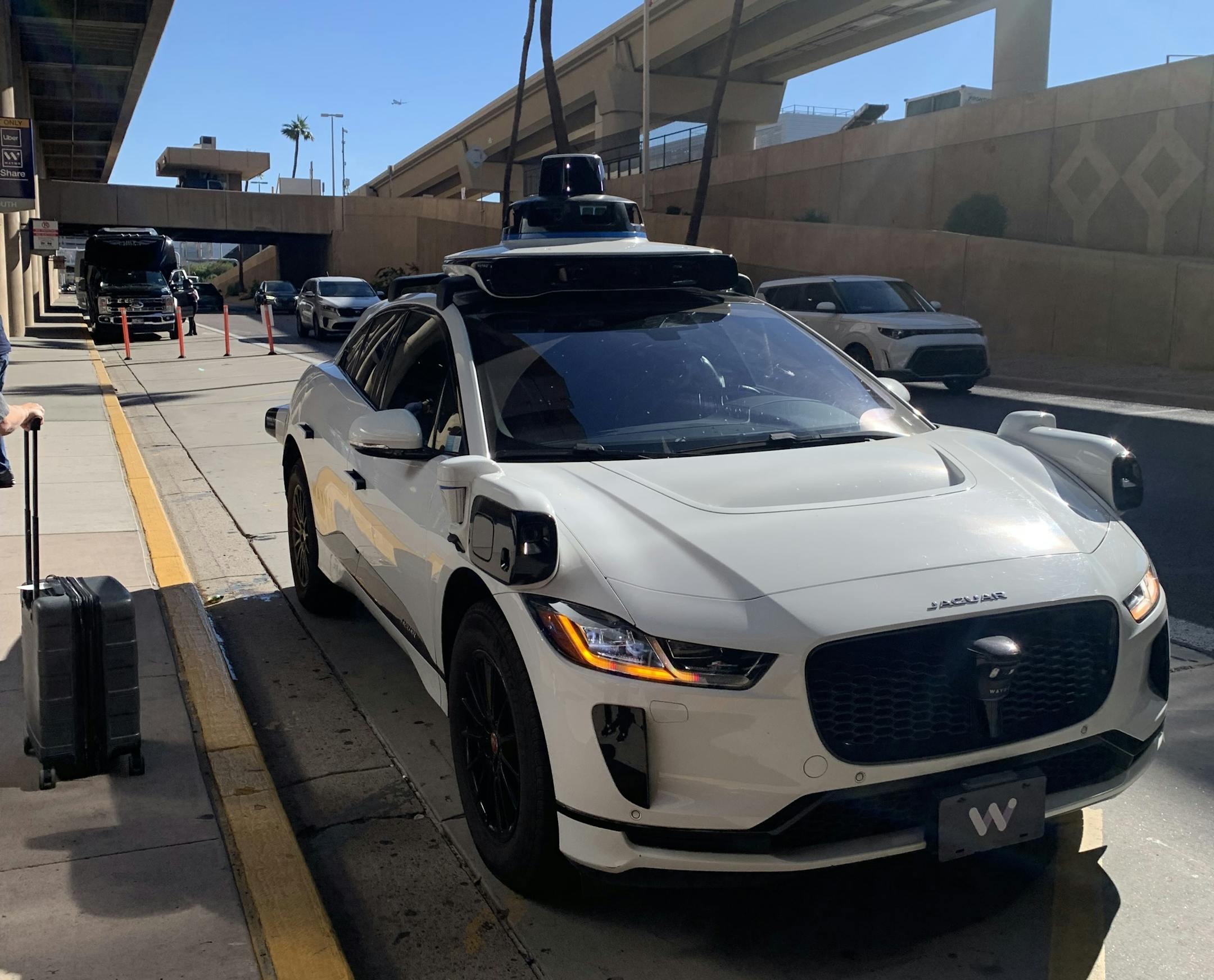
A few weeks ago, after landing at the Phoenix airport for a journalism conference, our tech-adventurous editor suggested we take a Waymo to our hotel.
Little did we know that Alphabet’s driverless ride-share cars would soon expand to Minneapolis, and we’d be previewing our city’s future.
We had lots of questions. How would we hail it? What would it feel like to be driven by a ghostly chauffer? And, most importantly, would we die in a fiery crash?
Requesting a Waymo
The Waymo app was easy to use and told us our car would arrive in about seven minutes. After checking the route, our editor reassured us that we wouldn’t be driving on a freeway — although Waymo cars do in some cases.
Waymo pickup
We waited for our Waymo in the ride-share pick-up area. Like Uber or Lyft, the Waymo app shows the location and ETA for its cars — all-electric, white Jaguars equipped with sensors and cameras. Seemingly identical Waymos swarmed the curb. Fortunately, our editor noticed one with her initials displayed on one car’s roof, where a taxi’s light would be.
The app warned us we would have five minutes to start our ride after the car arrived. We unlocked the doors from the app and lifted our roller bags into the trunk, a task that some riders might find difficult without a human driver’s help.
We were greeted by a friendly, robotic “Hello” and music that resembled a yoga-class playlist as we climbed in. Waymos can accommodate up to four riders; no one can sit in the driver’s seat. There was plenty of legroom in the back because our nonexistent driver had the seat pulled forward.
We punched a button to begin our ride, and the steering wheel started spinning. Any fears we had about fiery crashes were quickly abated as our cautious chaperone putted along at about 20 mph.


