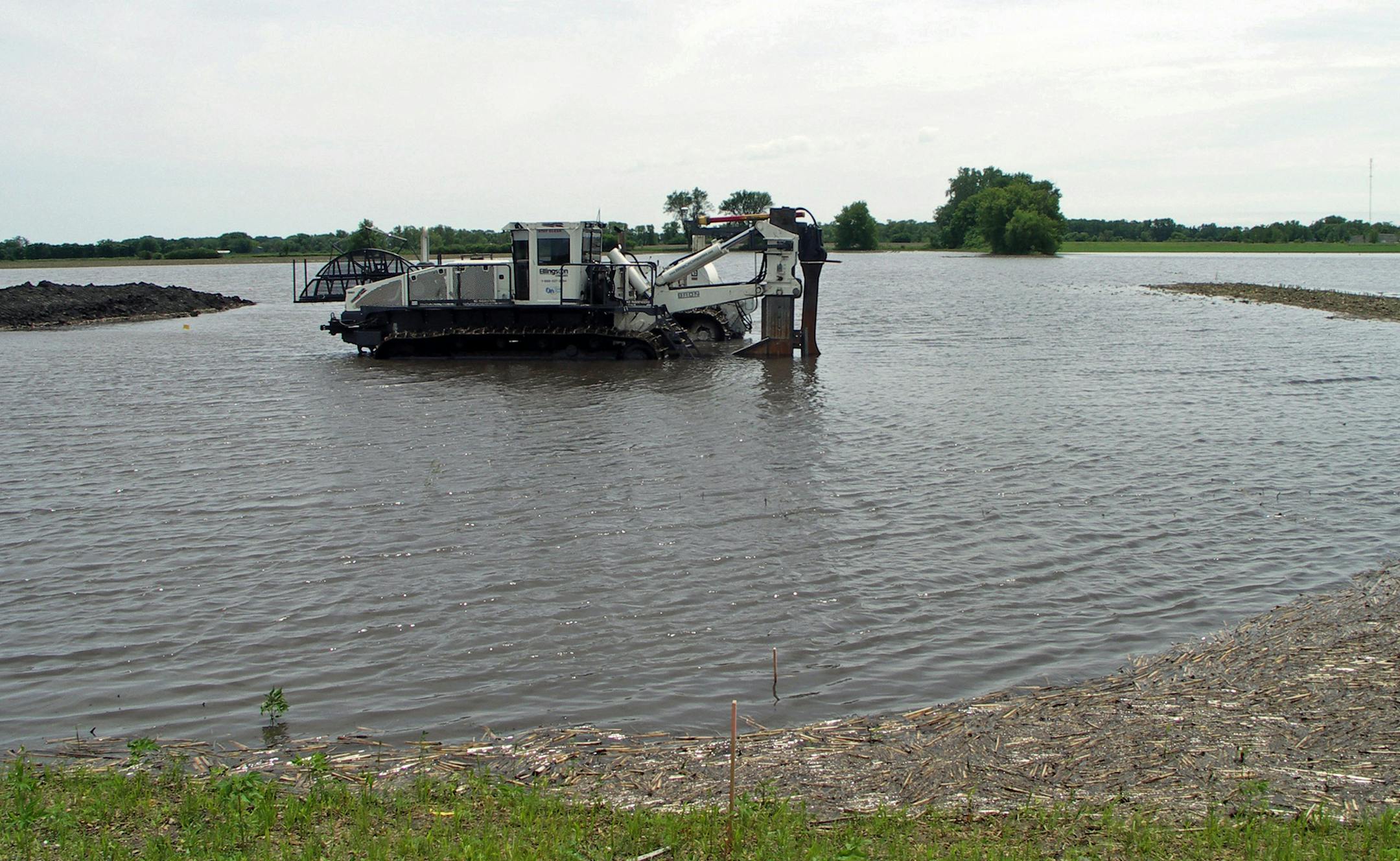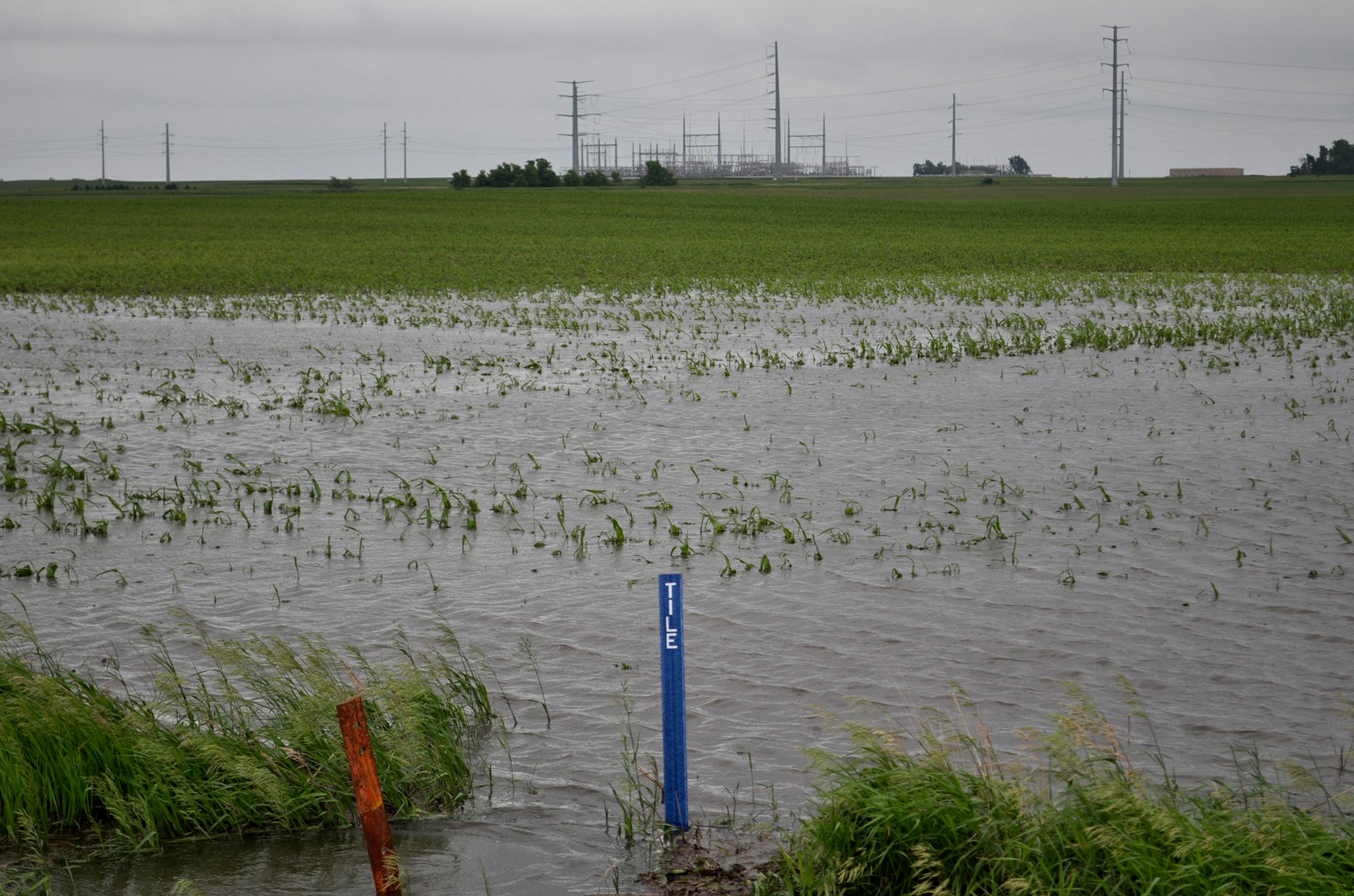
Minnesota farm fields have a serious water problem, and it's not drought.
More than half of the state's farm fields — 53 percent — have surplus topsoil moisture, and 49 percent have surplus subsoil moisture, according to a weekly U.S. Department of Agriculture report on Minnesota crop conditions released Monday.
"Conditions declined for all crops during the week as a result of excess moisture and standing water," the report said. "Many farmers have been unable to get equipment into their fields, delaying fertilizer and chemical application."
Most crops are in the ground, but 35 percent of the corn and 41 percent of soybeans are in very poor, poor or fair condition, the report said.
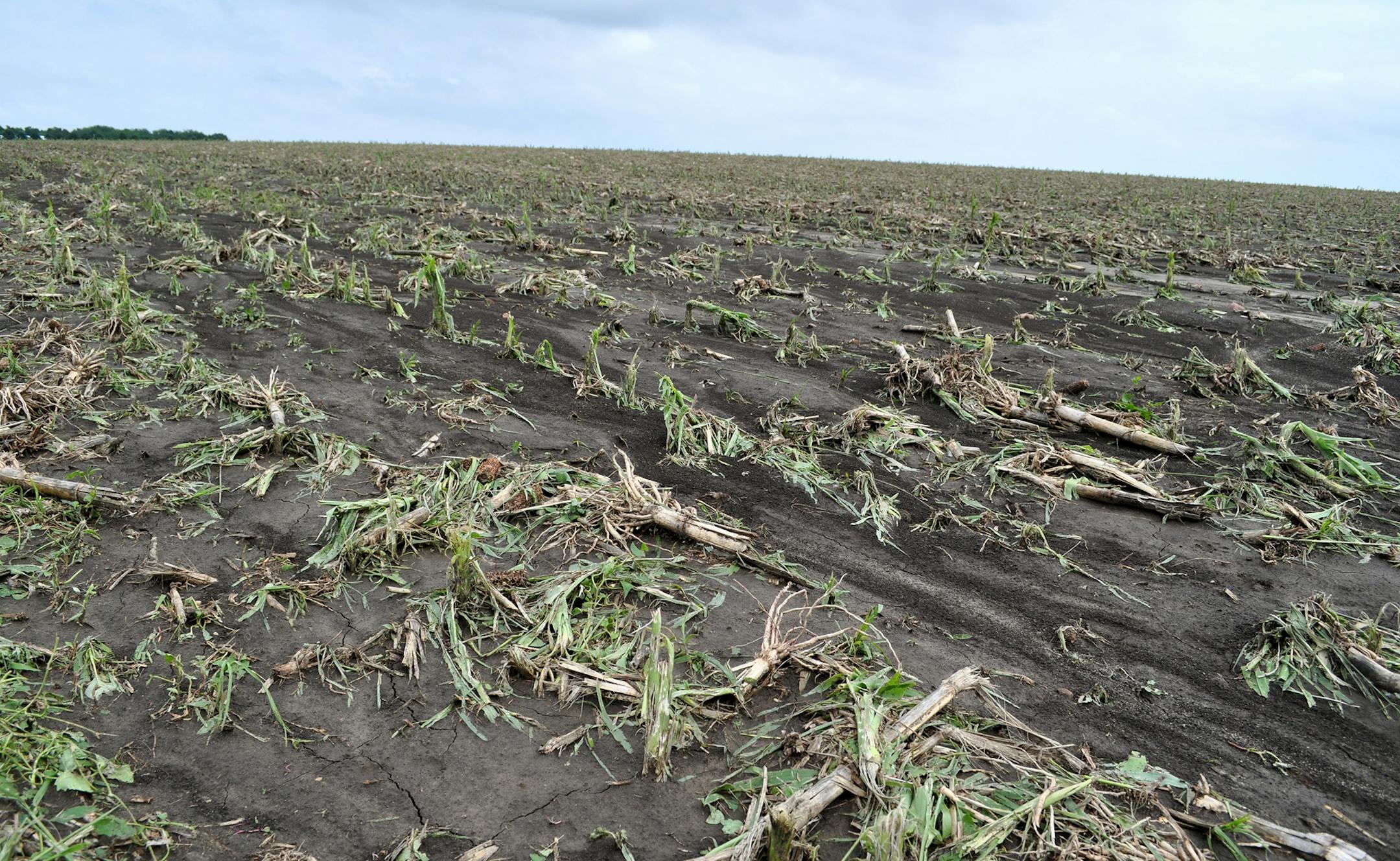
That's no surprise to state Agriculture Commissioner Dave Frederickson, who has toured some of the areas in southern Minnesota with crop damage. It's still too early to know how many acres across the state have been affected, he said, but Rock County in southwestern Minnesota is certainly one of the worst, with 100,000 of its 250,000 tillable acres destroyed or severely damaged by flooding and hail.
"It is devastating," Frederickson said. "Soybean fields where you could normally see green rows now look like a plowed field: totally black. Corn had a little bit of a stalk sticking out on some of the most severely damaged areas or not there at all, just pounded into the dirt. So that's done."
The challenge facing farmers is that it is too late to replant corn because of its long growing season, and almost too late to replant soybeans, Frederickson said.
He estimated that between 80 and 90 percent of farmers in the damaged areas are covered by some form of crop insurance. "That is not an incentive to lose a crop," Frederickson said, but the insurance payments in most cases should be enough to cover the cost of seed, fuel and fertilizer needed for 2015 planting. "Basically it's kind of marching in place and waiting for the next year so you're not going to be forced out of business because you had a bad year," he said.