

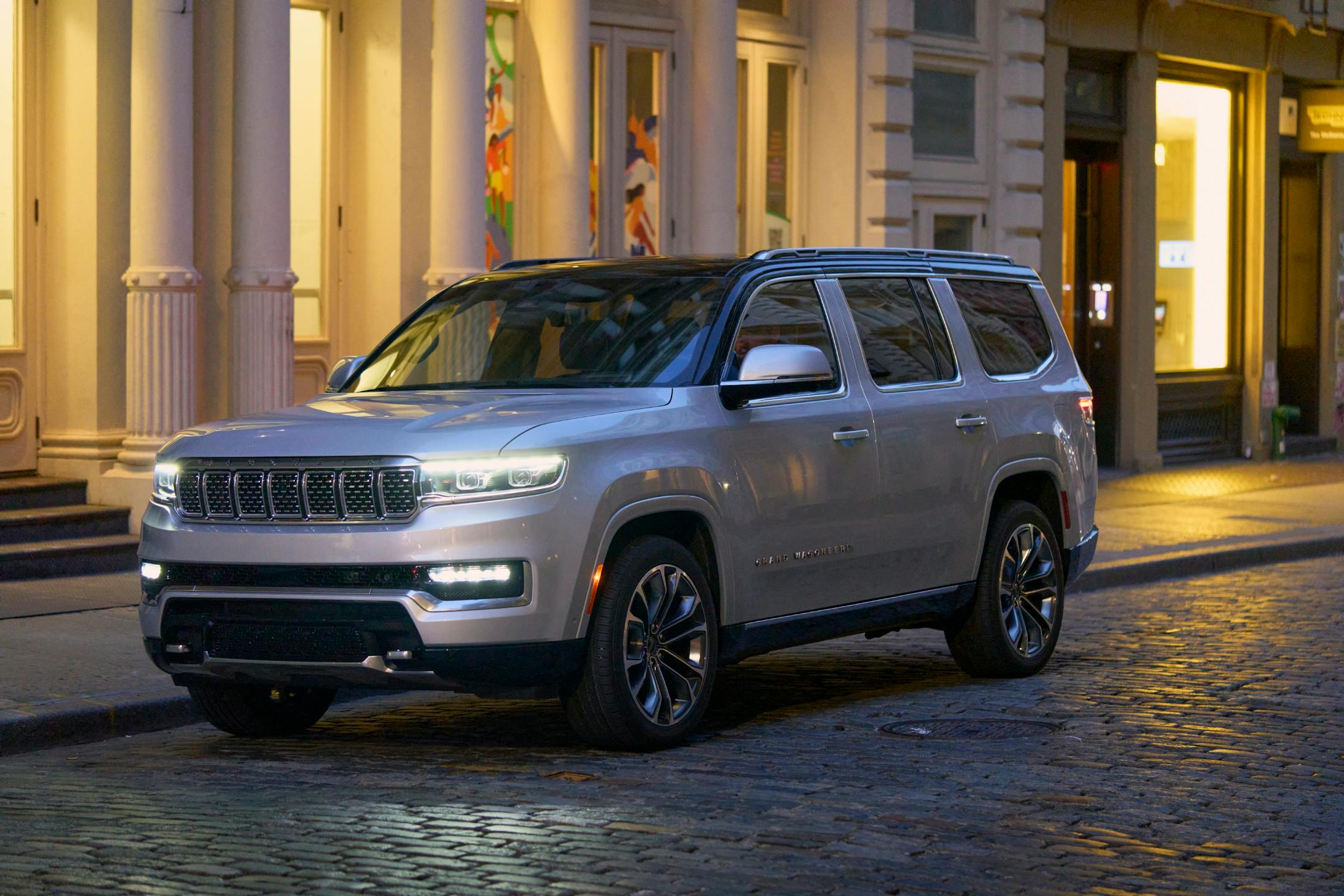
As if semiconductor shortages and COVID-19 hadn't driven car prices high enough, automakers are ratcheting up a hidden charge most shoppers are unaware of — and which nobody seems to understand.
Meet the destination charge, also known as the second-to-last line on the window sticker, a shipping charge with an asterisk for $2,000 on a new Jeep Grand Wagoneer.
If you're a car dealer, the first rule of what's called a destination charge seems to be: "Don't talk about destination charges."
This much is clear, though: These fees are rising faster than inflation, and they tend to be higher on vehicles for which there's high demand — like pickups and SUVs. Slower-selling vehicles, like sedans, have lower destination charges, and see fewer increases.
The destination charge is not included in the manufacturer's suggested retail price, or MSRP — the price automakers and dealers advertise.
"Some automakers use destination fees to increase revenue in a way shoppers don't notice till late in the buying process," said Mike Monticello, Consumer Reports' senior manager of road tests and reviews. "We think there should be rules to include the destination fee in the advertised price, not below it in a footnote."
Neither the automakers nor dealers contacted for this column would discuss what goes into setting destination charges.
Destination charges were relatively stable for years, but Consumer Reports found they increased at 2.5 times the rate of inflation since 2011, from an average $839 to $1,244.


