

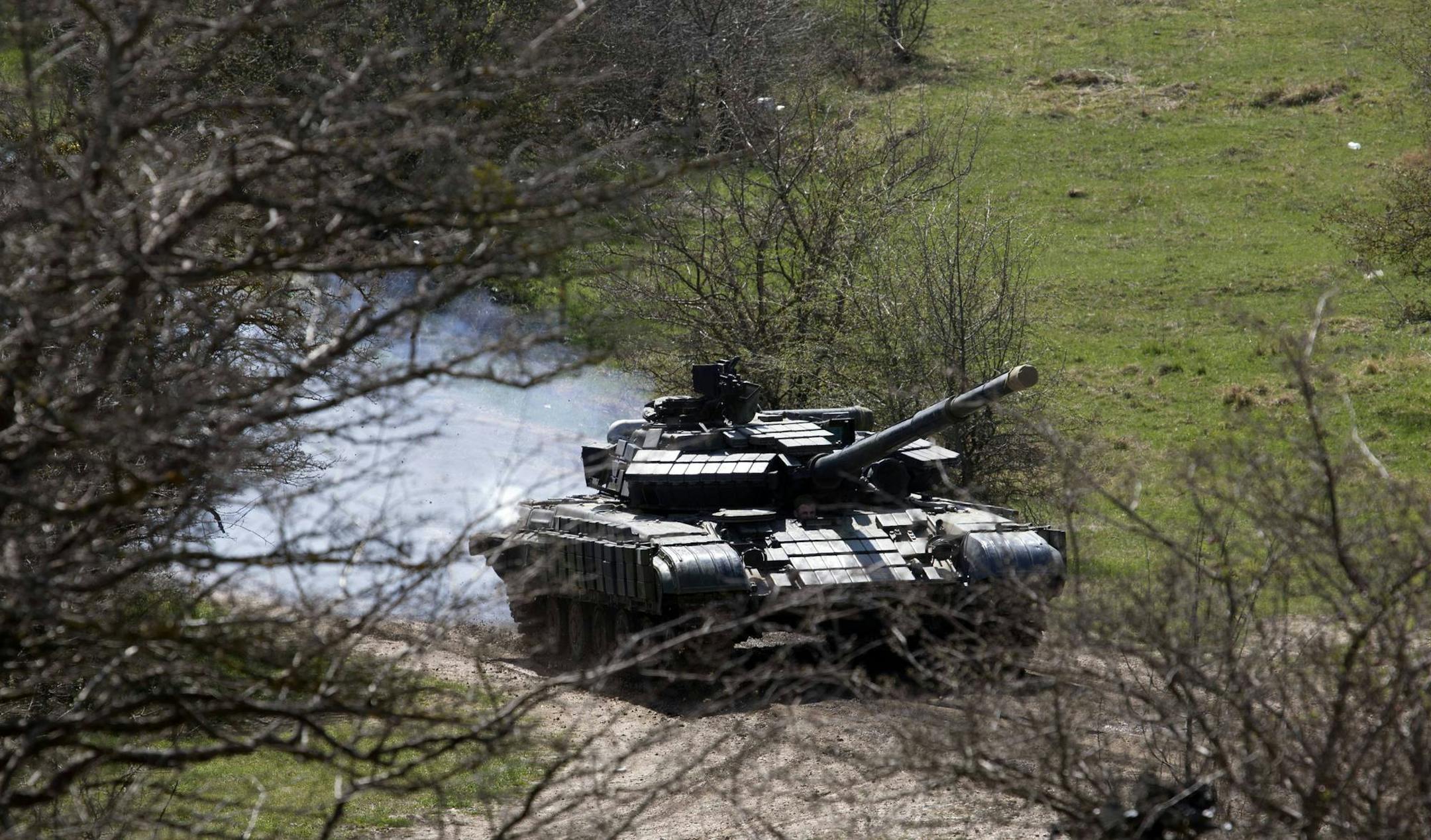
Vladimir Putin's invasion and annexation of Crimea was highly objectionable by itself, but it raised even worse possibilities. What if it was merely the opening move in a sustained effort to bring areas that were part of the Soviet Union back under Moscow's control?
Eastern Ukraine could be next, or Moldova. Even the Baltic states, Lithuania, Latvia and Estonia, could be in his sights.
The danger gained new urgency over the weekend as protesters waving Russian flags occupied government buildings in the eastern Ukrainian cities of Donetsk, Kharkiv and Luhansk, demanding a referendum on joining Russia and asking Putin to send troops. Ukrainian President Oleksandr Turchynov said the takeovers were a Russian operation to "topple Ukrainian authorities, disrupt the elections and to tear our country apart."
If Putin intends to grab another chunk of Ukraine, it would be hard to stop him. NATO commander Gen. Philip Breedlove said last week that the Russian forces massed next door could move in on short notice and carry out that mission in a matter of days. The brutal fact of life is that neither NATO nor the United States has made a commitment to respond militarily to an attack on Ukraine, and they probably won't make one now.
But if Putin assumes he can act with impunity against a neighbor in the name of protecting Russian speakers, he should keep a couple of equally stark realities in mind. The first is that Washington has ways of making him regret such actions even without dispatching ground or air forces for combat. The second is that the line excluding Ukraine from NATO's protection emphatically includes those Baltic states.
Some people in the Kremlin may recall that when the Red Army rolled into Afghanistan in 1979, Washington didn't send in the Marines. Instead, the CIA provided help in the form of weapons, communications gear, medicine and money to the insurgents — which helped turn Moscow's easy conquest into a nasty war that eventually drove the Soviets out.
What the U.S. did for those insurgents, it can also do for the rebels who would doubtless resist the Russian invaders in Ukraine. Putin should be under no illusions that he would be allowed to enjoy his victory or tailor the ensuing fight to suit his convenience. How do you say "roadside bomb" in Russian?
As for the Baltic states, he might want to reread Article 5 of NATO's founding document, which declares: "The Parties agree that an armed attack against one or more of them in Europe or North America shall be considered an attack against them all."


