

The jihadists stoning women to death in Mali and taking hostages in Algeria are harbingers of much worse to come. Osama bin Laden may be dead, but al-Qaida in Africa now threatens an area twice the size of Germany.
Mali is just one country in the Sahel, a million square miles of arid and semi-arid countryside stretching from the Atlantic to the Red Sea. The region has always been subject to episodes of starvation and brutal tribal conflicts, and things are now deteriorating further.
Many of the region's problems today can be traced back 20 years, to a decision by the United Nations and other international organizations to shift their focus away from family planning, which we know to be an extremely effective way to empower women and stretch scarce resources.
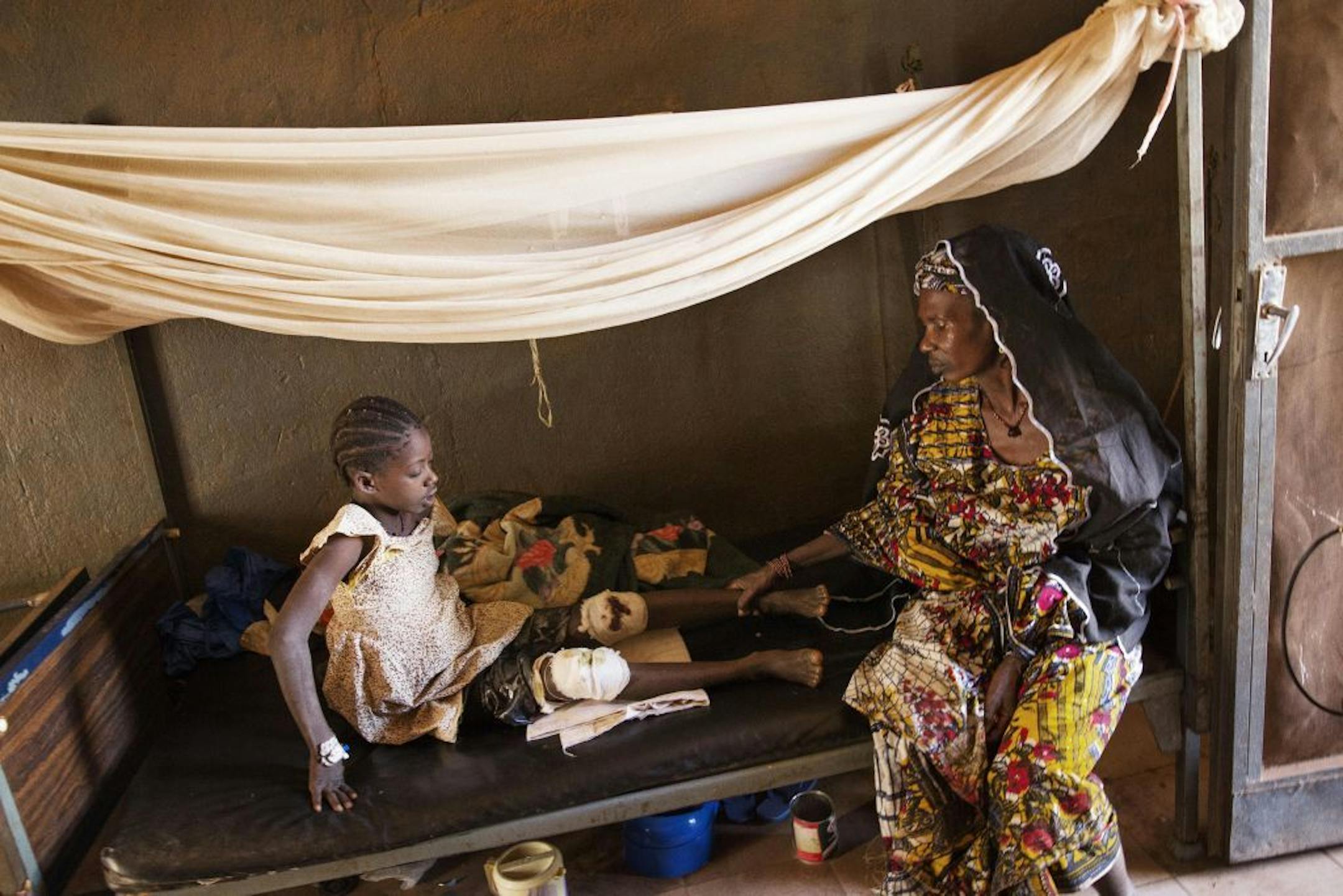
Since then, a variety of agencies have proclaimed their commitment to women's rights, but nothing concrete has been done to change the atrocious treatment of women in places like the Sahel. Girls as young as 10 are married to 40-year-old polygamous men. The obscenity of female genital mutilation is widespread. Women do much of the work, often walking 10 miles a day to collect water. Most are illiterate: In Niger, for example, only one girl in 1,000 completes secondary school.
Twenty years ago in Mali there were 6 million people. Today, there are 16 million, and that number is expected to grow to more than 35 million by 2050. Could that be one reason al-Qaida now controls half the country? The 9/11 Commission investigating the al-Qaida attacks on America 12 years ago called a rapidly increasing population of young men without any reasonable expectation of employment "a sure prescription for social turbulence."
The population of the Sahel as a whole will have increased more than tenfold in a single century, from 31 million people in 1950 to 340 million by 2050. Even with good governance (which the Sahel lacks), it is impossible to provide educational and employment opportunities for populations growing at this rate. As the 9/11 Commission report foresaw, social turbulence in the Sahel is turning into whirlwind of violence.
On top of this already daunting catalog of problems, climatologists at the Lawrence Berkeley National Laboratory project that temperatures in the Sahel will rise by an additional 7 to 10 degrees Fahrenheit by 2050. Crops will wither and livestock will die even as the population continues its rise. The crisis unfolding in the Sahel could become a cataclysm affecting 200 million people.
Without radical new policies, we can be certain that there will be more conflicts, more failed states and more easy pickings for Islamic fundamentalists. The only genuine path to peace in the Sahel is by investing in women. It will be a long, difficult process, but it is not impossible if we start today and on a realistic scale. As a result of the failure to invest in family planning for 20 years, only 8 percent of women in Mali use contraception.


