
Opinion | The National Guard is available. Where is it while ICE operates?

As federal enforcement escalates, civilians are left to witness and absorb the risks.

January 21, 2026 at 7:29PM
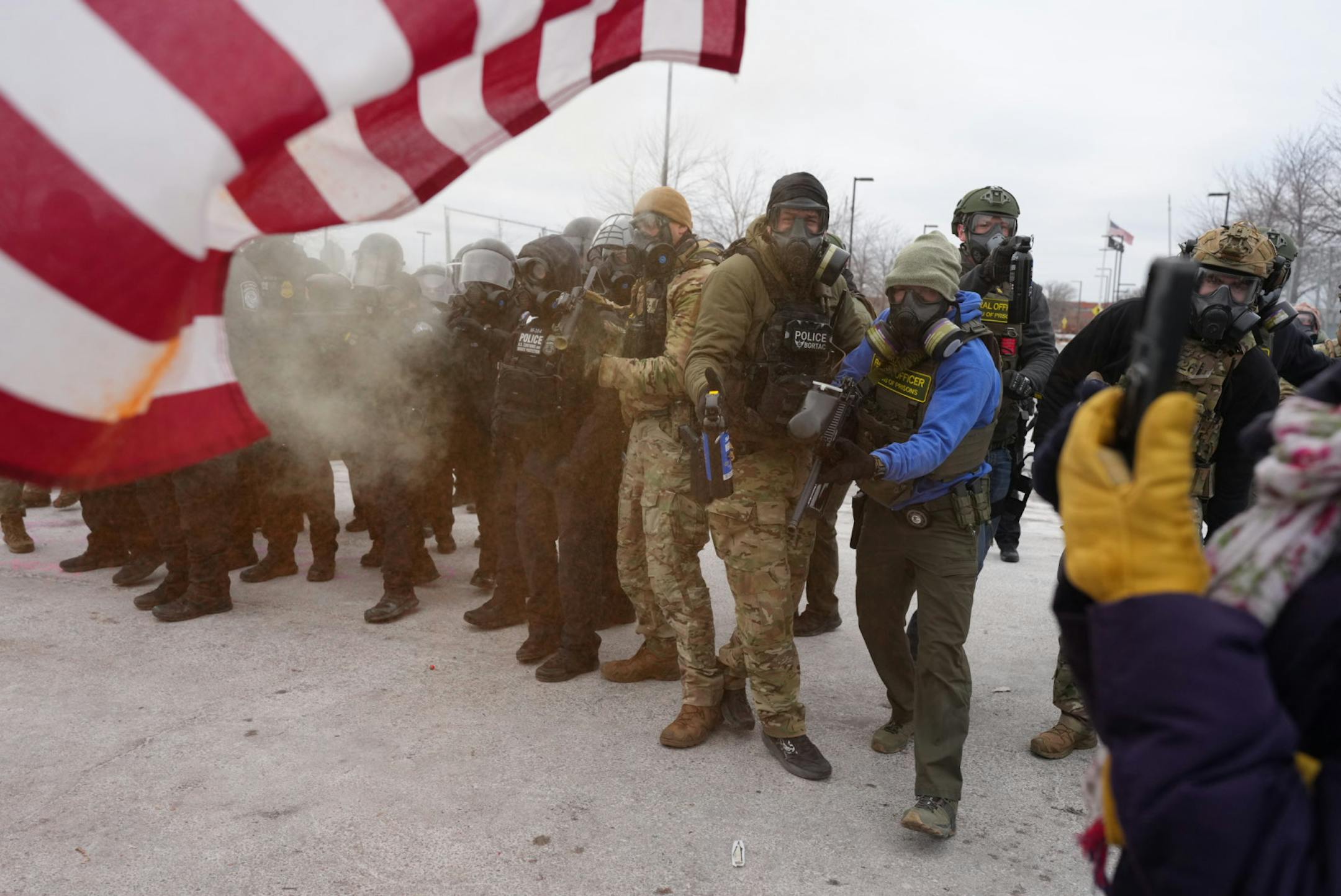
"Residents have been urged to remain calm, protest peacefully and document what they see. While peaceful protest is vital, clashes on the streets, with tear gas and flash bangs, have underscored how volatile this environment is for bystanders," Edward F. Kouneski writes. Above, federal agents deploy a chemical spray toward a group of protesters near the Whipple Federal Building at Ft. Snelling on Jan. 15 as a group of anti-ICE protesters had gathered near the building. (Richard Tsong-Taatarii/The Minnesota Star Tribune)

Opinion editor’s note: Strib Voices publishes a mix of guest commentaries online and in print each day. To contribute, click here.

•••

Residents across the Twin Cities are filming ICE operations because no one else is there to do it.

Gov. Tim Walz has urged people to record what they witness. They have. Neighbors and journalists are documenting encounters as they happen — in streets, near schools, outside homes.

At the same time, the Minnesota National Guard has been mobilized for public order, not for observing or documenting ICE operations where they occur. That leaves civilians to bear the risks of witnessing, documenting and being present when force is used. In practice, that means ordinary people deciding whether to step forward, with no buffer between them and armed federal agents.

But that burden has consequences. It places psychological strain on residents. People calculate whether to film an encounter or keep phones pocketed. Families weigh whether it’s safe to go outside. Parents explain to children why armed agents patrol their neighborhood.

At Roosevelt High School, federal agents appeared near the campus as students were leaving. They deployed chemical irritants and detained a staff member during a chaotic encounter on school grounds. With no official observers present, teachers saw people tackled and described the strain of witnessing aggressive force near students, with no clear authority responsible for their safety.

ICE operations in Minnesota have moved into everyday public spaces. Traffic stops have turned into pursuits. Enforcement actions have expanded to Minneapolis-St. Paul International Airport and into surrounding suburbs.

Federal agents have forcibly entered homes, smashed car windows, knocked people to the ground and carried people away in visible distress.

A 57-year-old Hmong elder and U.S. citizen was taken from his St. Paul home in boxers and Crocs in below-zero cold, guns pointed at his family while his 5-year-old grandson watched, old enough to understand fear, too young to understand why. The man is a friend of the St. Paul mayor, and his detention has reverberated through a community that has just elected a Hmong woman mayor.

Those encounters included two shootings by ICE agents. On Jan. 7, ICE agent Jonathan Ross shot and killed Renee Good on a Minneapolis street. Days later, a man was shot in the leg as tear gas was deployed under an SUV with children inside, sending an infant and toddler to the hospital.

ICE agents also target observers. They follow them home, photograph their houses, knock on their doors, smash car windows and pepper-spray those filming.

A federal judge barred ICE from using force and chemical irritants against peaceful protesters. Within 24 hours, agents violated the order, using chemical irritants at the Whipple Federal Building even as the National Guard stood mobilized but positioned for crowd control rather than observation.

Residents have been urged to remain calm, protest peacefully and document what they see. While peaceful protest is vital, clashes on the streets, with tear gas and flash bangs, have underscored how volatile this environment is for bystanders.

That combination — high-risk federal activity, limited local control and reliance on civilians to serve as witnesses — is not sustainable for public safety or accountability. What’s needed is oversight and restraint, not escalation.

There’s precedent for official observation. Seattle formalized a directive in January requiring officers to respond to immigration-related calls, activate body cameras, verify credentials when feasible and document what they witness — while neither assisting nor interfering with federal operations. Minneapolis could adopt similar protocols, but the Minneapolis Police Department is stretched thin.

The National Guard can provide the observation capacity MPD lacks. Minnesota law allows the governor to deploy the Guard — not just during unrest or disorder. The current situation falls squarely within that authority.

Guard members could be positioned where ICE operates, observing and documenting in situations where residents currently fill that role alone. They would not detain anyone or interfere with federal operations. Beyond observation, the Guard could assist with traffic control, perimeter security, crowd safety, and coordination support, freeing MPD officers for emergency response.

For communities that remember how Guard deployments were used during the unrest after George Floyd’s murder, the distinction matters. That deployment responded to civil unrest; this one addresses a public safety crisis created by ICE operations in residential areas.

Last week, a federal judge limited how federal agents may use force against peaceful observers, but no mechanism exists to enforce those limits. When excessive force is used, there is no immediate consequence.

Accountability requires evidence with a clear chain of custody, which phones alone cannot reliably provide. An organized state presence would change that. Such a presence would reduce the likelihood of chaotic encounters by making clear that state authorities are watching. It would create a reliable record from trained personnel rather than leaving that burden entirely to civilians. It would make clear that residents are not expected to serve as witnesses on their own.

Families who never expected to be caught in the middle of ICE operations are now bearing the cost of this violence.

Whether ICE operations continue for weeks, or months or move to other cities, official observation matters. For the people living through this. For prosecuting ICE agents who break the law. For the historical record.

The Guard is available. Put it where it’s needed.

Edward F. Kouneski is a psychologist emeritus and Minneapolis-based writer with a doctorate in family social science from the University of Minnesota.

about the writer

about the writer

Edward F. Kouneski

More from Commentaries

See More
card image
Richard Tsong-Taatarii/The Minnesota Star Tribune

As federal enforcement escalates, civilians are left to witness and absorb the risks.

card image
card image