
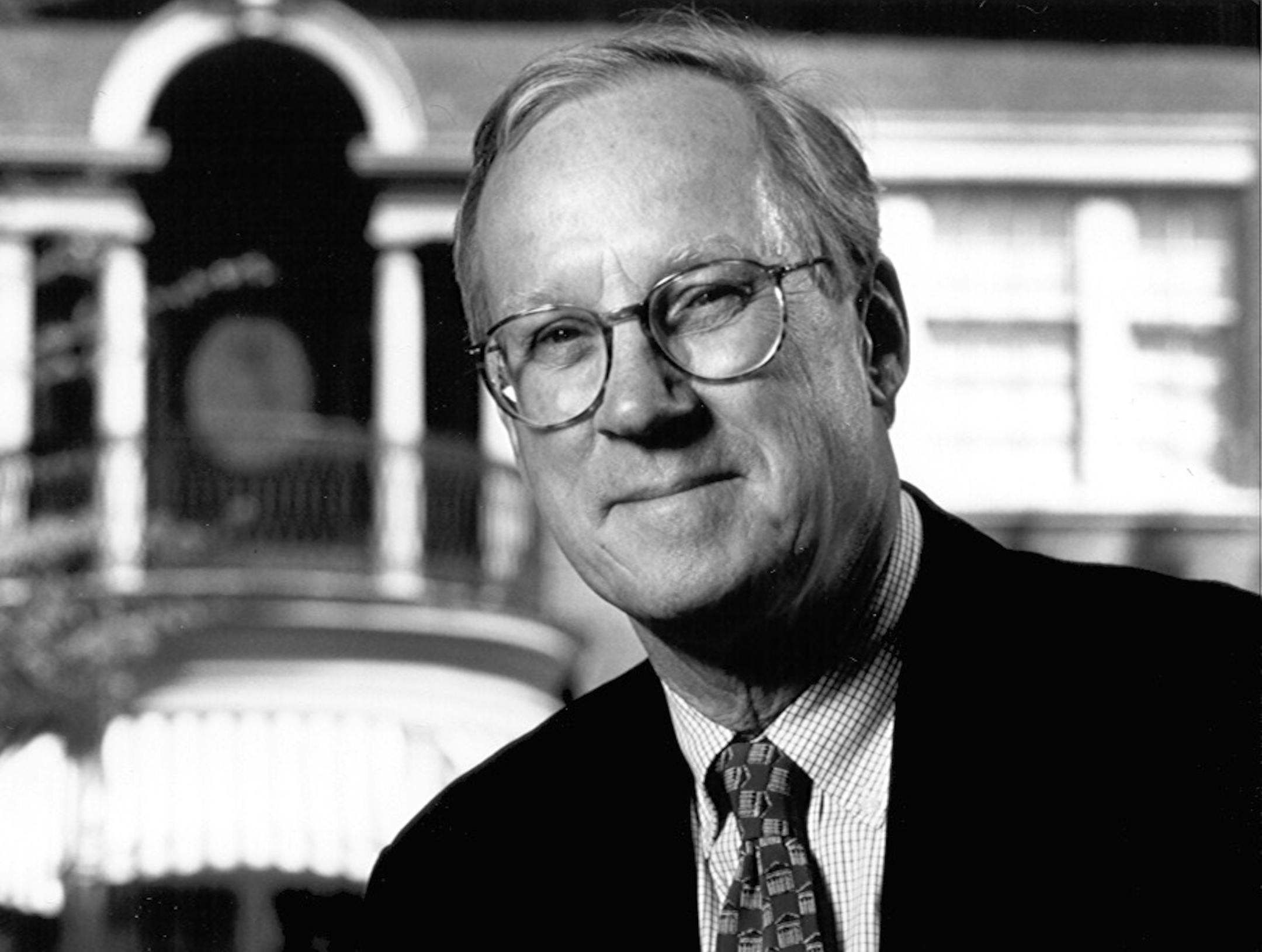
Richard Moe, Walter Mondale’s right-hand man and leader in historic preservation, dies at 88

The Duluth native and University of Minnesota Law School alumnus helped transform the vice president’s role when he was Mondale’s aide in the 1970s.

The Minnesota Star Tribune
September 25, 2025 at 9:32PM
Richard Moe, who served as president of the National Trust for Historic Preservation from 1993 to 2009. (Handout)

Richard Moe, a DFL Party stalwart who served as Vice President Walter Mondale’s chief of staff and went on to lead the National Trust for Historic Preservation for nearly two decades, died on Sept. 15 at Grand Oaks Assisted Living in Washington, D.C., of complications from Parkinson’s disease. He was 88.

Moe helped Mondale draft a memo that would change the vice presidency, proposing a partnership with President Jimmy Carter that would provide intelligence briefings, a weekly lunch with the president and his own office in the West Wing, steps away from the Oval Office.

No previous vice president had been granted those privileges, but every one since has had them. Moe was key in establishing that relationship.
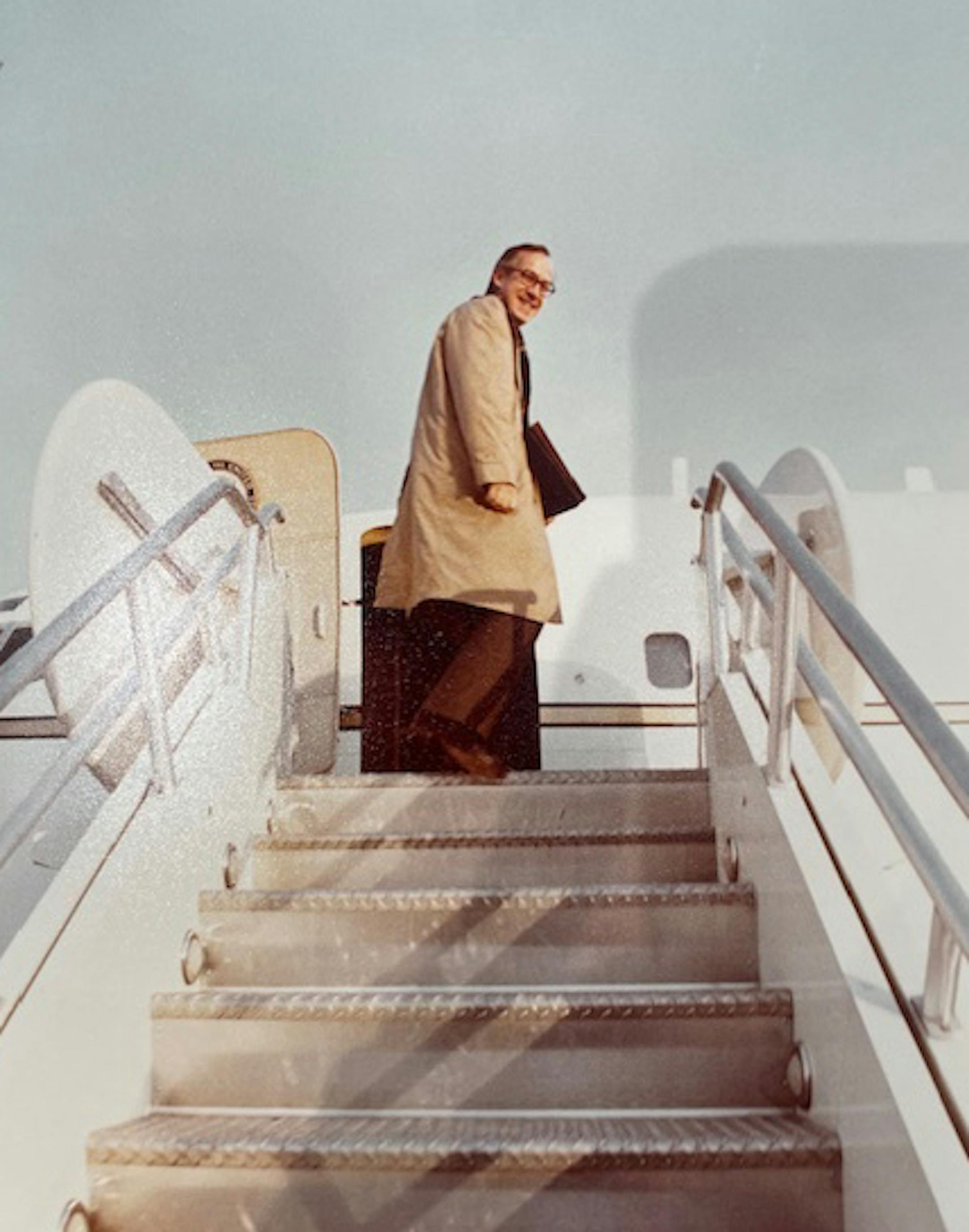
Richard Moe boards Air Force Two in 1978. (Provided by Alexandra Moe)

“Dick was the guy behind the scenes in creating this new model of the vice presidency as a critical component of the White House’s operations,” said Larry Jacobs, the Walter F. and Joan Mondale Chair for Political Studies at the University of Minnesota.

Born in Duluth in 1936, Moe attended what is now Shattuck-St. Mary’s School, a college prep school in Faribault. It wasn’t until he went to Williams College in Massachusetts that he developed an interest in politics.

He returned to Minnesota after graduation and immediately started volunteering with the DFL. His daughter, Alexandra Moe of Washington, said he was so nervous about driving for then-Sen. Hubert Humphrey that he accidentally ran their car into a gate. Humphrey remained a mentor of Moe’s for many years.

Moe graduated from the University of Minnesota Law School in 1966 and quickly moved up the DFL ladder, filling several staff positions. He was elected state party chair in 1969 at the age of 32, and soon led the DFL to claim its first legislative majorities. By the early 1970s, the DFL had captured the governor’s office and both houses of the Legislature for the first time.
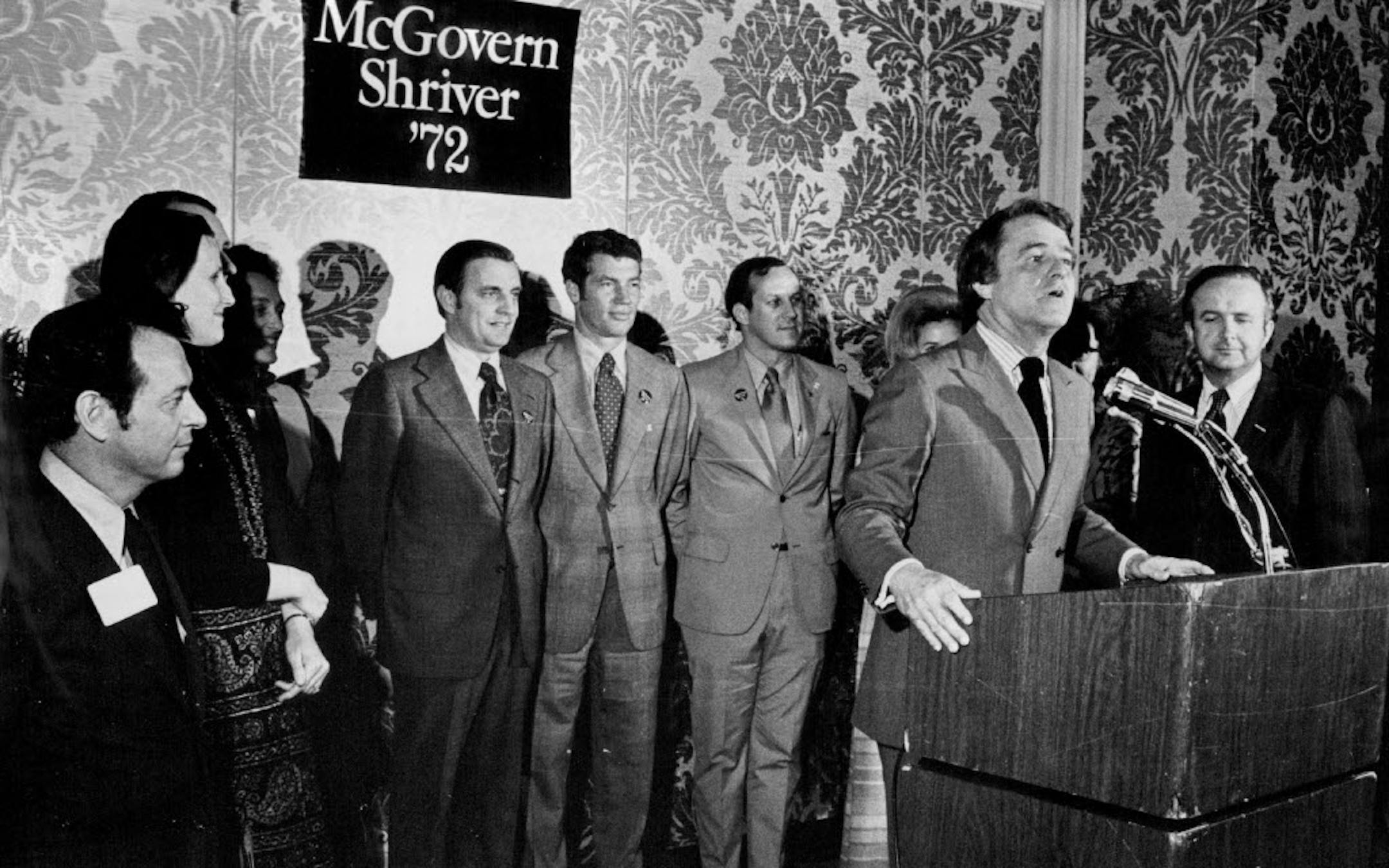
DFLers including Sen. Walter Mondale (under sign), Gov. Wendell Anderson and party chair Richard Moe listened to vice presidential candidate Sargent Shriver speak in Oct. 1972 at the Leamington Hotel in downtown Minneapolis. (Minnesota Star Tribune)

When Mondale, then the state’s senior U.S. senator, asked Moe to run his Washington office, Moe quickly became his right-hand man and chief aide. After Carter asked Mondale to become his running mate in 1976, Moe urged Mondale to accept and suggested that he talk to Humphrey, who had been vice president under Lyndon Johnson. Humphrey persuaded Mondale to join the ticket.
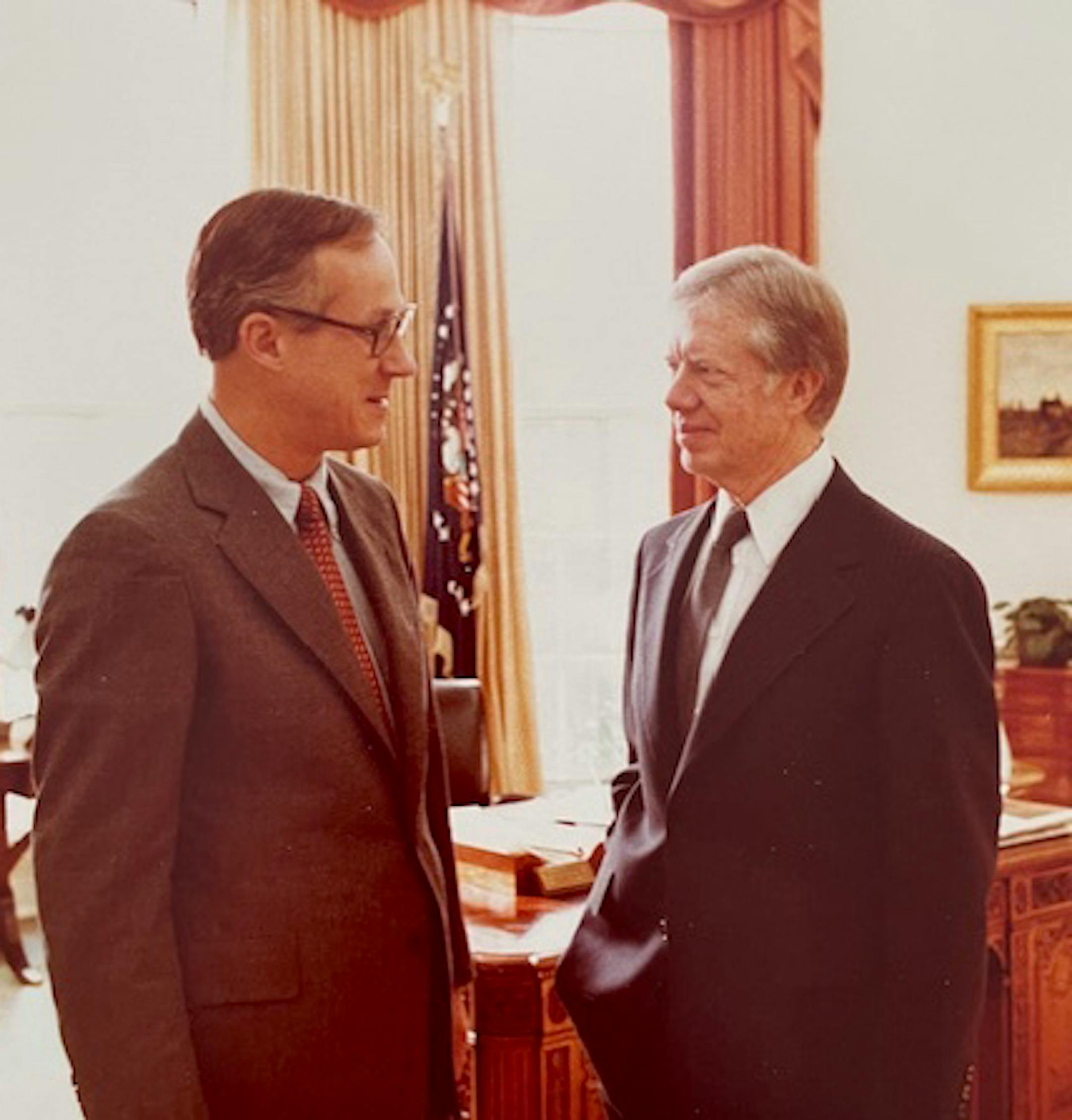
Moe prepared Mondale for his interview with Carter, and met with both to propose a more substantial role for the vice president. That meeting, along with the memo by Moe and Mondale, led to lasting changes in the office.

Richard Moe with President Jimmy Carter in the Oval Office in 1977. Moe served as an adviser to Carter while chief of staff for Vice President Walter Mondale. (Provided by Alexandra Moe)

During Mondale’s vice presidency, Moe traveled the globe with him and played a pivotal role in Mondale’s foreign policy agenda. The two remained close until Mondale’s death in 2021.

Moe “was always a public servant and always someone who worked for America,” Jacobs said. “He was someone who served the country for its best interests.”

Throughout Moe’s time in politics, Alexandra Moe said her father maintained his roots. The family returned frequently to the state throughout their time in Washington, but even when he spent weekends in Washington Moe liked doing the things he did in Minnesota, such as canoeing and woodworking.

“He was cut from that cloth of public service and those kinds of values that I think came out of the Midwest,” she said.

After Mondale lost the 1984 election to President Ronald Reagan, Moe practiced law in Washington for a dozen years and wrote an acclaimed history of Minnesotans in the Civil War, “The Last Full Measure: The Life and Death of the First Minnesota Volunteers.”

He launched a new career in 1993 as president of the National Trust for Historic Preservation, a Washington-based nonprofit that works to preserve historic buildings and districts. He led the charge to stop a Disney theme park from going up mere miles from the Manassas battlefield in northern Virginia, and helped local preservationists save thousands of historic homes after Hurricane Katrina hit the New Orleans area in 2005.

Moe’s proudest moment of preservation, according to his daughter, was restoring and opening a Washington cottage used as a retreat by Abraham Lincoln during the Civil War. The cottage is where Lincoln drafted the Emancipation Proclamation in 1862.

“It was a dilapidated old office space, and he turned it into a living museum and raised the money to recognize Lincoln’s contributions during the war,” Alexandra Moe said.

Moe retired in 2009 but stayed busy. He published his third book, “Roosevelt’s Second Act,” about Franklin Roosevelt and the 1940 election, in 2013. He was working on a book about Lincoln when he died, his daughter said.

Throughout Moe’s life, law school classmate and friend Phil Gainsley said he never changed. Gainsley said Moe was “a very classy guy.”

“We could use more people like him today,” Gainsley said. “His integrity, his intellect — he knew right from wrong. In government, that’s so important.”

Besides his daughter, Moe is survived by his wife of 60 years, Julia Neimeyer Moe, of Washington; a son, Andrew, of Portland, Ore.; a sister, Elizabeth Andes, of Lancaster, Pa.; and two granddaughters. Details for a private service have not yet been finalized.

about the writer

about the writer

Eleanor Hildebrandt

Reporter

Eleanor Hildebrandt is a reporter for the Minnesota Star Tribune.

See Moreicon

More from Politics

See More
card image
Mark Schiefelbein/The Associated Press

A Navy admiral commanding the U.S. military strikes on an alleged drug boat in the Caribbean told lawmakers Thursday that there was no ''kill them all'' order from Defense Secretary Pete Hegseth, but a stark video of the attack left grave questions as Congress scrutinizes the campaign that killed two survivors.

card image