

On July 14, 1948, a young mayor and soon-to-be senator from Minnesota stood on the floor of the Democratic National Convention and challenged his party to commit itself to the cause of civil rights, "the issue of the 20th century."
Sixteen years after Hubert Humphrey's speech, President Lyndon Johnson signed the Civil Rights Act into law — and Humphrey himself was elected vice president of the United States.
But in the summer of 1967, a young senator from Minnesota — chosen to fill Humphrey's seat — invited a young navy lieutenant named Carlos Campbell to testify before the Senate Banking Committee's subcommittee on housing. After flying recon missions during the Cold War, Lt. Campbell had been assigned to the Pentagon. But when he and his wife looked for apartments in Arlington, Va., they found that vacancies kept disappearing as soon as landlords realized the Campbells were Black.
Housing discrimination had, in theory, been outlawed in the Civil Rights Act of 1964. But the provision didn't cover privately owned housing, and in any case it was rarely enforced, leaving many cities effectively segregated. A generation of Black families were relegated to under-resourced neighborhoods, locked out of homeownership, denied access to good schools and jobs, and refused admittance to the growing middle class.
Most senators would have preferred not to talk about it. A lot of white Americans were uncomfortable with the idea of Black families moving into their neighborhoods, and the issue had become something of a political third rail.
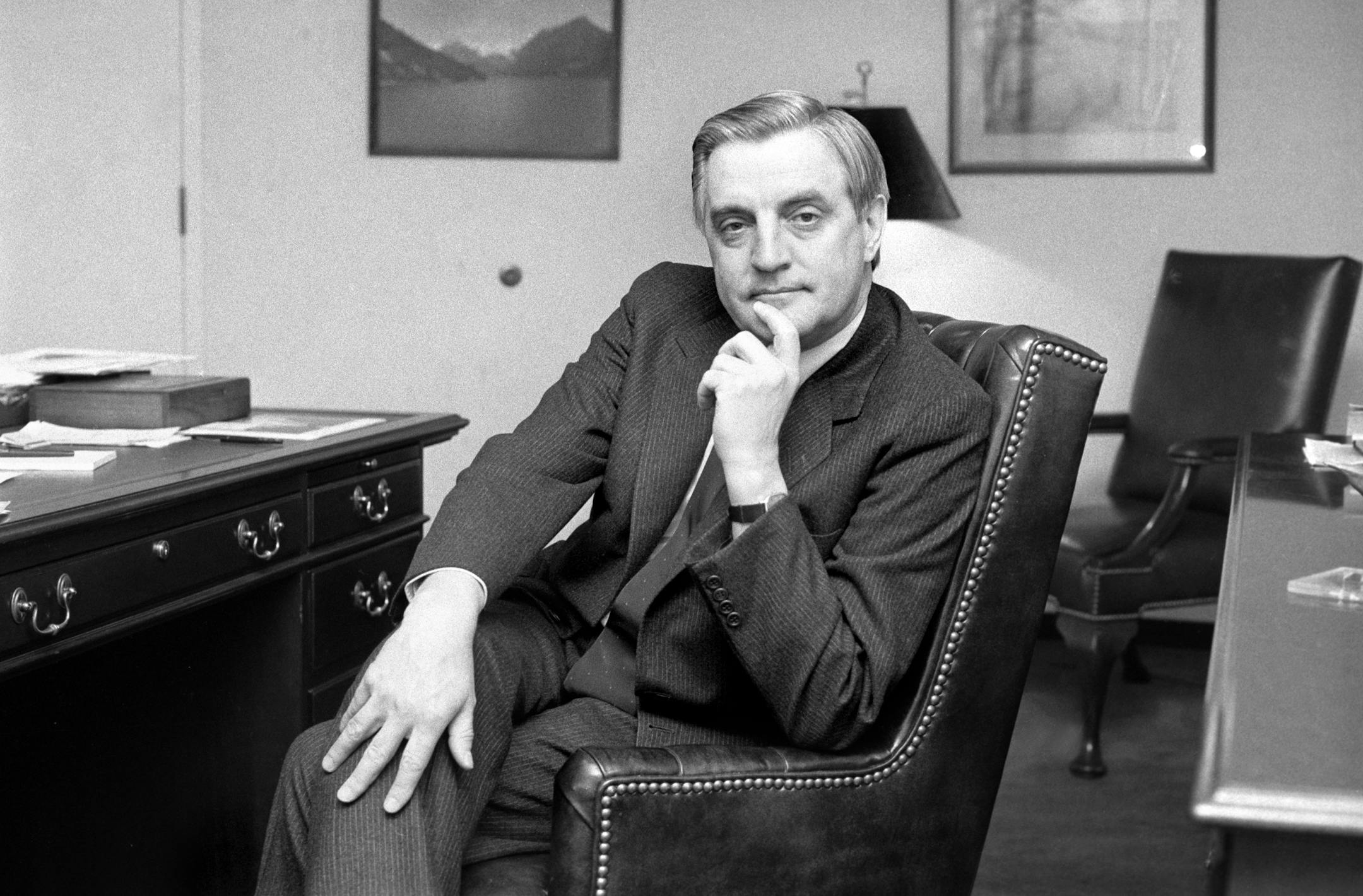
But if there's one thing that defined Walter Mondale, it was his willingness to tell hard truths.
Of course, there wasn't just one thing that defined him. Fritz was funny, kind, endlessly generous with his time and wisdom. He loved his family, he loved his staff, and he loved to serve. He was always more interested in earning respect than commanding fear. He never forgot a birthday.
Still, for many, the indelible image of the man was the moment when he stood on the stage as the Democratic nominee for president and told America a hard truth that, it turned out, most voters didn't want to hear. "Mr. Reagan will raise taxes," he said, "and so will I. He won't tell you. I just did."


