

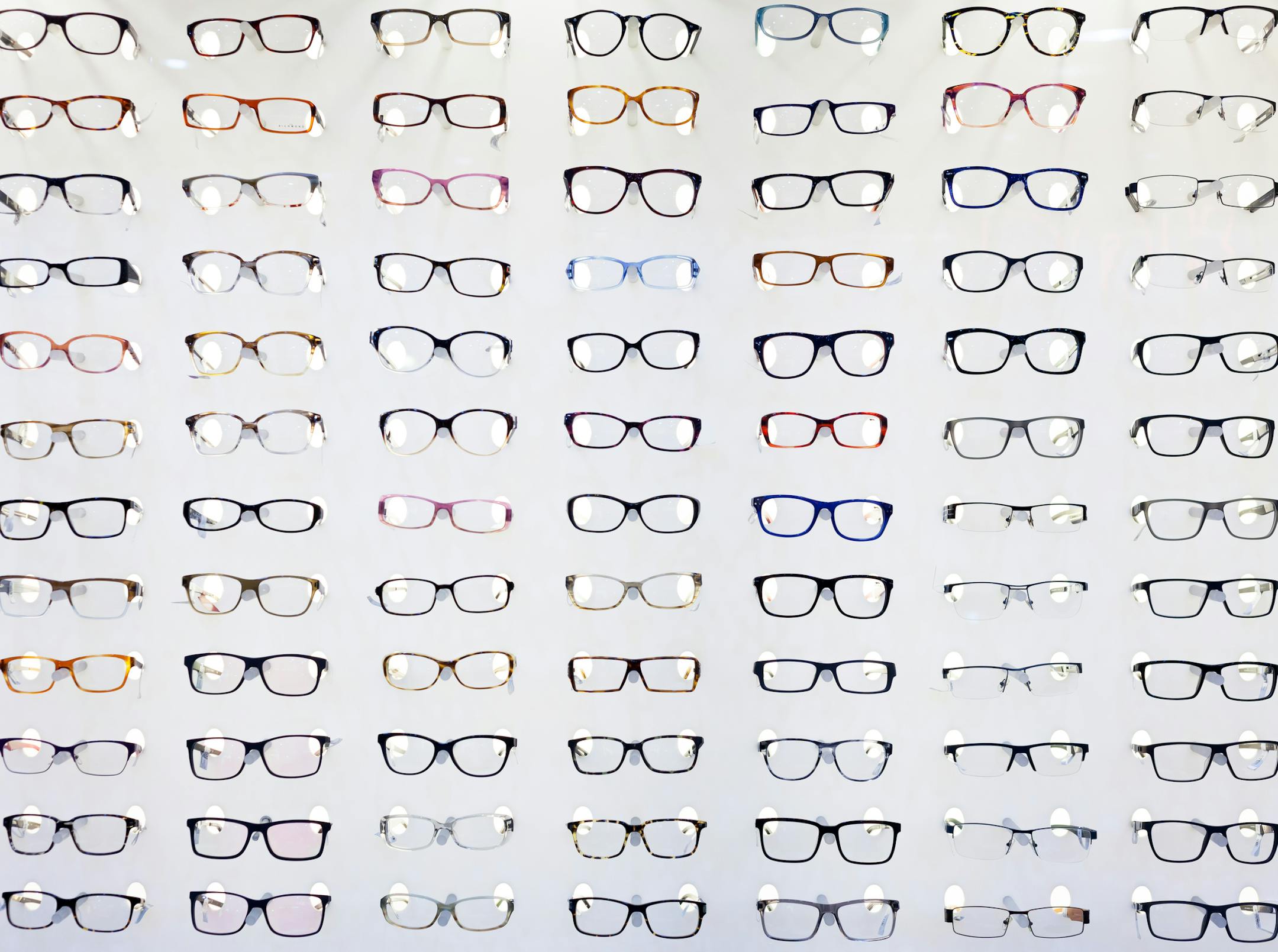
John-Lennon-meets-Harry-Potter round frames? A little designer number from Chanel or Prada? If you are shopping for new specs, it's easy to feel overwhelmed by all the choices of styles and brands.
But in actuality, much of this variety is an illusion: The lion's share of eyeglasses on the market — including those sold under popular designer brand names — come from just a few Italian companies with names you probably won't recognize: Marcolin, Safilo, Luxottica.
Luxottica not only manufactures millions of pairs of glasses annually, it also markets and sells them via more than 7,000 retail stores it also runs. Though the name "Luxottica" doesn't show up on their signs, when you head into LensCrafters, Pearle Vision, Target's optical department, Sunglass Hut and many more outlets, you are shopping at a space or store that the behemoth owns or controls.
Plus, when you buy glasses from your favorite designer, they were probably made by one of the big-three manufacturers. Luxottica owns several brands, including Ray-Ban and Persol.
And, no, Michael Kors didn't have a major part in how your new progressives look; design houses routinely send sketches of new-season styles to optical companies so their in-house staff can riff on, say, Tiffany's new pearl earrings or Ralph Lauren's latest runway lineup.
With only a few companies controlling both the manufacture and the distribution of most of the frames sold, it's tricky to figure out whether you are getting a good deal or not. Luxottica frames can cost from about $300 to several thousand bucks per pair.
The way to assess value is to buy from a store that offers great advice — where you will be told whether more expensive frames warrant their higher price tags. Some companies don't sell any Luxottica products. For example, Warby Parker offers $95 single-lens glasses in funky, fashionable frames. It began as an internet-only business that would (and still does) send out five free frames for customers to try on before they ordered glasses. The company has since opened more than three dozen brick-and-mortar stores in the U.S. and Canada.
To help you identify retailers that employ staff who can help you pick the right pair at the right price, the nonprofit Twin Cities Consumers' Checkbook collected ratings from thousands of local consumers on vision centers. Several stores received "superior" ratings for overall service quality by at least 80 percent of their surveyed customers, while some others received such favorable ratings from fewer than 50 percent. In general, chains and franchise operations were rated lower than independent firms. But there was variation among each type of outlet.


