
Sen. Tina Smith weighs in on efforts to fix multi-employer pensions

The Minnesota Democrat is part of a Senate effort to try to save hundreds of thousands of retired U.S. workers from catastrophic cuts in income.

March 15, 2018 at 4:40AM
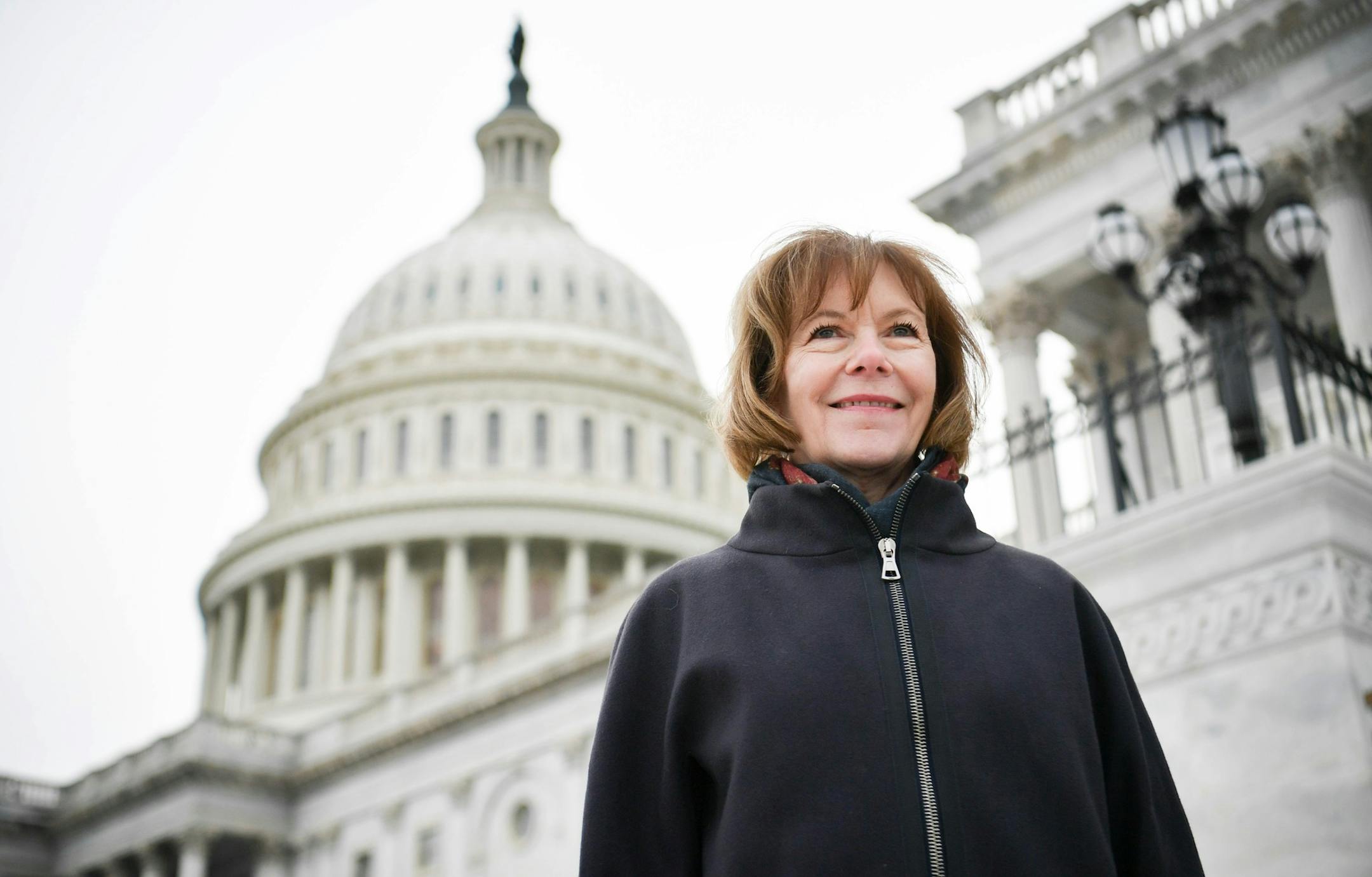
Sen. Tina Smith on the day she was sworn in as new U.S. senator from Minnesota at the U.S. Capitol, Jan. 3, 2018.
U.S. Sen. Tina Smith will be part of a special committee looking at ways to preserve benefits for retirees in underfunded, multi-employer pension plans. She sees her task as a “solemn commitment” to honor the promise made to Minnesotans who contributed to pension plans expecting to get something back. (The Minnesota Star Tribune)

Rookie Sen. Tina Smith's first big assignment is a tough one.

Smith, Minnesota's junior Democratic senator, has been named to a bipartisan special committee that is supposed to save the benefits of retirees in underfunded multi-employer pension plans.

Under a 2014 law spearheaded by former Republican Rep. John Kline of Minnesota and Democratic Rep. George Miller of California, the government has already approved benefit cuts to current retirees of four ailing multi-employer plans. Other applications for cuts are in the works. Private analysts and government researchers estimate that multi-employer plans covering a million people could run out of money within 20 years.

Also, the Pension Benefit Guaranty Corporation (PBGC), the government entity that pays pensioners when private plans default, is on track to run out of money to help multi-employer plans in a decade.

Now, Smith will team with Democratic Sens. Sherrod Brown of Ohio, Joe Manchin of West Virginia and Heidi Heitkamp of North Dakota and Republican Sens. Orrin Hatch of Utah, Lamar Alexander of Tennessee, Rob Portman of Ohio and Mike Crapo of Idaho to try to save hundreds of thousands of retired U.S. workers in their 60s and 70s from catastrophic cuts in income they need to live.

Q: People have proposed pension bills before, but without Republican sponsorship, they went nowhere. What do you think will be different about this bipartisan effort?

A: I think this bipartisan committee reflects a real opportunity to solve an important and pressing problem for 22,000 Minnesotans who are deeply concerned about whether their pensions are going to be there for them. We wanted very much to have a solution to this problem in the big budget framework which we all agreed to. There was at least an agreement to do this committee — a committee that was tasked not only with providing recommendations and legislative language but also an agreement that would then be considered by the Senate, which is very important. This won't just be a sit around and talk group. This will be a group that is tasked with coming up with a solution.

Q: Finding money to solve the pension problem has been hard. What sorts of things are doable?

A: I'm not naive. If this had been easy to do, somebody would have figured it out a couple of years ago. But in my mind this is sort of a solemn commitment we have. We are talking about Minnesotans who did everything right. They paid into this pension. They put their money in with a promise that they were going to have a little bit of money to live on when they retired. That ought to be a promise that gets fulfilled.

On my first trip back to Minnesota after I became a senator, I was up in Duluth talking with some of these pensioners. This one woman said, "If this doesn't work out for me, it's not like I've got some other nest egg someplace. This is what I need to keep me from actually being homeless." It's not going to be easy, but I think that there are some ideas. I agreed with the Butch Lewis act strategy which was to provide some federally funded low-interest loans from the Treasury that would bridge the gap over this hurdle we have to get over so that these funds could become solvent again. I thought that was a good idea and it frankly ends up costing the federal government less than if you just let everything fall apart. But I'm not saying that's the only solution. I'm saying that's a solution that we should consider. I hope and I am expecting that this group will be able to really focus on solving problems and getting something done.

Q: So do you think what you will get out of being in the group is a proposal that will have the blessing of enough Republicans to pass?

A: I believe the people appointed to this committee on both sides are there because they want to solve the problem and not just argue. … That's what we're sent here to do. This is important to Minnesotans and my job is to bring a Minnesota perspective to the discussion and to use all the skills I have to encourage people to come to an agreement. Having a legislative proposal that can't go anywhere once it gets to Congress doesn't really get us very far.

Q: Rep. Kline thought if the pension plans were going to remain solvent, the people collecting them were going to have to settle for something less. Is that your belief going into the negotiations?

A: I go into this believing it is our responsibility to honor the commitment that has been made to people. These are folks who fulfilled their part of the commitment. They put their money in. Anybody who has contributed to a retirement plan, regardless of who their employers are, knows what that feels like. I'm putting my money in now because my employer is telling me that they are going to follow suit. So that's where I come from. But I will also really listen to everybody and try to figure out how we can accomplish something.

Q: What assurances can you give your constituents?

A: I am one woman who is going to go on to this committee and do everything I can to find a solution that fulfills our promise. That's the most that I can do.

Q: Is there a time frame on any of this?

A: My understanding is that we are tasked with finding a solution during the course of this calendar year. Sometimes having more time does not equal getting to a solution. Sometimes a deadline is a good thing.

about the writer

about the writer

Jim Spencer

Washington Correspondent

Washington correspondent Jim Spencer examines the impact of federal politics and policy on Minnesota businesses, especially the medical technology, food distribution, farming, manufacturing, retail and health insurance industries.  

See Moreicon

More from Business

See More
card image
Carlos Gonzalez/The Minnesota Star Tribune

The member of President Donald Trump’s cabinet also touted the administration’s economic policy, saying “Minnesota could lead the way” on economic renewal.

MMR virus vaccine (measles, mumps, rubella) at Logan Square Health Center in Chicago, Ill. on Thursday, May 9, 2019.
FILE - This 2011 electron microscope image provided by the Centers for Disease Control and Prevention shows H3N2 influenza virions. In January 2019, the flu season was shaping up to be one of the shortest and mildest in recent U.S. history. But a surprising second viral wave has just made it the longest, according to the flu statistics released on Friday, April 19, 2019. (Dr. Michael Shaw, Doug Jordan/Centers for Disease Control and Prevention via AP)
