

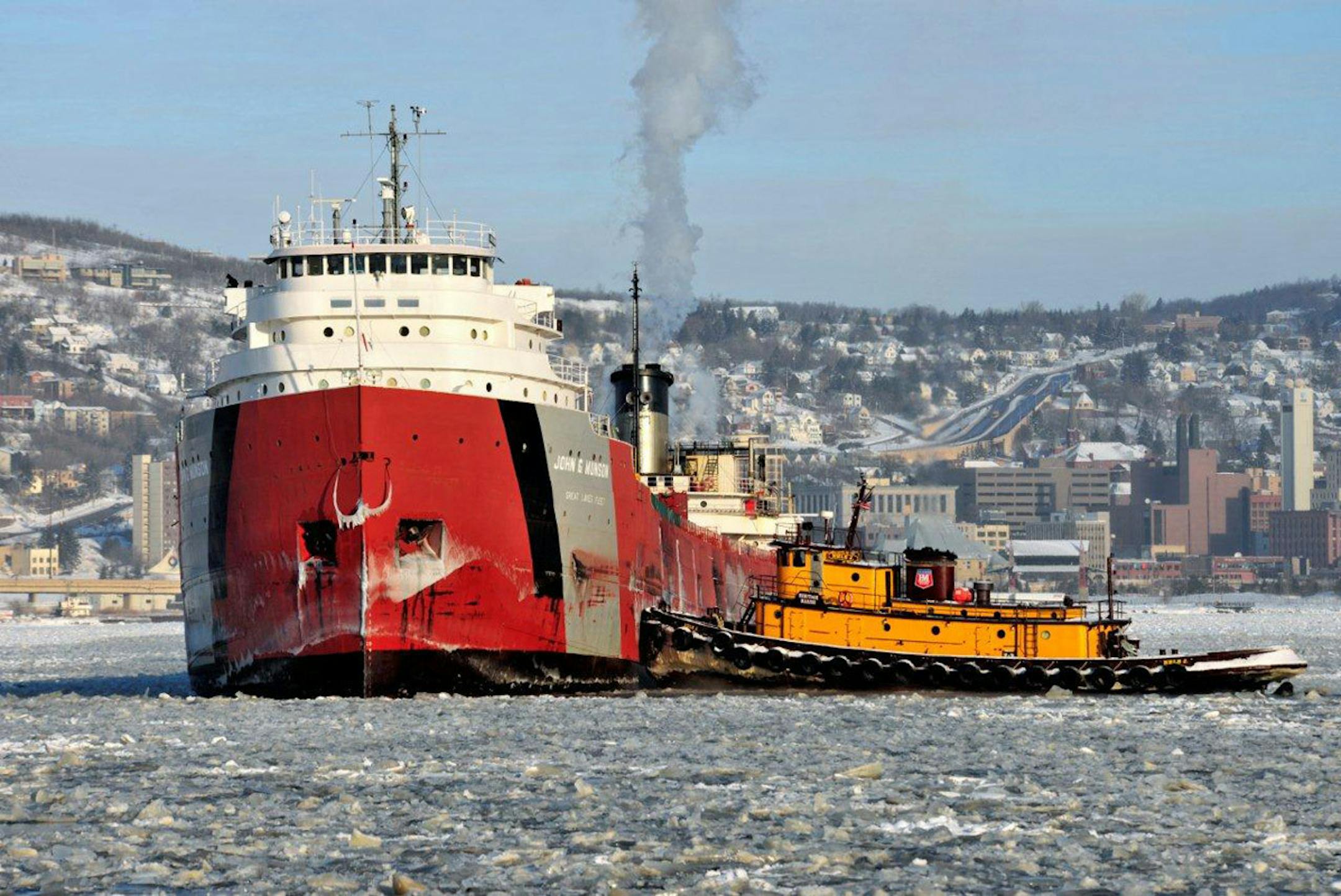
The Great Lakes maritime business runs deep with Adolph Ojard, who will retire this year after a decade of leading the Duluth Seaway Port Authority, Minnesota's nautical window to the world.
His late father, Adolph Ojard Sr., was the last captain of the Edna G., the oldest working U.S. tugboat when it was retired in 1981 and later put on display in Two Harbors. The younger Adolph earned a bachelor's degree from the University of Minnesota Duluth in 1971, but quickly followed his dad into the transportation business — starting with manual labor on Duluth's ore docks.
Ojard worked his way up over the years to become general manager of the DM&IR Railway and the USS Great Lakes Fleet, two of the most storied names in Minnesota's iron ore business. Ojard left the private sector in 2003 when he was named executive director of the Duluth Port Authority, a state-created public agency.
Duluth-Superior, the Twin Ports, is by far the largest port complex on the Great Lakes, a hub for taconite, coal and grain — host to about 900 ships a year. The Star Tribune talked with Ojard last week about the port's highs and lows over the past decade.
Q: What's been the most positive development?
A: The resurgence of the iron ore industry has been most notable. The industry is on a solid footing, and the port and the maritime industry are key ingredients in the system for delivering iron ore to lower Great Lakes steel mills.
Q: The outbound coal trade accounts for a lot of lakers passing under the Aerial Bridge. But coal shipments have been off about 30 percent the past two years compared with the previous decade's average. What's up?
A: We have seen a significant falloff in demand for coal to Canada, as power plants there convert to natural gas and biofuels. The same is true to a lesser extent for U.S. shipments. But the downturn has been made up somewhat by new business — coal exports to Europe for power plants there.


