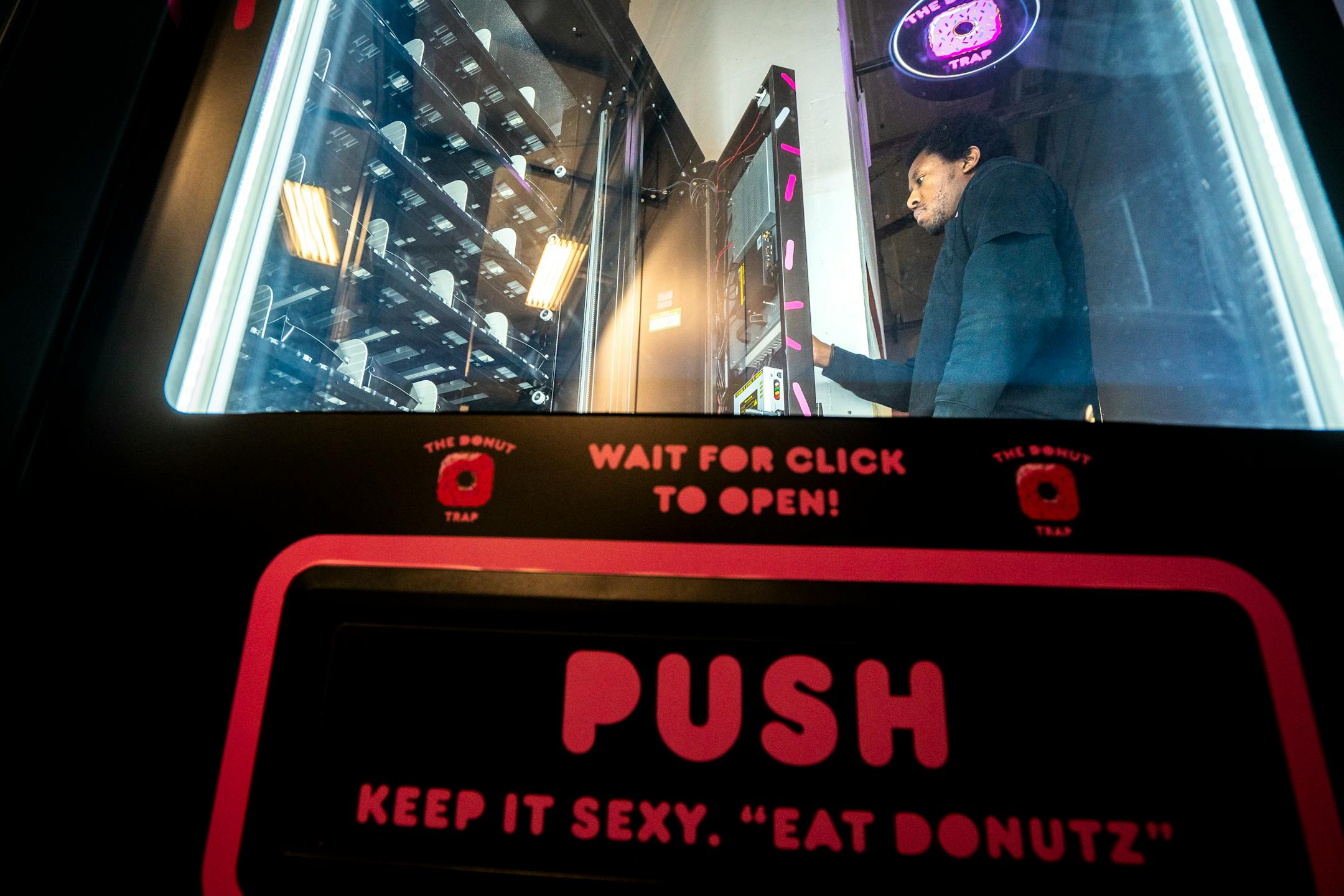
Bradley Taylor spent months brainstorming with different manufacturers on a vending machine design that would not only keep his homemade doughnuts fresh but dispense them gently enough to not smear the icing or smush the shape.
One particular company, located out west, "was crazy enough to do it," Taylor said.
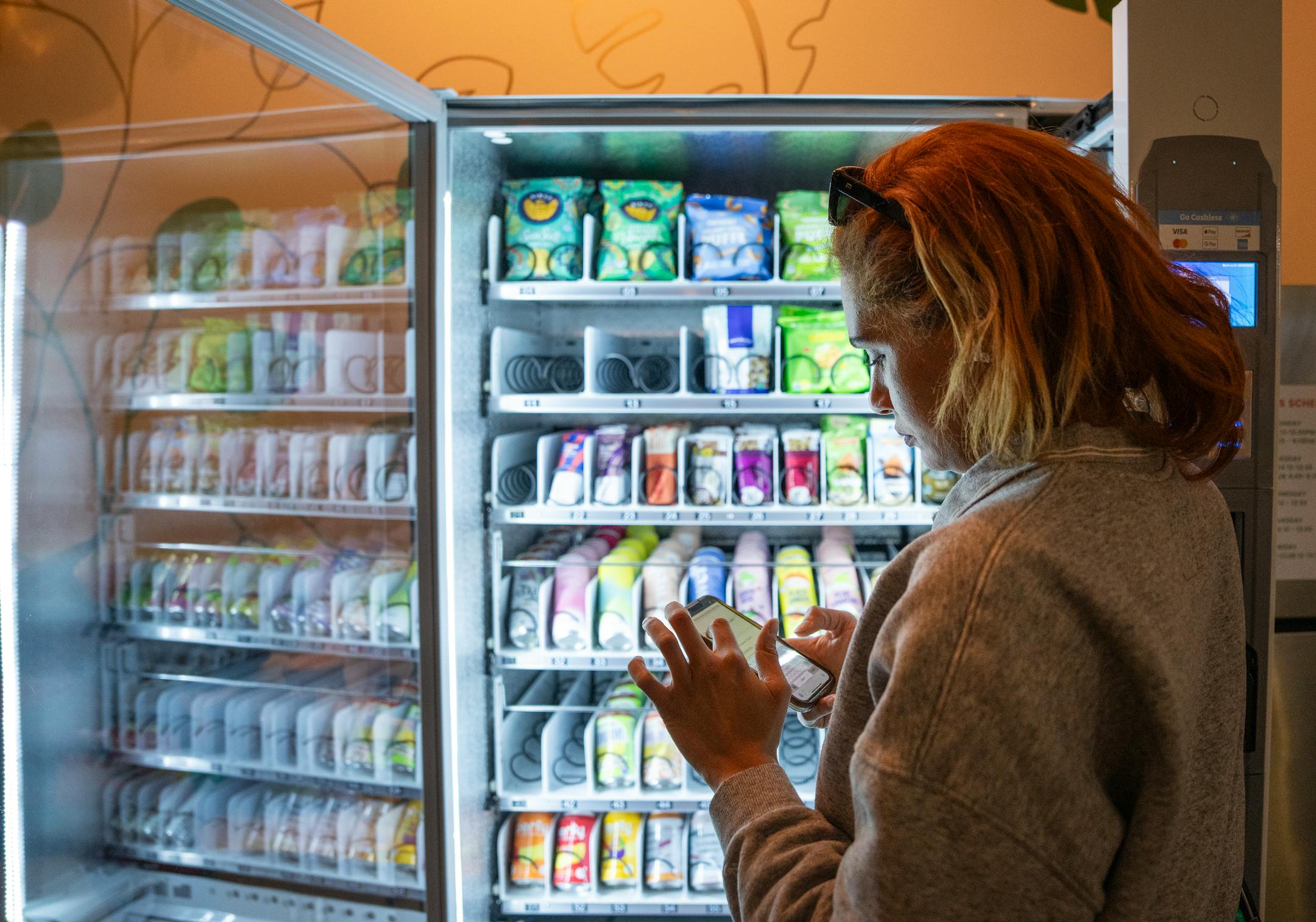
Taylor's six-months-in-the-making machine — which uses an elevator/conveyor-belt mechanism to deliver individually packaged doughnuts to each customer — is just one of many businesses to eschew a storefront for an automat.
Pharmaceuticals. Phone accessories. Construction tools. Hair extensions. Beauty supplies. What people can buy from the almost 150-year-old technology has evolved from gumballs, pop and cigarettes, giving big corporations and small entrepreneurs alike a low-overhead way to expand their businesses.
Taylor's first machine booted up at St. Paul entertainment venue Can Can Wonderland in 2022. Now the Donut Trap has eight locations throughout the Twin Cities, including Rosedale Center and Minneapolis-St. Paul International Airport, where it's the only Minnesota brand to have a vending machine at one of the largest airports in the country.

In 2022, the convenience services industry had a $1.1 billion economic impact on Minnesota, paying out about $400 million in wages to more than 5,500 workers, according to the National Automatic Merchandising Association (NAMA), the national trade organization for vending and micro-markets.
"I firmly believe this self-serve, unattended automated retail is going to all kinds of places," said Carla Balakgie, NAMA's chief executive.
The pandemic, Balakgie said, "really accelerated the trend for consumers to want convenience, to want autonomy, to want 24/7 access to whatever they want, whenever they want to get it."