

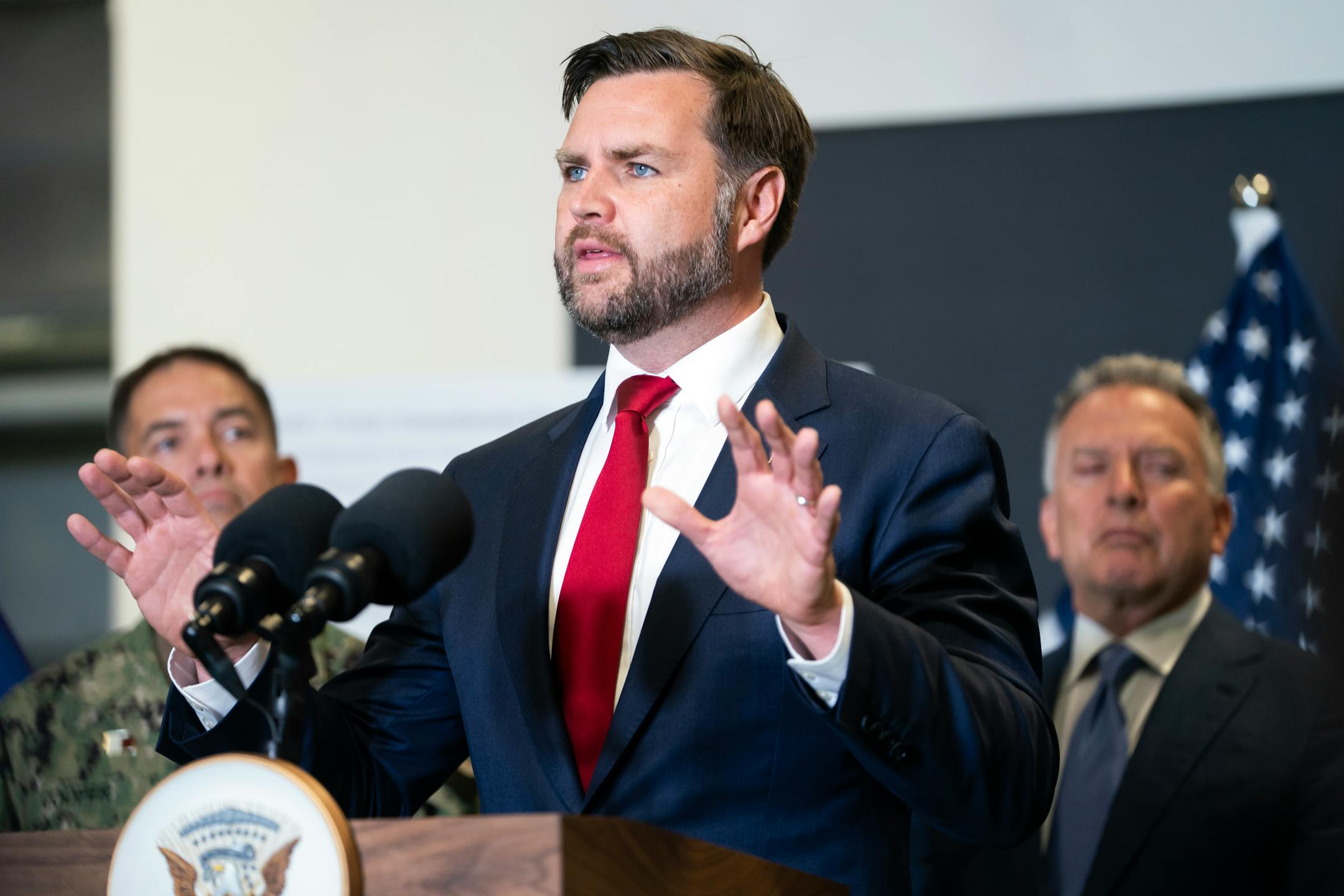
TEL AVIV - Vice President JD Vance projected cautious optimism about the Trump administration’s Middle East peace plans in Israel on Tuesday, downplaying a weekend of violence that threatened the fragile ceasefire in the Gaza Strip.
Vance’s arrival in Israel, just a week after President Donald Trump visited, underscored the tenuousness of the ceasefire while showcasing how much external intervention will be required to keep it on track before the start of negotiations for the thornier second phase of the agreement, which aims for a permanent end to the war.
Israel and Hamas have each accused the other of violating the ceasefire amid reports of Israeli troops firing on Palestinians on a daily basis, and there remain significant disputes over the return of deceased Israeli hostages from Gaza.
Vance largely sidestepped addressing those disputes Tuesday, declining to issue a deadline for Hamas to disarm or return the bodies of the hostages. He also said the situation was evolving “better than I expected,” just days after the Israeli military killed dozens of people in Gaza in strikes that it said were a response to a Hamas attack in which two Israeli soldiers were killed.
“It is in fact exactly how this is going to have to happen when you have people who hate each other, who have been fighting against each other for a very long time,” Vance said at a news conference, where he was joined by Steve Witkoff, the U.S. Middle East envoy, and Jared Kushner, the president’s son-in-law. “We are doing very well.”
Trump has touted the Middle East deal as a transformational foreign policy achievement, claiming last week that the ceasefire marked the “historic dawn of a new Middle East.” Vance, Witkoff and Kushner called for patience Tuesday, describing the many moving parts of the peace initiative — including the establishment of an international peacekeeping force and the rebuilding of Gaza — as works in progress.
In Israel, Vance’s visit has been viewed as a signal from Washington to all parties that it is running the show and will ensure the deal gets to the next stage, according to Gayil Talshir, a political scientist at the Hebrew University of Jerusalem. It is also seen as a means to supervise Israeli Prime Minister Benjamin Netanyahu and make sure he doesn’t return to fighting in Gaza, she added, describing it as a “sign of Israel’s weakness vis-à-vis Trump.”
“This is an unprecedented situation,” said an Israeli politician who spoke on the condition of anonymity to freely discuss the role of a key ally. “Netanyahu has turned Israel into a U.S. client state. … What America says, Israel does.”


