
Vaccines are helping older people more than we knew

They can promote “healthy aging and prevent physical and cognitive decline.”

KFF Health News
February 15, 2026 at 5:30PM
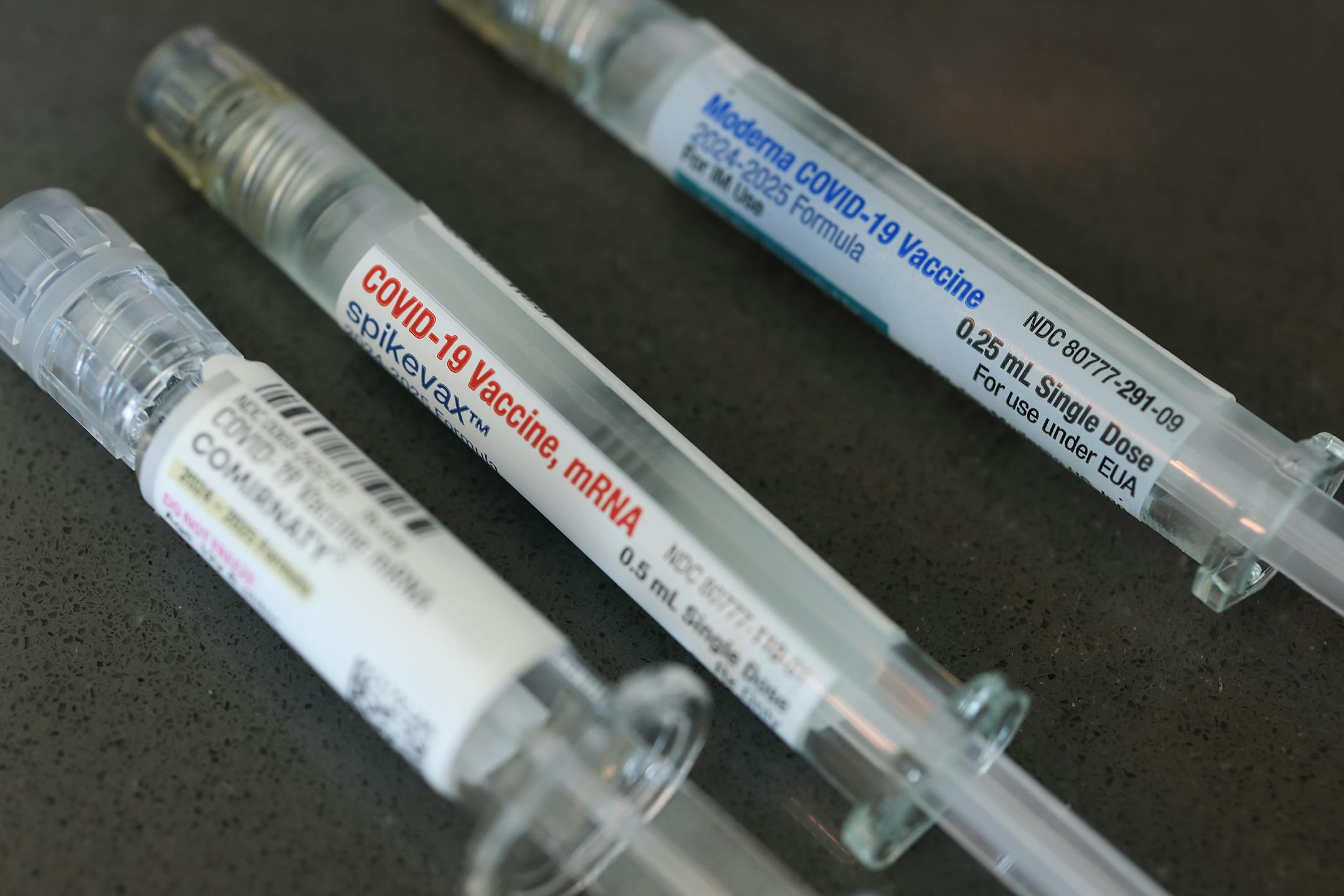
Researchers say the COVID-19 vaccines lower the risk of developing long COVID, which can have damaging effects on physical and mental health. (Joe Raedle/Getty Images)

Let’s be clear: The primary reason to be vaccinated against shingles is that it provides at least 90% protection against a blistering disease that can cause lingering nerve pain and other nasty long-term consequences, which a third of Americans will suffer in their lifetimes.

The most important reason for older adults to be vaccinated against the respiratory infection RSV is that their risk of being hospitalized with it declines by almost 70% in the year they get the shot, and by nearly 60% over two years.

And the main reason to roll up a sleeve for an annual flu shot is that when people do get infected, it also reliably reduces the severity of illness, though its effectiveness varies by how well scientists have predicted which strain of influenza shows up.

But other reasons for older people to be vaccinated are emerging. They are known, in doctor-speak, as off-target benefits, meaning that the shots do good things beyond preventing the diseases they were designed to avert.

Some of these protections have been established by years of data; others are the subjects of more recent research, and the payoff is not yet as clear. The first RSV vaccines, for example, became available only in 2023.

Still, the findings “are really very consistent,” said Stefania Maggi, a geriatrician and senior fellow at the Institute of Neuroscience at the National Research Council in Padua, Italy.

She is the lead author of a recent meta-analysis, published in the British journal Age and Ageing, which found reduced risks of dementia after vaccination for an array of diseases. Given those “downstream effects,” she said, vaccines “are key tools to promote healthy aging and prevent physical and cognitive decline.”

Yet too many older adults, whose weakening immune systems and high rates of chronic illness put them at higher risk of infectious diseases, have not taken advantage of vaccination.

The Centers for Disease Control and Prevention recommends the one-and-done pneumococcal vaccine for adults 50 and older. An analysis in the American Journal of Preventive Medicine, however, estimated that from 2022, when new guidelines were issued, through 2024, only about 12% of those 67 to 74 received it, and about 8% of those 75 and older.

The strongest evidence for off-target benefits, dating back 25 years, shows reduced cardiovascular risk following flu shots.

Healthy older adults vaccinated against flu have substantially lower risks of hospitalization for heart failure, as well as for pneumonia and other respiratory infections. Vaccination against influenza has also been associated with lower risks of heart attack and stroke.

Could the RSV vaccine, protective against another respiratory illness, have similar cardiovascular effects? A recent large Danish study of older adults found a nearly 10% decline in cardiorespiratory hospitalizations — involving the heart and lungs — among the vaccinated versus a control group, a significant decrease.

Lowered rates of cardiovascular hospitalizations and stroke did not reach statistical significance, however. That may reflect a short follow-up period or inadequate diagnostic testing, cautioned Helen Chu, an infectious disease specialist at the University of Washington.

“I don’t think RSV behaves differently from flu,” Chu said. “It’s just too early to have the information for RSV, but I think it will show the same effect, maybe even more so.”

Vaccination against still another dangerous respiratory disease, COVID-19, has been linked to a lower risk of developing long COVID, with its damaging effects on physical and mental health.

Probably the most provocative findings concern vaccination against shingles, aka herpes zoster. Researchers made headlines last year when they documented an association between shingles vaccination and lower rates of dementia — even with the less effective vaccine that has since been replaced by Shingrix, approved in 2017.

Nearly all studies of off-target benefits are observational, because scientists cannot ethically withhold a safe, effective vaccine from a control group whose members could then become infected with the disease.

That means such studies are subject to “healthy volunteer bias,” because vaccinated patients may also practice other healthy habits, differentiating them from those not vaccinated.

In 21 studies involving more than 104 million participants in Europe, Asia, and North America, vaccination against shingles was associated with a 24% reduction in the risk of developing dementia. Flu vaccination was linked to a 13% reduction. Those vaccinated against pneumococcal disease had a 36% reduction in Alzheimer’s risk.

Other researchers are investigating the effects of shingles vaccination on heart attacks and stroke and of COVID-19 vaccination on cancer survival.

What causes such vaccine bonuses? Most hypotheses focus on the inflammation that arises when the immune system mobilizes to fight off an infection. “You have damage to the surrounding environment” in the body, “and that takes time to calm down,” Chu said.

The effects of inflammation can far outlast the initial illness. It may allow other infections to take hold, or cause heart attacks and strokes when clots form in narrowed blood vessels. “If you prevent the infection, you prevent this other damage,” Chu said.

Hospitalization itself, during which older patients can become deconditioned or develop delirium, is a risk factor for dementia, among other health problems. Vaccines that reduce hospitalization might therefore delay or ward off cognitive decline.

about the writer

about the writer

Paula Span

KFF Health News

More from The Good Life

See More
card image
Dana Gallagher

A spring-laden risotto, slow-roasted salmon and sweet-tart couscous salad are must-trys.

card image
card image