

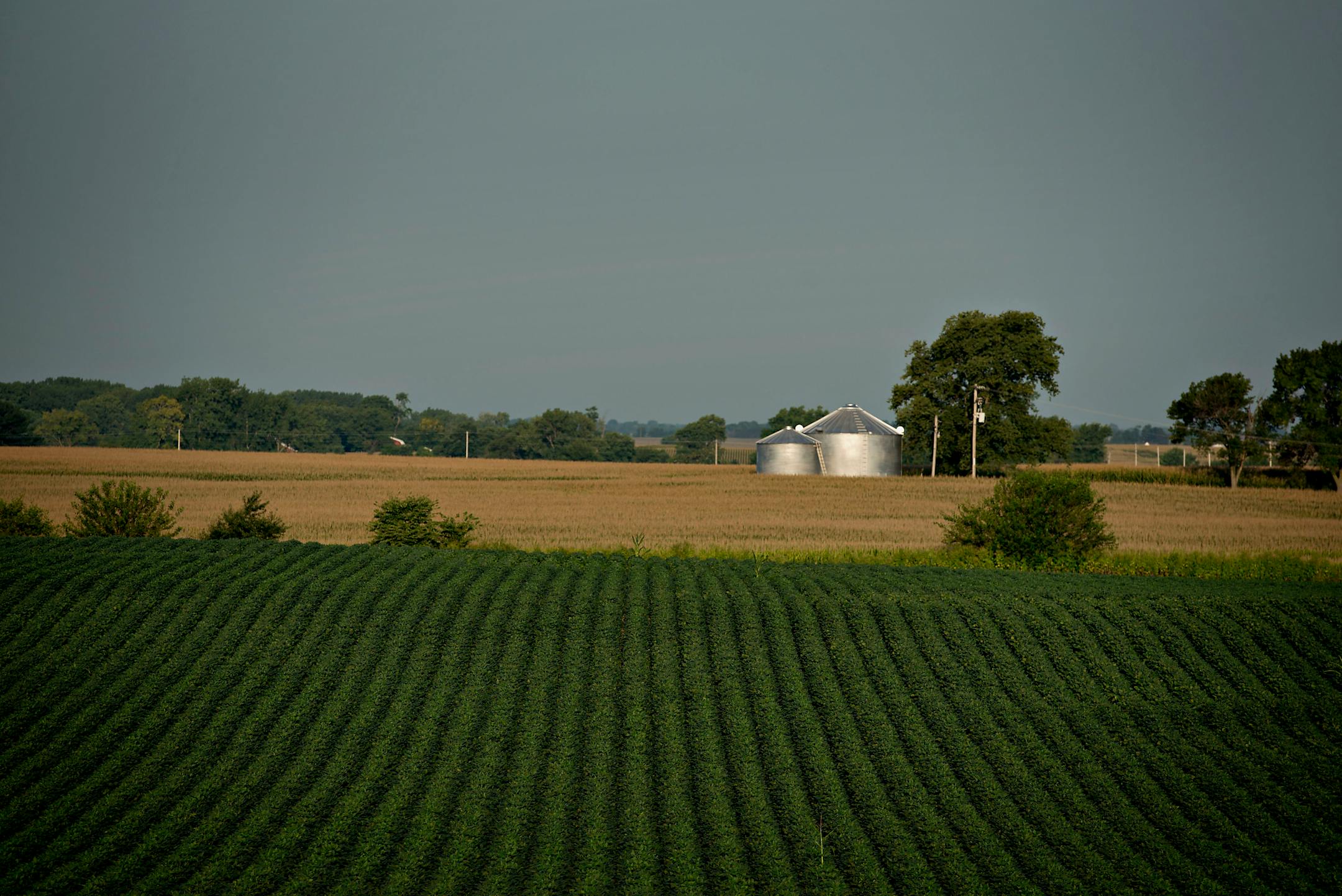
Minnesota farmers plan to plant more soybeans and fewer sugar beets this year, but the state's corn acreage is expected to remain the same.
The move to beans reflects a big drop in corn prices over the last year, while soybean prices have been more stable. "The scales are tipping in favor of soybeans," said Ed Usset, a grain marketing specialist at the University of Minnesota's Department of Applied Economics. Minnesota is one of the nation's largest producers of corn and soybeans.
U.S. farmers are expected to plant 81.5 million acres of soybeans this year, up 6 percent over 2013 and a record crop if it materializes, according to a report Monday from the U.S. Department of Agriculture. In Minnesota, soybean plantings are expected to rise 10 percent to 7.4 million acres, just below the record planted in 2003.
Meanwhile, U.S. corn plantings are expected to be down 4 percent this year to an estimated 91.7 million acres, the lowest since 2010. Still, the 2014 U.S. corn crop is forecast to be the fifth-largest on record if farmers carry out their plans. Minnesota's corn crop would be the state's second-largest, with farmers expected to sow 8.6 million acres.
Last year, much of the corn belt had a bumper crop. So, "following the harvest and into January, corn prices collapsed," said Mike Krueger, president of the Money Farm, a grain marketing advisory firm in Fargo, N.D. Farmers who were fetching around $7 per bushel for corn in 2012 were getting less than $5 a bushel last fall.
Corn is more expensive to plant than soybeans. And right now, corn prices are only at the cost of production or a little below, said Paul Simonsen, a southern Minnesota corn and soybean farmer and chairman of the Minnesota Soybean Research and Promotion Council. "With soybeans you can break even or make a little bit."
The U.S. soybean market has been anchored by strong exports, particularly to China. "The exports have just been so tremendous," Simonsen said. "This year is a record."
Perhaps no farmers in Minnesota got hammered harder last year than sugar beet growers, as a sugar glut caused prices to sink. This year, projected beet plantings are down 6 percent to 435,000 acres. Minnesota is the nation's largest sugar beet-producing state.
![GLEN STUBBE • gstubbe@startribune.com -- Wednesday, April 28, 2010 -- Nicollet, Minn. -- ] Rick Grommersch grows much of the corn fed the hogs on his Nicollet, MN farm. He was optimistic for the growing season and said this was the earliest his corn crop had ever emerged from the soil which will give a longer growing season and hopefully a higher yield.](https://arc.stimg.co/startribunemedia/OK4TW4ZOCPYS2GONXSIXZJBWJI.jpg?&w=1080)



