

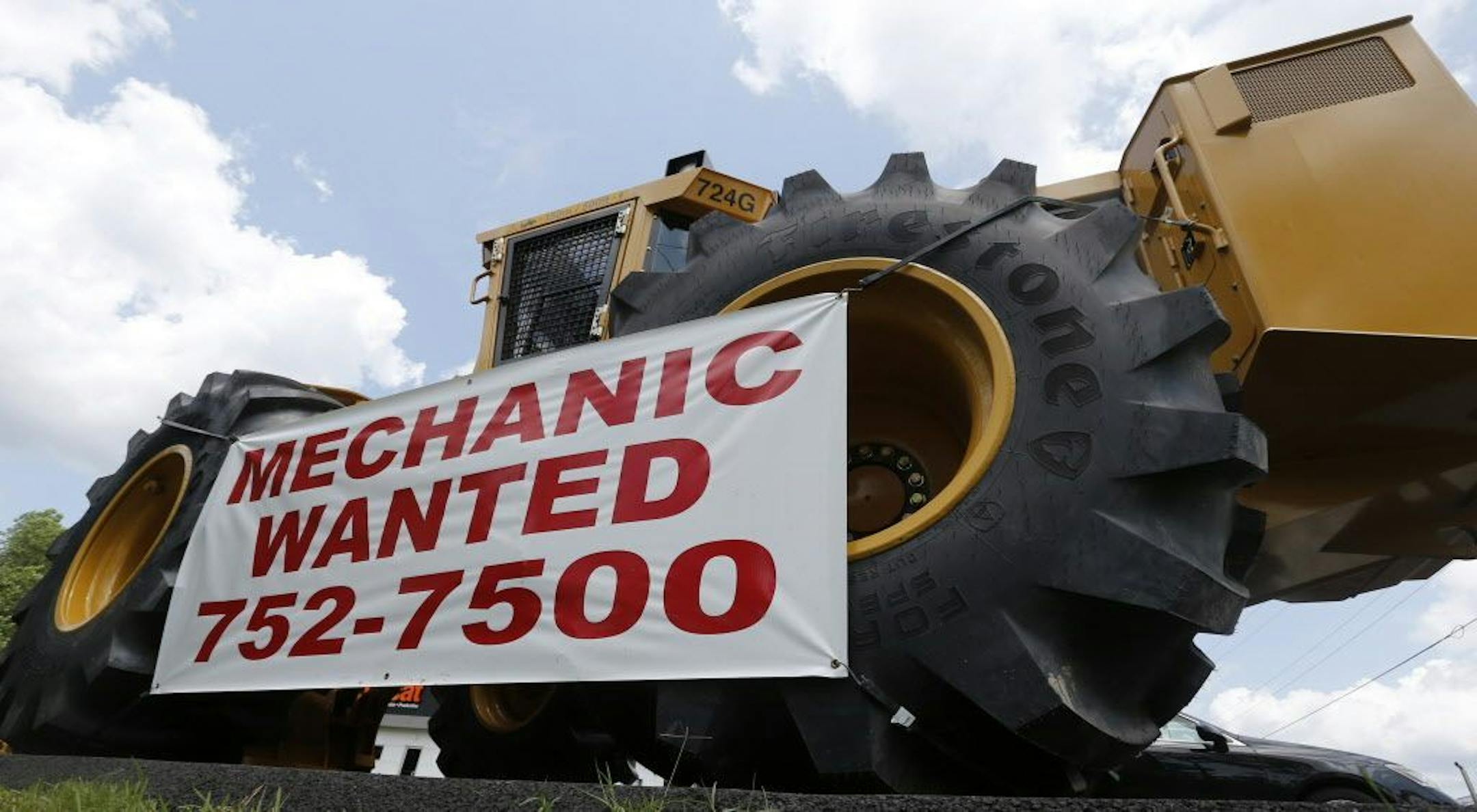
WASHINGTON — The U.S. job market just demonstrated that it may be nearing full health more than six years after the Great Recession — and showed why the Federal Reserve may be about to raise interest rates from record lows.
July marked the latest month in a streak of solid hiring, with employers adding 215,000 jobs and the unemployment rate holding at a relatively low 5.3 percent, the government said Friday.
Monthly job growth has averaged 211,286 so far this year, a level suggesting that employers are confident the economy will continue to expand and require more workers in the coming months and years. The government also said employers added a total of 14,000 more jobs in May and June than previously estimated.
"Another solid jobs report suggests the economy is gaining strength and keeps the Fed on track to raise rates as early as the next meeting," in September, Sal Guatieri, a senior economist at BMO Capital Markets, said in a research note.
The Fed has held its key short-term rate near zero since the financial crisis of 2008 to try to energize borrowing, investing and spending. But now the Fed is close to concluding that the economy is strong enough to withstand higher rates.
Still, many Americans remain anxious about the modest recovery. The economy's overall growth rate has remained lackluster at an annualized pace of 1.5 percent in the first of half the year, and pay raises have been sluggish, with average hourly earnings in July up just 2.1 percent from a year earlier.
Some of those misgivings were on display Thursday night at the first Republican presidential debate, where the candidates talked of simplifying the tax code, slashing regulations and easing the pressures on American workers resulting from immigration and global trade.
"The jobs that once sustained our middle class — they either don't pay enough or they are gone," said Florida Sen. Marco Rubio, offering a perspective shared by many Democrats as well.


