

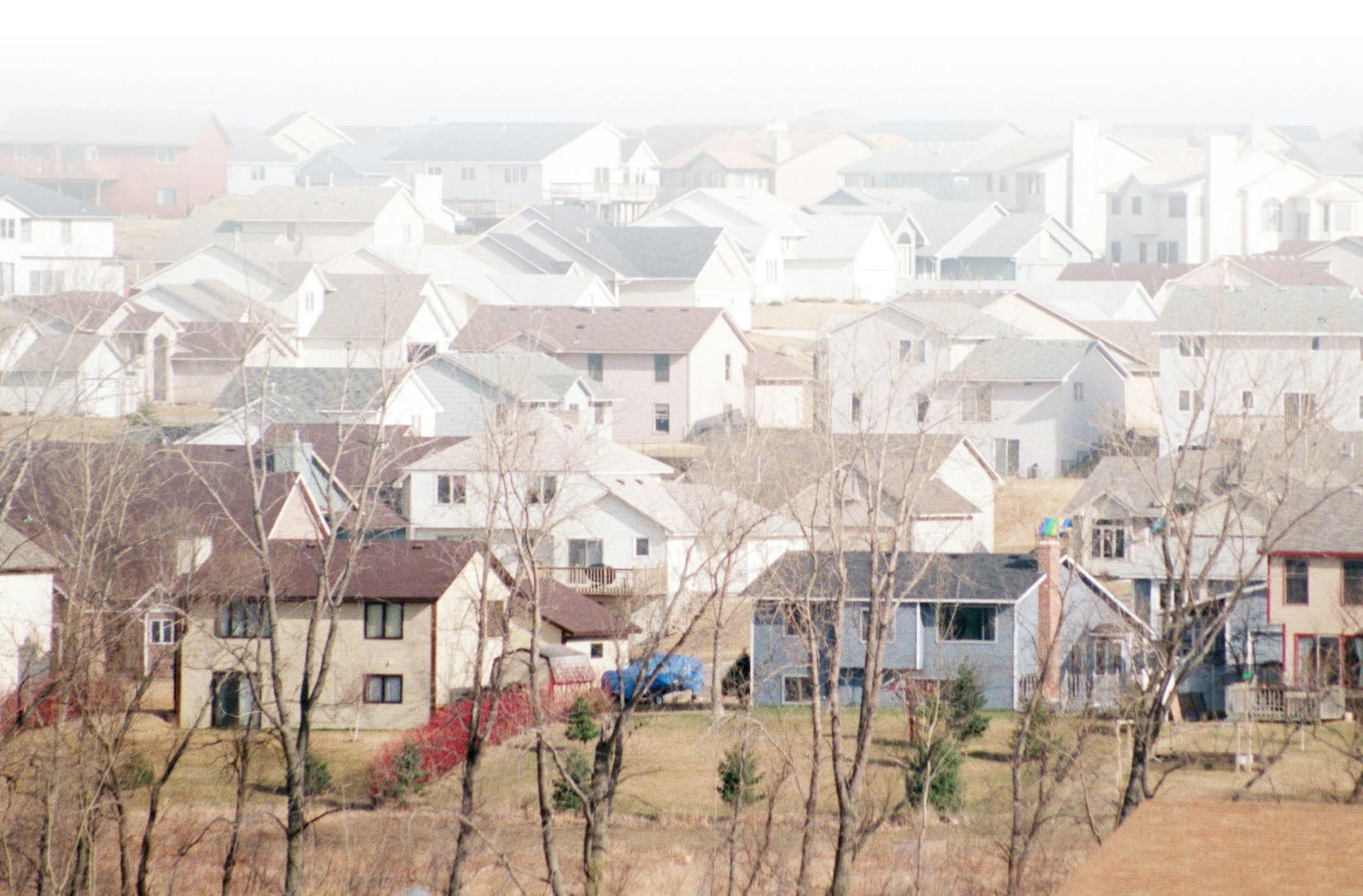
Land-use planners across the country have long defined "urban sprawl" as something that happens in the lightly populated exurban fringes of cities, where it's easy to see the isolated tracts of similar-looking housing, the strict segregation of commercial and residential areas and the congested highways.
But residents of closer-in areas also say they "feel" those characteristics of sprawl in their neighborhoods despite their higher population densities, and a University of Minnesota researcher says a study she performed indicates their perception in many cases is indeed more than just a feeling.
Tracy Kugler, a research project manager with the University's Minnesota Population Center, has developed a new way to measure urban sprawl that incorporates a series of "know-it-when-you-see-it" attributes of sprawl — rather than just population density — and then applied it to nearly every major urban center in the United States.
She deployed her "sprawl index" on a neighborhood scale across 353 U.S. metropolitan regions, which is a departure for a discipline in which sprawl has almost always been studied on a regional scale.
What Kugler found in her two-year effort is that moderately dense neighborhoods often share the same sprawl-related characteristics as their exurban counterparts, which could prove to be an eye-opener for planners who have mostly assumed that these issues are confined to outer-ring areas.
"I wanted to find a way to measure what people actually experience as sprawl, and how that compared to what people had been measuring as sprawl," she said. "The sense that I had was that density isn't the only thing that matters."
In developing her index, Kugler used public data on things that people typically perceive as attributes of sprawl, such as the level of street network connectivity, the integration of housing and commercial uses and the sameness of the housing stock.
She also employed aerial photography of a randomly selected cross section of neighborhoods from across the country to determine whether they had small or large lots, if there were sharp or blurry transitions between urban and rural uses, the number of cul-de-sac streets and other criteria.



