

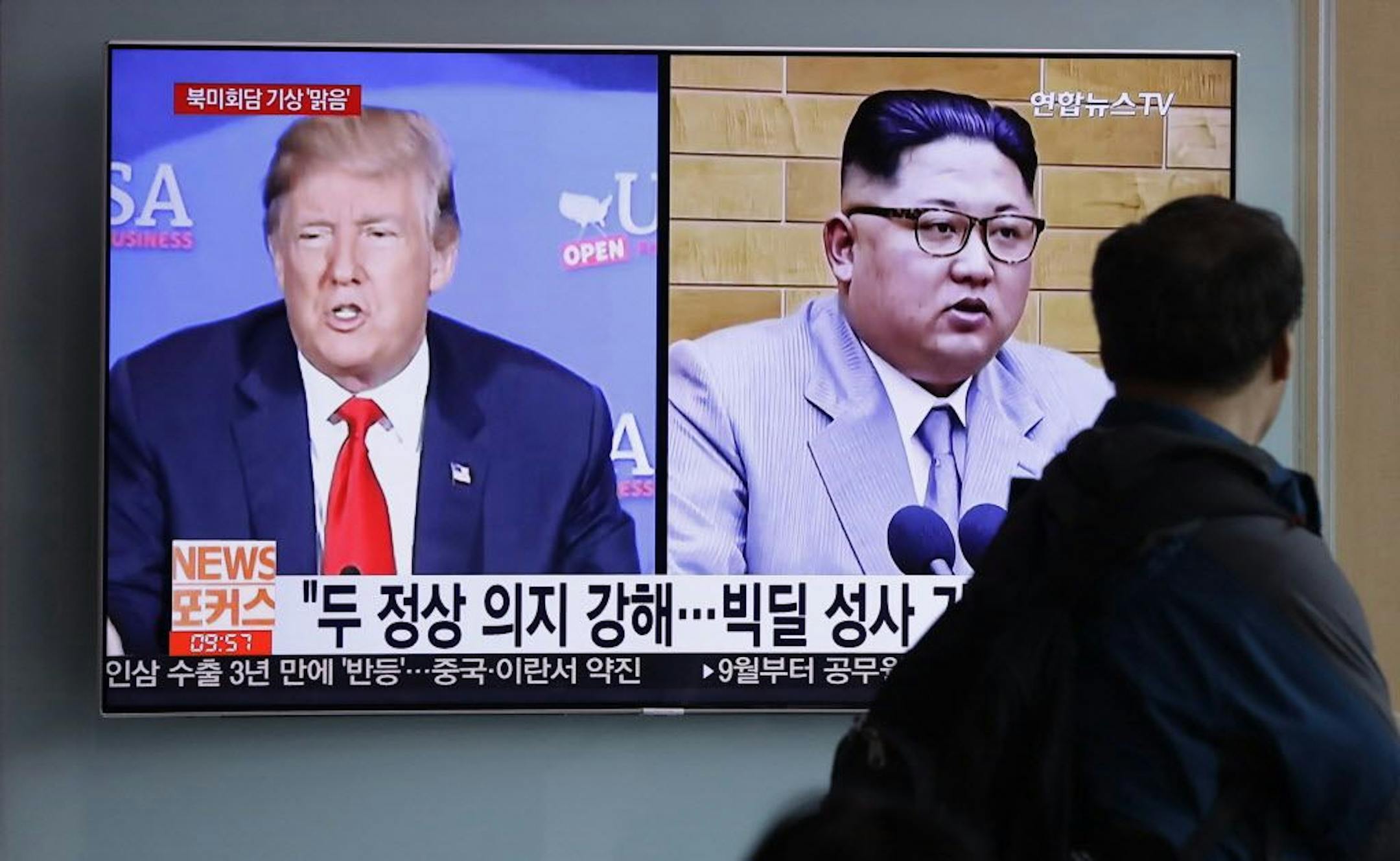
The Trump administration is a cable-news presidency. President Donald Trump, known for his aversion to detailed briefings, often sets much of his agenda during his morning "executive time" sessions - that is, watching and frequently tweeting about cable shows like Fox and Friends.
But Trump isn't the only world leader with a cable-TV package: North Korean leader Kim Jong Un is apparently another consumer of American news coverage. And, as became clear this week, that should cause the Trump administration to think hard about how it publicly portrays the president's upcoming summit with Kim.
The much-anticipated meeting, scheduled for June 12 in Singapore, will likely be the most important diplomatic event of the year. But on Wednesday, North Korea suddenly undercut the hype, announcing that it would postpone talks with South Korea because of Seoul's joint military exercises with the United States. Then it suggested it could pull out of the summit with Trump, too.
The threats weren't entirely unexpected. As many analysts noted, North Korea often backtracks on promises as a negotiating tactic.
Alison Evans tweeted "One reason NorthKoreathreatened to cancel the 12 June summit?It's leadership likely recognises how important optics are to Donald Trump...North Korea just won lots of photos and an hour of footage from the Kim-Moon summit - Kim Jong Un doesn't need another photo-op just yet."
But later on Wednesday, North Korea released another statement that presented more significant objections to the Trump administration's view of the Singapore summit. The complaints seemed to come in response to cable-news appearances by U.S. officials.
This past weekend, Secretary of State Mike Pompeo and national security adviser John Bolton appeared on Sunday talk shows and discussed Trump's plans for his meeting with Kim. Pompeo reiterated to Fox News that the United States would demand the "the complete, verifiable, irreversible denuclearization of North Korea," while Bolton told CNN that North Korea is in a weak position due to Trump's "maximum pressure" policy of economic and diplomatic isolation.
And while he didn't mention it this Sunday, Bolton has previously touted the example of Libya's denuclearization as potential precedent. In 2003, the then-dictatorship agreed to give up its nuclear efforts in order to get relief from U.S. sanctions and repair its moribund economy. "I think we're looking at the Libya model of 2003, 2004," he said to CBS News last month.


