
Spike in enrollment adds urgency to University of Minnesota Rochester expansion plans

The 80% surge in the freshman class has the university accelerating plans for additional space downtown.

The Minnesota Star Tribune
September 8, 2025 at 11:00AM
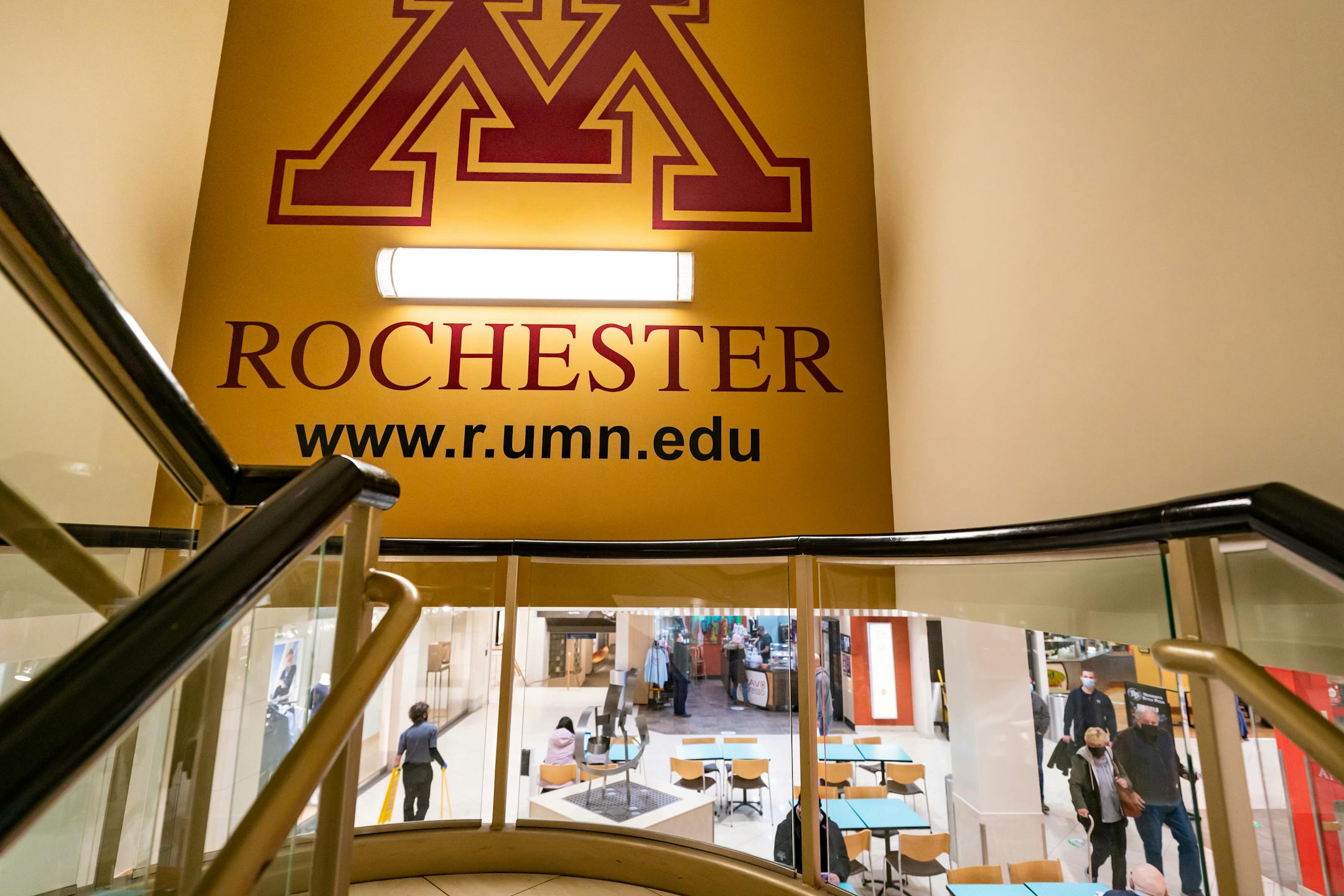
The University of Minnesota Rochester’s downtown campus, spread across a mix of leased spaces, is nearing capacity. (Glen Stubbe/The Minnesota Star Tribune)

ROCHESTER – As she begins her first week of college, Isabel Schoen isn’t wrestling with the age-old question of what to study. She already knows.

“I have known from a very young age I wanted to study medicine,” said Schoen, a freshman at the University of Minnesota Rochester. “I want to be in a profession where I can help kids and make a difference.”

At UMR, Schoen is far from alone. Unlike nearly half of freshmen nationwide who arrive undecided, most students at the Rochester campus start with a clear path. That’s by design: The university offers only two undergraduate programs, both in health sciences.

“I toured other traditional schools, including in the Twin Cities, but it just felt too big,” said Schoen, a Lakeville native. “I just feel like here it’s an entirely different experience, with a clear focus.”

Schoen is part of UMR’s largest freshman class in history — nearly 350 first-time students, an 80% increase from last year. For a campus that surpassed 1,000 students for the first time only in 2024, the surge in enrollment has leaders both celebrating and scrambling.

The university’s newest addition — a 400-bed residence hall and student-life center that opened in a converted hotel last year — is already at capacity. Classroom and lab space scattered across its downtown footprint are also nearing their limits.

While the school has been noncommittal about future development plans — including what do with 4.8 acres of land it owns on the southern edge of downtown — UMR Chancellor Lori Carrell said the latest enrollment numbers have begun to accelerate conversations with the university system and local developers regarding space needs.

“We are at or past an inflection point,” Carrell said of the university, which opened to students in 2009. “We know we need investment; that’s the way startups work. And so strategic investment needs and requests related to those are on the forefront of my calendar and our priorities as a campus.”

To accommodate the influx of new students — nearly 400 in all, including transfers — the university has hired 11 new employees in recent months, including three faculty members. The school is also looking to expand on its longstanding relationship with nearby Mayo Clinic, where nearly all students at UMR go for internships while in school.

What the school is not doing, however, is lowering admission standards or the level of education that had earned the school national recognition, said Terry Whittum, associate vice chancellor for enrollment at UMR.

The average GPA for incoming students is 3.6, identical to what it was the year before when the university accepted fewer than 200 students.

Whittum attributed the growth this year to an 18-month recruitment effort that zeroed in on finding the right students for the university’s niche offerings. He also pointed to four-fold growth in the Minnesota Direct Admissions program, in which high school seniors can proactively receive admission from dozens of participating higher learning institutions. Now in year three, the program has 180 high schools enrolled across the state.

“We’re not a traditional campus — we don’t have football or a quad or those kinds of things,” Whittum said. “But the students who come here really are attracted to the programs that we offer and the accessibility of Mayo.”

With about 1,200 students enrolled this fall, the school is about halfway to its goal of 2,500 students, which the university has said would trigger the need for a significant expansion, particularly for student housing.

That plan could include developing property of its own — the university has spent more than $10.2 million on land downtown since 2010 — as well as continuing its model of leasing space throughout the downtown.

The University of Minnesota had a presence in Rochester for decades before state officials in 2006 signed off on building another campus in the city. The campus graduated its first class in 2013.

In the meantime, many first-year students don’t view the nontraditional campus setting as a downside; rather, for freshmen like Abby Grant, the small class sizes and access to Mayo Clinic were key reasons she enrolled.

Grant, who came to UMR from Lonsdale, Minn., is already on the fast track to a career in radiology after accumulating more than 30 credits through a postsecondary enrollment program in high school.

“For me, I like that [UMR] is just specific to medicine,” Grant said. “It’s been nice to see other people who are like, ‘Let’s get this done. We know what we’re doing, we know what our plan is to get it done.’ Instead of people like, ‘No, I want to do partying.’ That is not why any of us are here.”

about the writer

about the writer

Sean Baker

Reporter

Sean Baker is a reporter for the Star Tribune covering southeast Minnesota.

See Moreicon

More from Rochester

See More
card image
Trey Mewes/The Minnesota Star Tribune

The Edmontosaurus fossil “Medusa” has come to Winona State with skin and tendon evidence, making it one of about a dozen such fossils in the world.

card image
card image