
University of Minnesota clinic is treating a record number of ailing birds of prey

The U’s Raptor Center says West Nile virus, warmer winters might be contributing to the high patient load.

The Minnesota Star Tribune
October 10, 2025 at 5:33PM
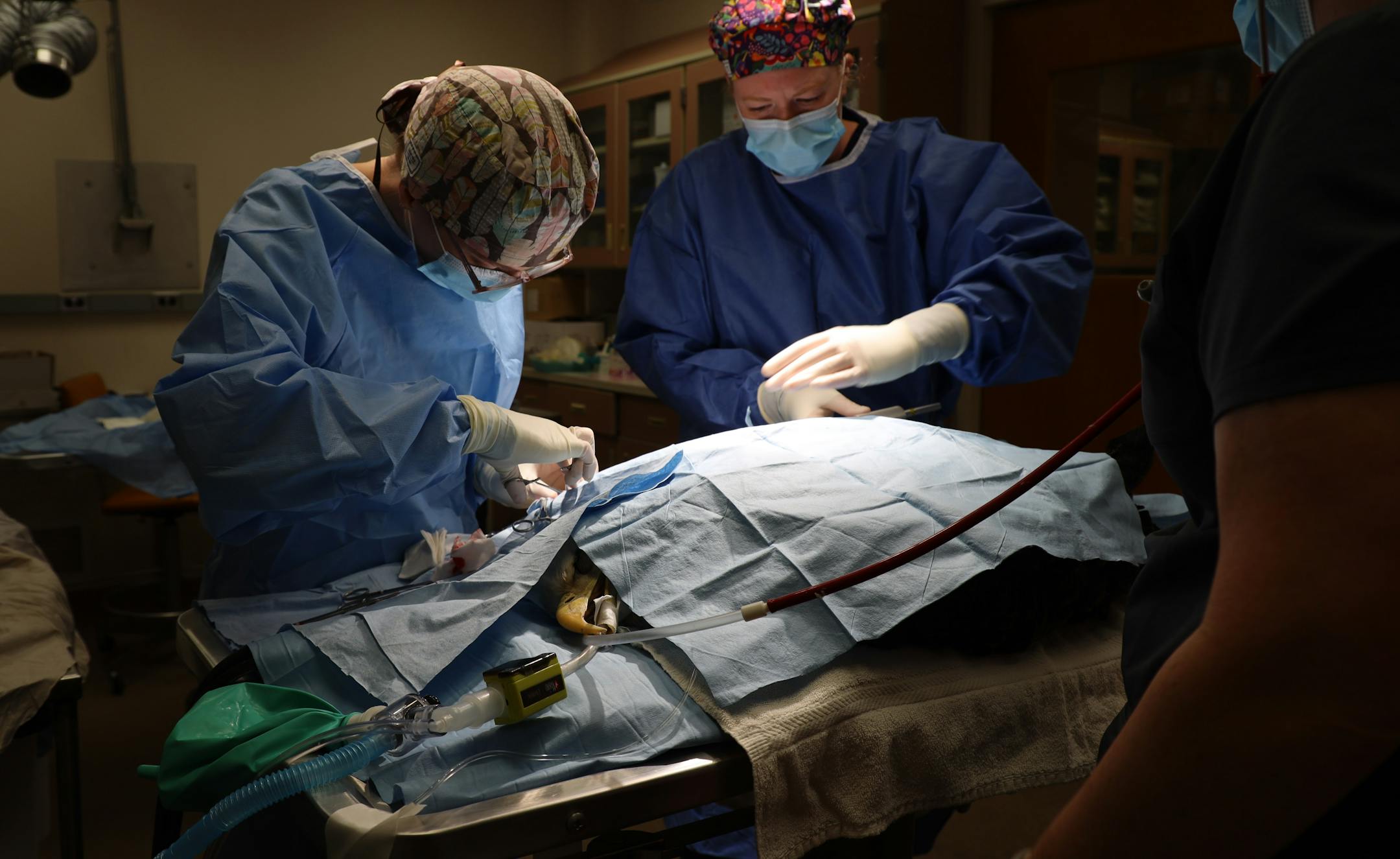
Raptor Center medical director Dana Franzen-Klein, left, repairs the broken wing of a bald eagle. (Photo: Courtesy of Anthony Baffo, The Raptor Center)

Found in a western Wisconsin farm field, a sick bald eagle was transported to the Raptor Center’s clinic in St. Paul and admitted Oct. 5. With severe tremors and spasms, the juvenile bird was so ill it had to be euthanized. Preliminary test results confirmed center specialists’ suspicions. The raptor had bird flu.

The center at the University of Minnesota treats birds of prey for a range of ailments, but this case stood out:

The young eagle was patient No. 1,106, surpassing the previous highest total of admissions in a year at the Raptor Center. And with two and a half months left in 2025. Last year also hit a new high.

“Even during the months where we get fewer birds because of migration, we still got more birds in,” said interim executive director Lori Arent. “That trend started and continued right from January.”

On Friday, the center was caring for 41 birds.

Some are admitted with infectious disease, like highly pathogenic avian influenza. Others are hurt in window strikes, vehicle collisions and territorial battles. Baby birds get displaced from their nests. The most common species so far this year are bald eagles, red-tailed and Cooper’s hawks, and barred and great-horned owls.

Arent and medical director Dana Franzen-Klein said they couldn’t identify a singular reason for this record year. They’ll analyze admission data at year’s end to dig further.

“We don’t get a completely definitive diagnosis on every admission,” Franzen-Klein said. “Overall, it seems to be more of what we usually see.”

But while they aren’t certain why, they have some theories.

First, a record number of patients (329) have been juvenile raptors, young birds which still are learning to fly and hunt.

The last two warmer-than-average winters might have allowed prey to thrive, which improved the food supply and consequently the success of breeding parents, Franzen-Klein said.

Also, West Nile virus infections are noticeably higher this year. The virus is spread by mosquito bites and also when raptors prey on infected birds.

The center isn’t certain of West Nile’s impact because of limited testing.

“We confirm [West Nile virus] with testing a couple birds a year,” Franzen-Klein said. “But we don’t test the 100-plus birds that we suspect have it. We just can’t afford to do that.”

One factor in the high clinic admissions could be a positive one, Arent and Franzen-Klein said. The center works to educate the public about its services, and that’s likely paying off.

View post on Instagram
 

“Wildlife rehab has become a more recognized profession with more resources,” Franzen-Klein added. “People know we exist and give us a call when they find a bird, which is great.”

The center has 300 volunteers around Minnesota and other Midwest states who respond to those calls. All in a region that truly is raptor country.

With about 9,800 breeding pairs, the state has one of the largest bald eagle populations in the nation. Plus, there is a massive fall migration of birds of prey moving south from Canada that follow the updrafts along Lake Superior, rather than attempting to cross the big water. Hawk Ridge Bird Observatory in Duluth counts as many as 60,000 raptors in spring and autumn.

A majority of the sick and injured birds come from the metro and other populated areas, like Duluth and Mankato, where species are adapted to living with people, Franzen-Klein said.

While about 60% of birds are treated and released, all the extra patients combined with testing protocols have forced the center to create a makeshift quarantine space out of former offices.

With state funding, the center now tests every bird admitted for avian flu since the outbreak in early 2022. Birds are quarantined until they test negative for the virus, and at times that has meant cramped quarters.

“If this continues, we would need more housing space in the long term,” Arent said. “It’s challenging."

about the writer

about the writer

Bob Timmons

Outdoors reporter

Bob Timmons covers news across Minnesota's outdoors, from natural resources to recreation to wildlife.

See Moreicon

More from Outdoors

See More
Rising above the treeline (Top of this photo), on the shore of Birch Lake, the Twin Metals Copper Nickel Mine Plant site and Tailings Management site is part of the proposed plan. ] In theory, the copper-nickel mine Twin Metals wants to build in the headwaters of the Boundary Waters Canoe Area Wilderness is a zero-discharge mine — a closed loop that will endlessly recycle millions of gallons of water, including rainwater and the polluted process water it uses to extract ore and
Brian Peterson/The Minnesota Star Tribune

The copper-nickel mine is controversial for its proximity to the Boundary Waters Canoe Area Wilderness, and the Biden Administration had canceled its leases.

card image
card image