

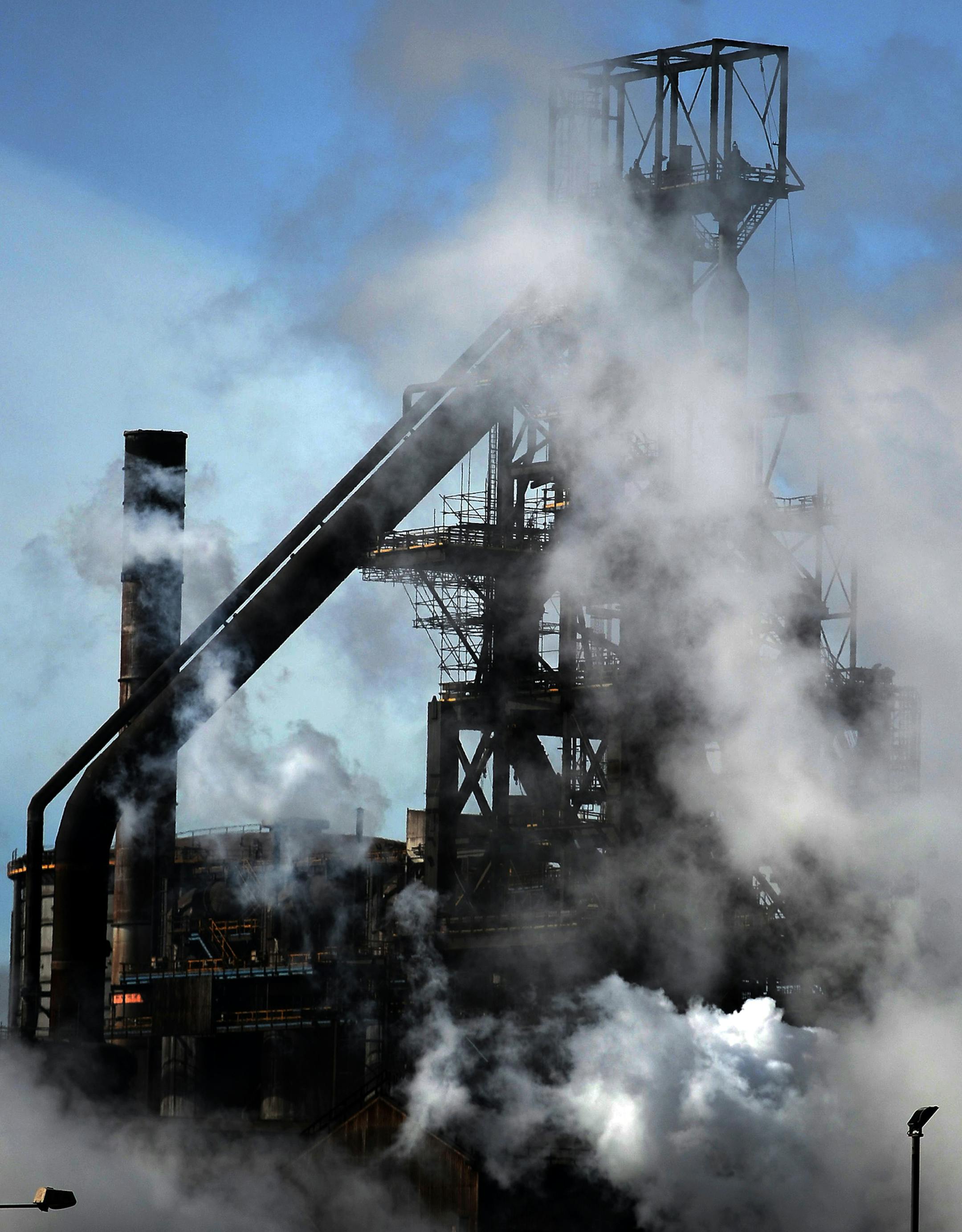
Port Talbot in South Wales is known for producing two things: stardust and steel. Its dazzling crop of homegrown film stars stretches back for generations, including Richard Burton, Sir Anthony Hopkins and Michael Sheen. So do its steelworking families.
Christian Reed, a project manager, has worked at the Tata Steel plant — Britain's biggest — for 11 years. His father worked in the local steel industry for 40 years, and his grandfather was a foundry worker. "It's very difficult to contemplate losing the plant," he says. "It would be like losing a member of the family."
The fate of his job and those of about 4,300 other Port Talbot steelworkers, as well as Britain's loss-making steel industry in general, have become the most poignant part of the political row that has erupted in Britain since Tata Steel, Britain's biggest producer, said in late March that it planned to sell or close its operations in the country.
Opposition politicians have demanded that the government engineer a rescue, either by erecting high tariff walls against cheap steel imports, as the U.S. has done, or by going for some sort of nationalization.
On April 5, a potential rescuer, Sanjeev Gupta of Liberty House, a commodity-trading company, said he was interested in buying the Port Talbot business, though he wants government sweeteners before doing so. He has called Britain's steel industry "probably the worst in the world."
There are few parts of the rich world where steel remains a good business, however. Port Talbot's woes are indicative of a global problem — especially in places where makers of unspecialized steel face competition from cheaper producers.
In the eyes of many, the main boogeyman is China, where steel output has ballooned. The country has produced more steel in two years than Britain since 1900, says the International Steel Statistics Bureau, and is indeed awash with excess capacity.
But this is part of a phenomenon that extends across the developing world. Meanwhile, the China-led slowdown in developing economies and low oil prices, which have hit the use of steel in rigs and pipelines, mean demand is severely lagging supply.


