

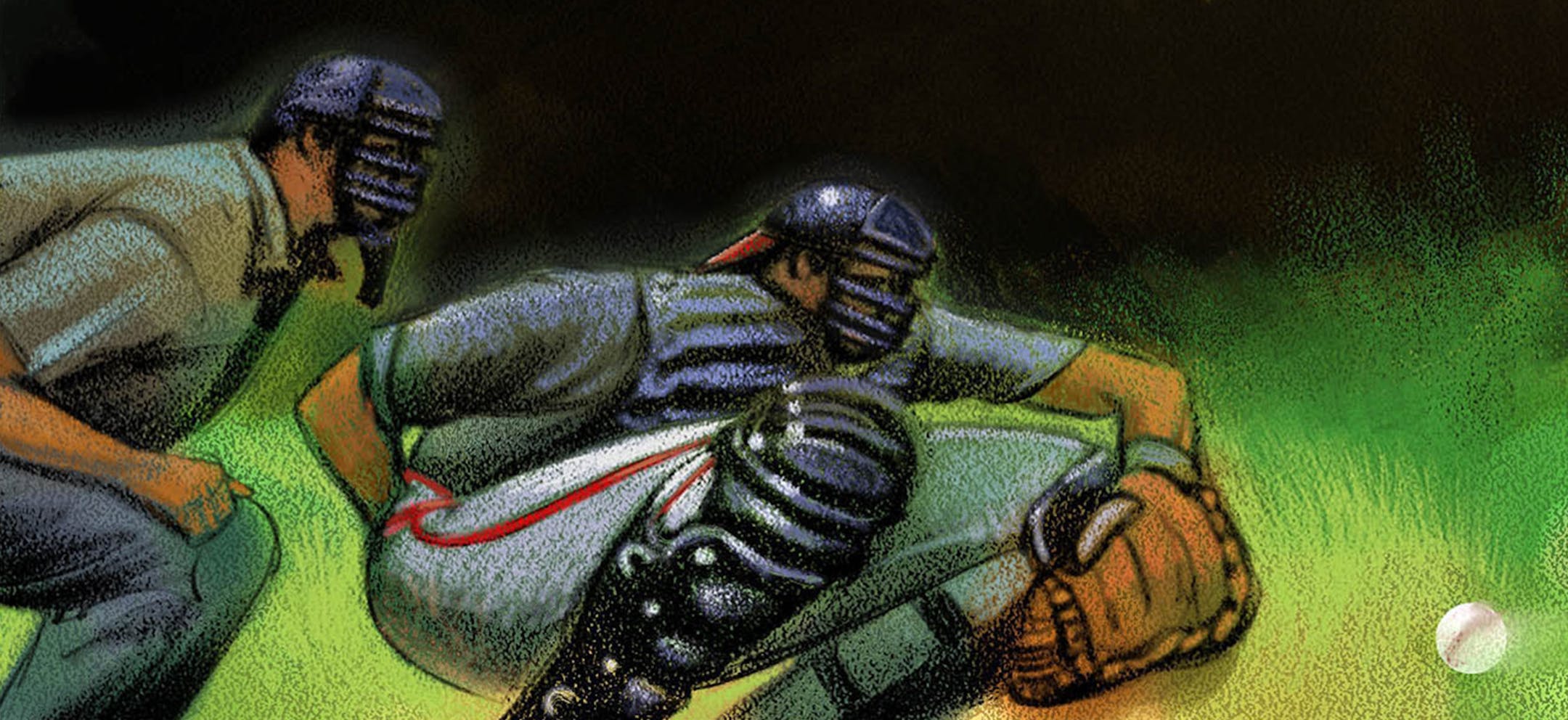
In his Senate confirmation hearing in 2005, the aspiring chief justice, John Roberts, offered a memorable analogy: "Judges are like umpires. Umpires don't make the rules; they apply them. The role of an umpire and a judge is critical. They make sure everybody plays by the rules."
The analogy was effective, because many people want judges to be umpires, dedicated to neutral application of the rules. In baseball, however, many fans don't agree that umpires are objective. Are they right?
We are obtaining a lot of data on that question, and a new paper finds some identifiable biases on the part of baseball's umpires. The biases are fascinating, not only because of what they tell us about baseball, but also because of what they tell us about human nature, and perhaps a general human propensity toward mercy.
To test for bias, Stanford University's Etan Green and David Daniels studied more than 1 million calls made by umpires from 2009 to 2011.
Not surprisingly, they found that some pitches are almost 100 percent likely to be called strikes, while others are almost certain to be called balls. But there is an area of uncertainty around the edge of the strike zone. That's where the bias occurs. Green and Daniels conclude that despite "their professional directive and expertise, umpires err in their decisionmaking; their mistakes are systematic, sizable and pervasive."
To test for bias, the authors examined how the umpires' judgments about the size of the strike zone change in four conditions: when the count has two strikes, when the count has three balls, when the preceding pitch was a ball and when the preceding pitch was a called strike.
When the batter has two strikes, the strike zone turns out to get a lot smaller. Apparently, umpires don't like to call a third strike. Similarly, the strike zone gets much smaller right after a called strike. These effects are remarkably large, producing "as much as a 20 percentage point drop, for the average umpire, in the probability of a strike."
By contrast, umpires show no bias if the preceding pitch was a ball. If the count has three balls, the strike zone does expand — but only slightly.


