
Opinion | We could hate on higher ed a little less

Yes, it deserves scrutiny — but not all that ire. Never forget the pivotal ways it serves our society.

September 16, 2025 at 8:12PM
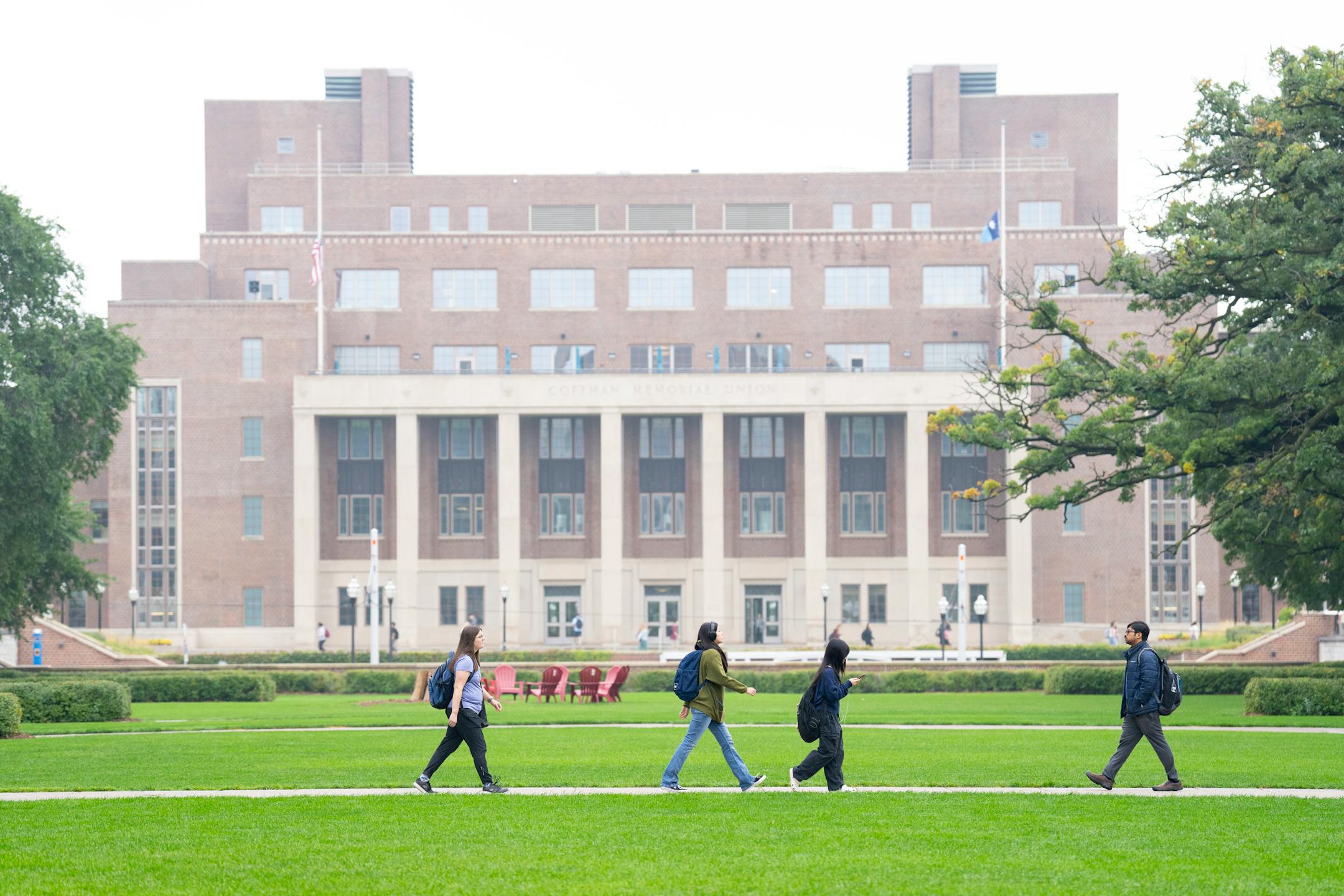
"it’s essential never to lose sight of the pivotal importance of American colleges and universities economically, technologically, socially, individually and in other core ways," Mitch Pearlstein writes. (Alex Kormann/The Minnesota Star Tribune)

Opinion editor’s note: Strib Voices publishes a mix of guest commentaries online and in print each day. To contribute, click here.

•••

Six decades ago in Queens, when I was a lousy and irresponsible junior high school student and then a lousy and irresponsible high school student, I fantasized about someday being not just a studious college student, but a classy one. As if matriculating in a make-believe, midcentury movie starring Peter Lawford, clothed in tweed and leather elbow patches.

Since that time, my higher education jets have cooled with age, but not nearly to the point of cold, as a large part of me remains a romantic about American colleges and universities. This, despite widespread and increasing anger and doubts about them in many places — sour views held by millions, often the very people who owe much of their worldly and other successes to the “academy.”

Back in the 1960s, when I only occasionally did my homework, I figured I had one last chance to have the kind of career and life I envisioned for myself, but only if I finally learned how to work conscientiously, consistently. Which, I did, at a special one-year program at a community college intended especially for young people having a hard time getting accepted elsewhere. Fear, I learned, can be a great motivator. From the ivy-free City University College Center at New York City Community College, I went on to earn undergraduate and graduate degrees from two excellent universities, winding up in terrific jobs at both. My boss each time, as great fortune would have it, was C. Peter Magrath, who you may recall from his 10 years as president of the University of Minnesota, from 1974 to ’84. Peter’s love for American colleges and universities, particularly big and messy land-grants, was ardent. I learned a lot from him.

But as enthusiastic as Peter’s allegiance was, it was grounded in practicality and hard reality, as governing boards generally don’t elect innocents. Yet he never lost an electric spark of wonder about higher education, and nor have I, causing me to have small patience these days with critics whose strictures about colleges and universities are overly severe, myopic regarding what remarkable and invaluable institutions they are. Their shortcomings and excesses notwithstanding, they deserve better.

I’m reluctant to be seen here as embracing an infelicitous devotion. Though if that’s the perception, so be it, as colleges and universities, despite inadequacies and sins, deserve more reverence than they have been receiving.

What kinds of inevitable sins and inadequacies exactly?

Many tuition rates are ridiculously expensive. Though in partial fairness, the only families and students who usually pay full freight (or is it fright?) are those who can afford to do so. Less affluent students routinely qualify for different kinds of financial aid.

Too many swaths of too many schools are intellectually mangled by “woke.” What is woke? Think of political correctness on steroids which, I’m proud to say, I’ve been critiquing since the 1970s.

It’s hard to see how faculties, especially in elite schools, especially in the social sciences and humanities, will be any less politically and ideologically skewed in the future.

While graduating at age 22 or 23 and moving quickly into good-paying and challenging jobs is only occasionally pain-free, a case can be made that it’s more maddening now for many young people. This is leading to legitimate questions about the wisdom of prodding as many people to get four-year degrees as we have for decades. (If it soothes any currently frustrated young people and their parents, after graduating from a very good liberal arts college in 1970, my first, non-temporary job was as a reporter for $1.85 an hour, the minimum wage at the time. Then, again, I did seem to have more disposable income back then.)

And though I would like to think antisemitism is not currently as blanketing as some contend, not to acknowledge it here when discussing higher education in spiritually infused terms doesn’t cut it.

Assorted caveats notwithstanding, the problems above, and more, are consequential. Yet even though the anti-intellectualism of woke, for instance, provokes blood pressures to steam, it’s essential never to lose sight of the pivotal importance of American colleges and universities economically, technologically, socially, individually and in other core ways. That’s the heart of the matter.

A Minnesota road trip during the second week I worked at the U, in 1974, reinforced all this. Along with another new member of Peter’s staff, I toured what were then the four “coordinate campuses”: North to Duluth, west to Crookston, south to Morris and across to Waseca. What a revelatory reflection it was of the enormous commitment we have long made in thousands of institutions — whether four-year or two-year, public or private, secular or religious — scattered all over the United States. Located in all kinds of communities, educating all kinds of people, young and not-so-young.

American colleges and universities continue demonstrating good and proud things about us, but we imperil ourselves if we beat the hell out of them. And if Washington continues mucking around in them.

Mitch Pearlstein’s newest book is “Second Chance Hiring: An Economic and Ethical Necessity,” to be released by Bloomsbury on Nov. 13. He is founder emeritus of Center of the American Experiment.

about the writer

about the writer

Mitch Pearlstein

More from Commentaries

See More
card image
Alex Kormann/The Minnesota Star Tribune

We can rebuild our country while rebuilding the middle class.

card image
card image