

The scenes from Russia's invasion of Ukraine are heart-rending and has rightly sparked an international coalition to stop the destruction and roll back the Russian invasion.
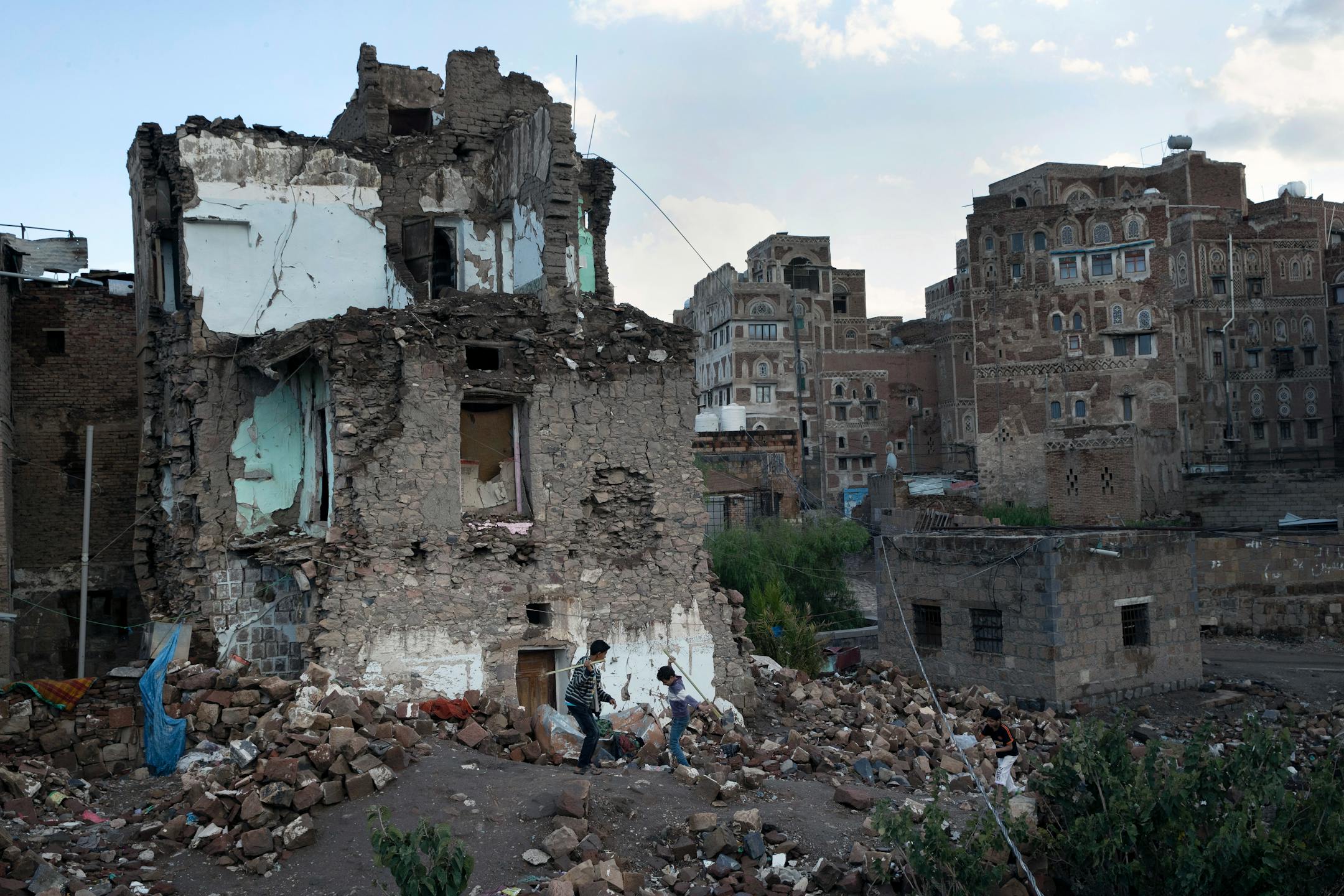
There is another conflict where the aggressor nation has bombed hospitals, civilian neighborhoods, basic infrastructure, a funeral, a wedding, and even a school bus, causing thousands of civilian casualties in the process — the Saudi-led war in Yemen, which marks its seventh anniversary later this month. But unlike its response to the Ukraine war, the United States has done more to enable the conflict in Yemen than to end it.
It is hard to overstate the humanitarian catastrophe caused by the intervention of the Saudi-led coalition in Yemen. There have been at least 18,000 civilian casualties caused by coalition airstrikes, and a Saudi air and naval blockade has severely limited the import of fuel and humanitarian aid. Almost 400,000 people have died from direct and indirect causes since the start of the war.
A Jan. 21 Saudi airstrike on a detention center in the northern part of the country killed at least 91 people and wounded 226 others.
As soon as he took office, President Joe Biden pledged to do all he could to end the Yemen war. In his first foreign policy speech as president, he promised to end support for "offensive operations in Yemen, including relevant arms sales."
The Biden administration's record on the Yemen war has not lived up to its initial rhetoric. After pausing two sales of bombs destined for the Royal Saudi Air Force, the administration approved more than $1 billion in arms sales to the regime. These sales raise serious concerns in their own right, but they also represent an endorsement of Saudi conduct.
The administration may go even further in enabling Saudi conduct in the war as a quid pro quo for Saudi Arabia to pump more oil to counteract the impact of sanctions on Russia.
Rewarding one autocracy in an effort to punish another would be both hypocritical and counterproductive.


