

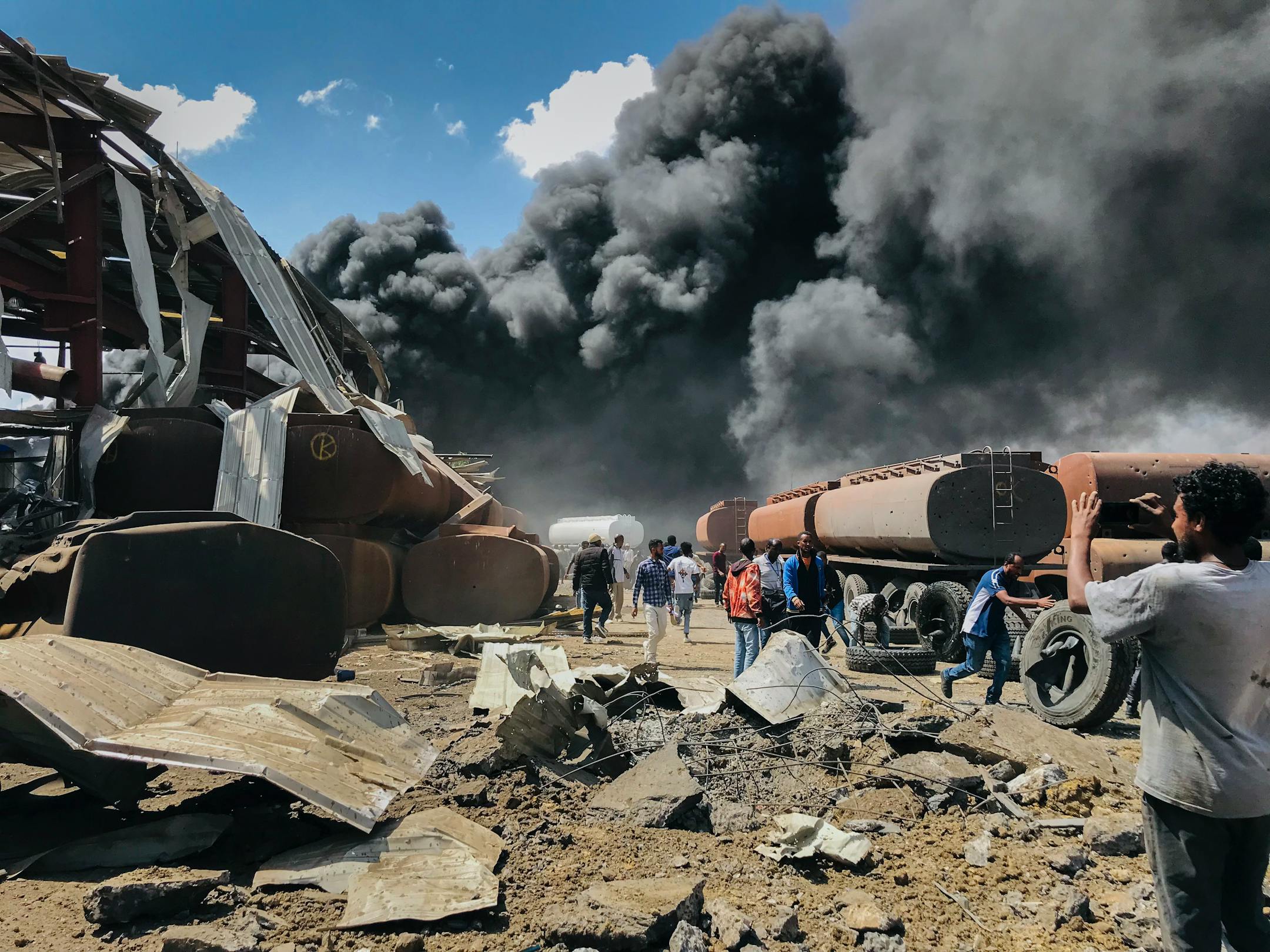
Coming from a Nobel Peace Prize winner, Abiy Ahmed's call for restraint and diplomacy to end the war in Ukraine might have attracted more attention if the Ethiopian prime minister hadn't stained his laurels with the blood of his own people.
Reports of hideous war crimes committed by Ahmed's forces and those of his Eritrean allies against civilians in the rebel northern province of Tigray make a mockery of his appeals for nonviolence in other parts of the world.
Russia's invasion of Ukraine has diverted international attention from conflicts elsewhere, including those in Yemen, Mozambique and Africa's Sahel, the region just south of the Sahara. In Ethiopia, Africa's second most populous nation, a bloody civil war is now in its 16th month.
The fighting between Abiy's forces and the rebel Tigray People's Liberation Front seems at a standstill, but human-rights groups and multilateral organizations have condemned atrocities on both sides.
Caught in the middle are civilians in the northern province, who now face a calamity that is being likened to horrors of Africa's past, and Ethiopia's: mass starvation and ethnocide. World Health Organization Director-General Tedros Adhanom Ghebreyesus, himself an Ethiopian, says there is "nowhere on earth where the health of millions of people is more under threat" than the Tigray region.
Abiy's government, which had celebrated Tedros' elevation to the leadership of the WHO as a matter of national pride, now is trying to tar him because his family has origins in Tigray. But as well as anecdotal evidence, there is a growing body of data to support Tedros' claim that the province is on the edge of a major humanitarian disaster.
Though the war's true toll is impossible to know, researchers from Belgium's Ghent University estimate as many as half a million people have died so far: between 50,000 and 100,000 from the fighting, 150,000 to 200,000 from starvation and more than 100,000 from the lack of medical attention. U.S. Secretary of State Antony Blinken has expressed concern about possible ethnic cleansing in Tigray, but the government in Addis Ababa has dismissed this as "spurious."
The Tigrayan rebels have been accused of crimes, including murder and rape, against other ethnic groups. But Abiy's soldiers are blamed for most of the civilian casualties, especially those from starvation and neglect. Government forces are preventing food aid and medicine from reaching Tigray, humanitarian groups say.


