

The world is changing faster than our sluggish political leaders — let alone the public — can manage.
The COVID-19 virus and climate change move far more quickly than the international community, as we saw last week at the G-20 in Rome and the COP26 climate summit in Glasgow, Scotland. Back home, rapid social shifts push many Americans to embrace fraudsters who promise to save them. The urgent need to upgrade our fraying democracy is blocked by GOP naysayers and Democratic Party infighting.
Above it all, science is advancing at warp speed while we humans progress at sludge speed, too oblivious to recognize that the changes from which we now recoil will be dwarfed by those of the next five or 10 years.
That reality was highlighted by the Joint Chiefs of Staff chairman, Gen. Mark Milley, at the Aspen Security Forum on Wednesday in Washington.
The general spoke of the uniqueness of the Chinese challenge, fueled by Beijing's drive to surpass the United States in cyber capabilities and space. His real message was the need to recognize the urgency of this moment.
"We are witnessing one of the largest shifts in geopolitical power that the world has witnessed," the general said. He was referring to China, of course, which in the last four decades has surged from a peasant economy and peasant army to the second-largest global economy with sophisticated capabilities in space and cybersecurity — on land, sea, air and underwater.
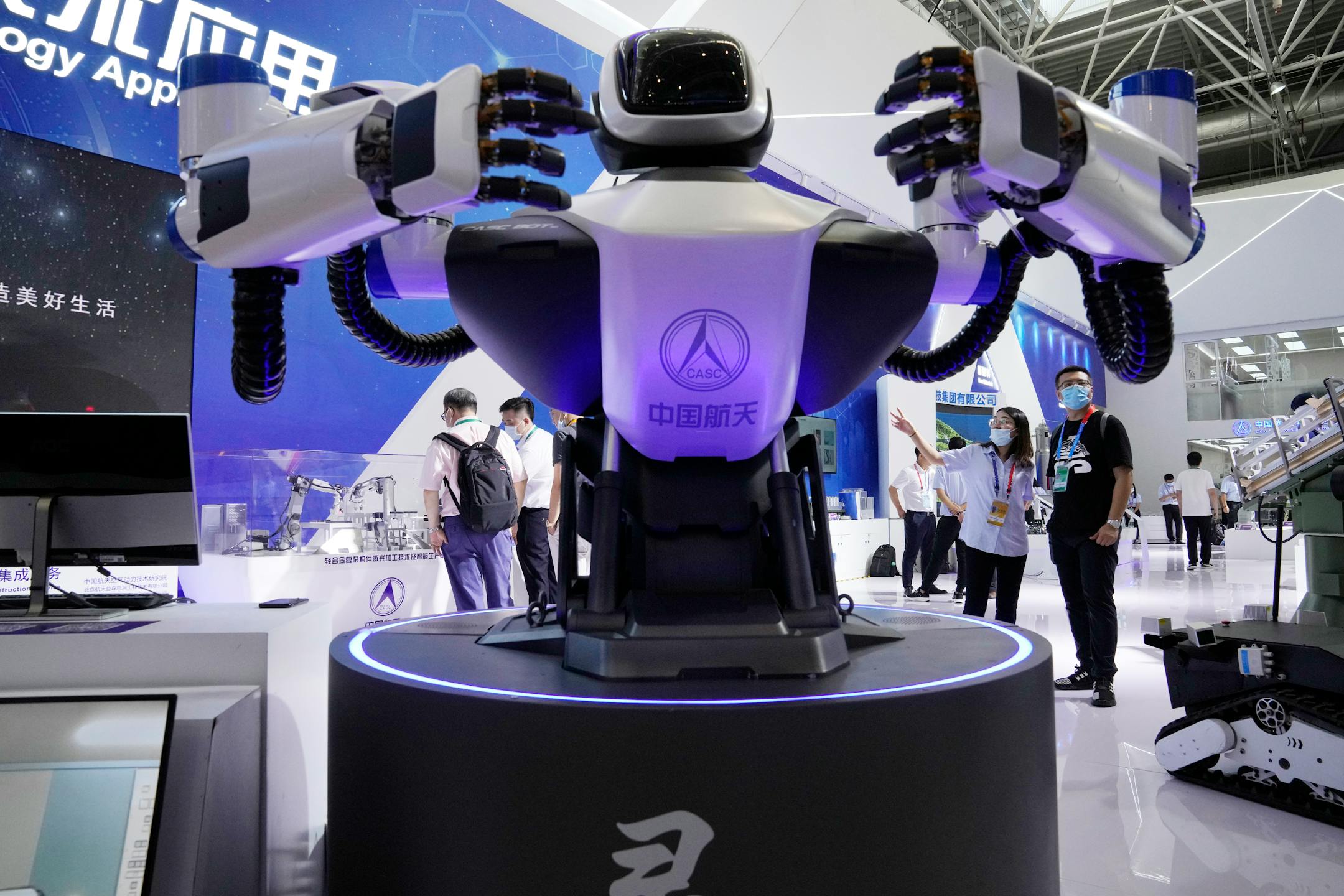
The general stressed, however, that these changes happened within "a fundamental change in the character of war" spurred by vast technological changes. "The last big shift, between World War I and World War II was the introduction of the airplane, mechanization and the radio. Today, you're seeing robotics, artificial intelligence and a wide variety of other technologies.
"If we, the United States military, don't do a fundamental change ourselves in the coming 10 to 20 years, we're going to be on the wrong side of a conflict."


