

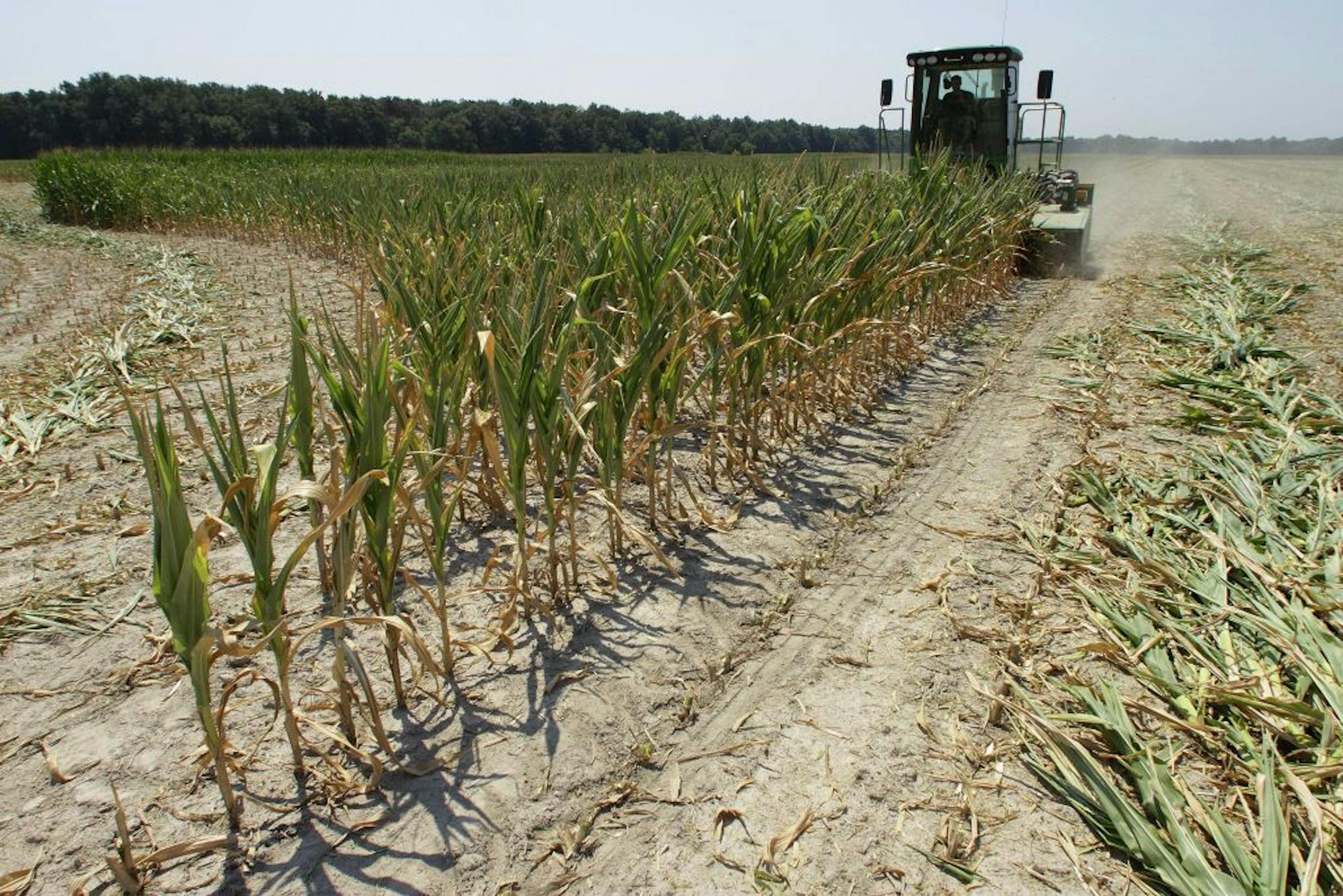
Even after the worst drought in a half century shriveled crops from Ohio to Nebraska, U.S. farmers are having their most-profitable year ever because of record-high prices and insurance claims.
Farmer income likely will jump 6.9 percent to $144 billion, exceeding the government's August estimate of $139.3 billion, said Neil Harl, an economist at Iowa State University. Parched fields that drove corn, soybean and wheat futures as much as 68 percent higher since mid-June mean insurance payouts may more than double to $28 billion, according to Doane Advisory Services, a farm and food-company researcher in St. Louis.
"Crop insurance was a savior this year," said Kyle Wendland, 29, whose corn yields plunged 36 percent and soybean output dropped 11 percent on the 1,030 acres he farms near Fredericksburg, Iowa. "It was the difference between making a profit or sustaining a loss."
Farming accounted for 0.9 percent of the U.S. economy last year, generating 11 percent of total exports and employing 2.635 million people.
Midwest farmland values rose by 13 percent to a record in the third quarter, and spurred sales of seeds, tractors and fertilizer. Costlier grain eroded profit for pork producers and restaurant owners. The government is predicting that food inflation will accelerate next year, led by meat, dairy and baked goods.
While smaller harvests are reducing supplies in the United States, which is the biggest agricultural exporter, slowing demand and more production in other nations are easing the impact.
Production of corn, the biggest U.S. crop, fell 13 percent to 272.4 million metric tons, the lowest since 2006, the Department of Agriculture estimates. In the two months from mid-June, prices surged as much as 68 percent on the Chicago Board of Trade to a record $8.49 a bushel. Crops withered as Midwest states went without rain for most of July and August and high temperatures obliterated records dating back more than a century.
Soybean output fell 4 percent to 80.86 million tons, driving futures to an all-time high of $17.89 on Sept. 4. Wheat prices reached a four-year high of $9.4725 on July 23, and the condition of the winter crop on Nov. 18 was the worst since at least 1985, threatening output of grain that will be harvested next June.



