

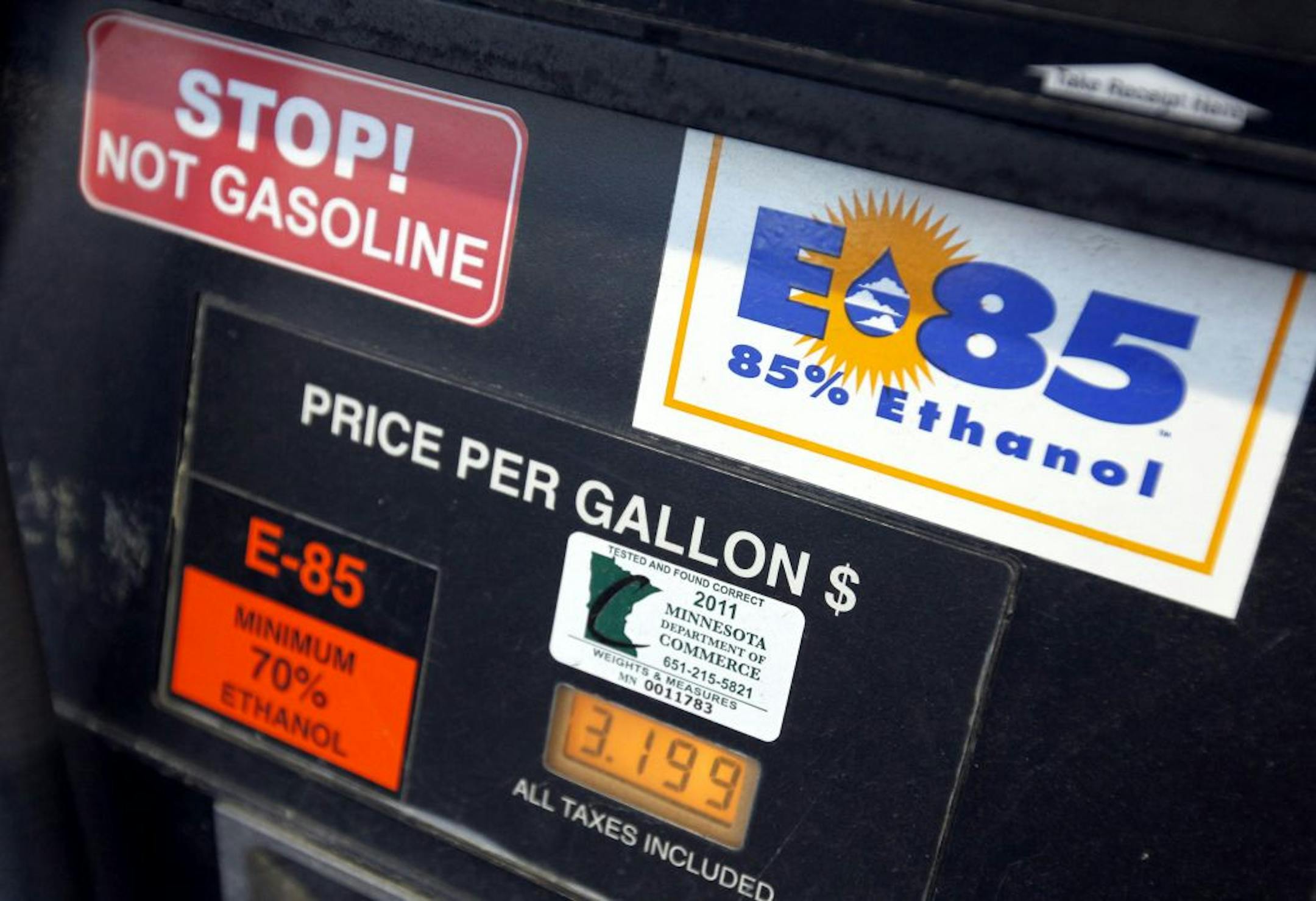
U.S. ethanol production is headed for the first decline in 16 years, jeopardizing the nation's drive to boost alternative fuels, as higher costs and lower demand close plants.
Shrinking distilling margins have resulted in a 14 percent drop in output this year to 827,000 barrels a day, or 12.7 billion gallons annually, Energy Department data show, 500 million gallons short of the amount refiners are mandated to use under a 2007 law that calls for escalating consumption of the biofuel. That would be the first yearly decrease since 1996.
As many as 10 companies, from Valero Energy Corp. to Biofuel Energy Corp., have closed distilleries after the worst drought since the 1950s sent the price of corn to a record just as gasoline demand slumped. President Obama's administration has until Tuesday to decide whether to agree to calls from a bipartisan group of lawmakers for the suspension of the law, which was the centerpiece of George W. Bush's plan to wean the U.S. off oil. Ethanol accounts for about 9.2 percent of total gasoline consumption, according to the Energy Department.
"It's an ugly situation that continues to get worse," Jason Ward, an analyst at Northstar Commodity Investments, a Minneapolis-based risk management company that specializes in agribusiness and renewable fuel, said in a telephone interview on Oct. 26. "The margin simply isn't enough to run full capacity or in some cases even at all. You can lower the standard but the market is going to take care of itself."
Ethanol, made in the U.S. by fermenting starches from corn to create an alcohol similar to moonshine, has gained 6.4 percent this year to $2.344 a gallon on the Chicago Board of Trade, not enough to make distilling it profitable. Prices are down 12 percent from a year ago.
Corn futures for delivery in December rose 3.25 cents, or 0.4 percent to $7.4425 a bushel in Chicago. Prices for the most-active corn contract rose to a record $8.49 a bushel on Aug. 10.
Based on December contracts for ethanol and corn, producers are losing about 36 cents on each gallon of the biofuel made, according to data compiled by Bloomberg. They were earning 24 cents a gallon a year ago. The numbers don't include profit from the sale of dried distillers' grains, a byproduct of ethanol production that can be fed to livestock.
"Right now, it is the toughest time ever to run an ethanol plant," said Bruce Babcock, an energy and farm economist at Iowa State University in Ames. "It's never been this bad in the last four years."



