

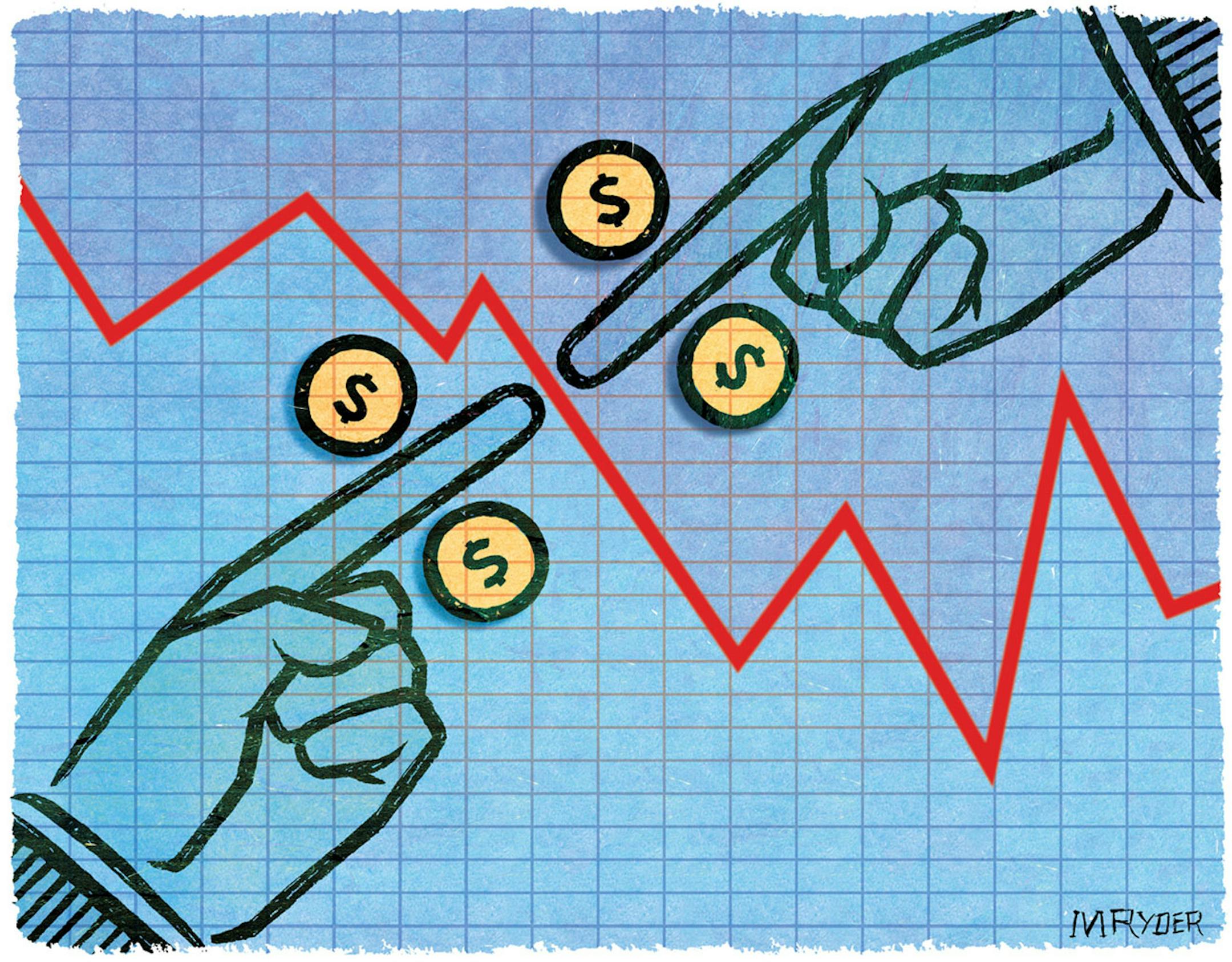
Four years into a so-called recovery and we're still below recession levels in every important respect except the stock market.
A measly 88,000 jobs were created in March, and total employment remains some 3 million below its pre-recession level. Labor-force participation is at its lowest level since 1979.
The recovery isn't just losing steam. It never had much steam to begin with.
That's because so much of our debate over economic policy has been beside the point.
On the one side have been Keynesians — followers of the great British economist John Maynard Keynes — who want more government spending and lower interest rates in order to fuel demand.
We tried a big Keynesian stimulus from 2009 to 2011, and the Federal Reserve is still keeping interest rates near zero.
I side with the Keynesians. But let's be candid: Keynesians don't have a clear answer for how much additional government spending is necessary in an economy, like ours, in which wages keep dropping. Simply urging "more" isn't convincing.
On the other side are supply-side "austerics" who want lower taxes on the wealthy and on corporations to boost incentives to hire and invest, and who see government deficits crowding out private investment.


