

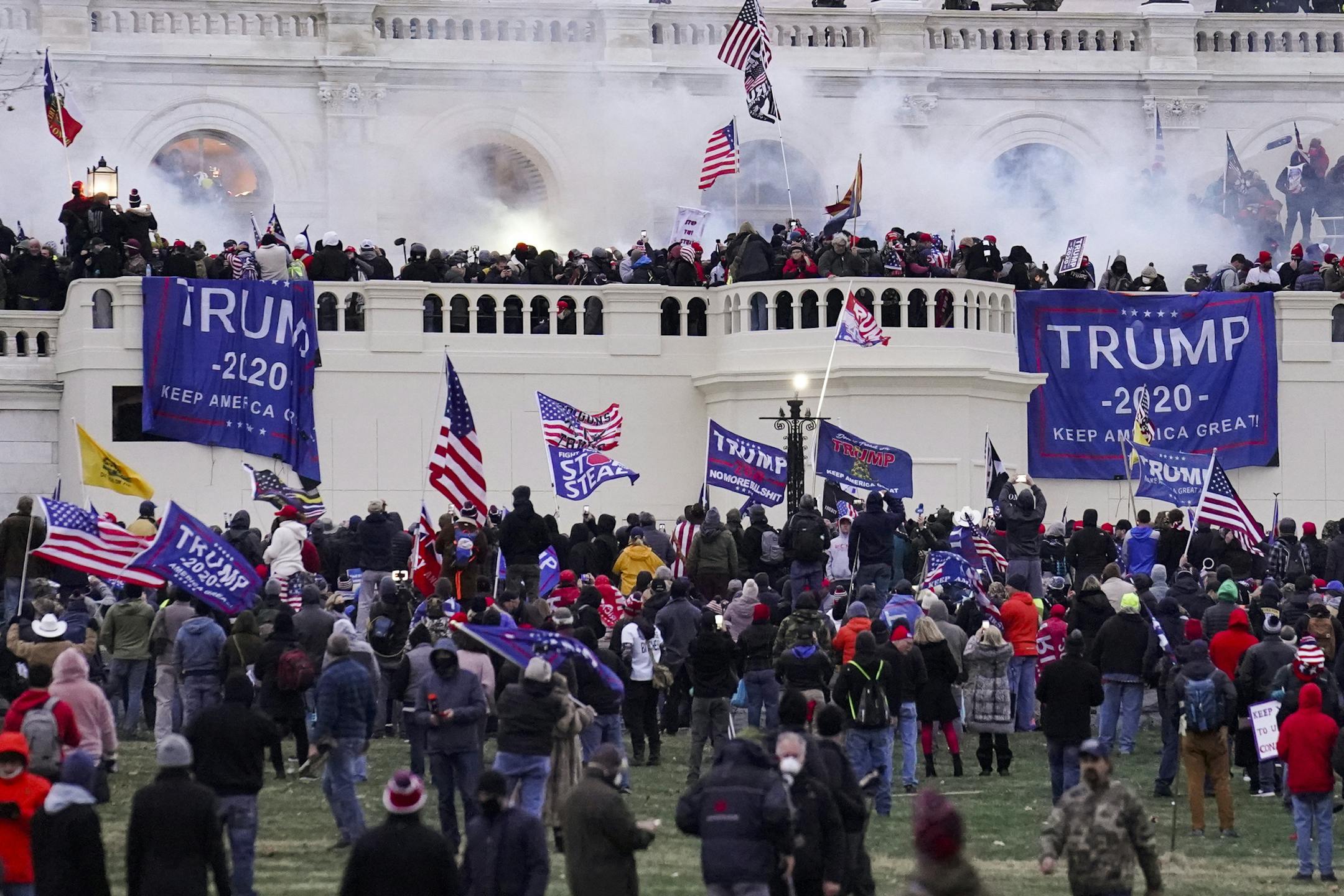
The Jan. 6 attack on Congress takes its place next to the other terrible national traumas of the past 60 years — the JFK assassination, the race riots of 1967-68, the Challenger space shuttle crash and 9/11. Like those other shocks to our national consciousness, Jan. 6 demands a seminal, sweeping account of what happened and why, a summation that anchors how that day is remembered for generations to come.
The reports of the Warren Commission (the assassination of President John F. Kennedy), the Kerner Commission (Black uprisings in Detroit, Newark, New Jersey and other cities), the Rogers Commission (the Challenger failure), and the 9/11 Commission run by former New Jersey Gov. Tom Kean and former Indiana Rep. Lee Hamilton are essential reference points. Born of months of dogged research fortified by subpoena power and testimony under oath, these accounts transcend the books and lawsuits, congressional hearings and contemporaneous journalism of their time. They comprise the official memory of history we dare not forget.
Some say the political atmosphere now is too toxic, the level of disinformation too extreme to establish an inquiry into Jan. 6, whose conclusions will command the same respect as these four legendary presidential commissions.
This is nonsense. It should be remembered how "toxic" the atmosphere was when these other commissions did their work, and how susceptible the nation was then to easy answers and lies.
Congress authorized the 9/11 Commission just one month after the U.S. began its ill-fated war in Iraq. The Kerner Commission met at the height of the Vietnam War protests, when tens of thousands were angry and in the streets. Earl Warren, the ex-California governor and U.S. Supreme Court chief justice, led the JFK investigation when billboards proliferated across the county calling for his impeachment. His team put to rest a cottage industry of conspiracy theories, despite doubters to this day.
In each case, it was the sterling quality of the impartial commissioners that made their conclusions trustworthy. They considered their service to be a profound act of patriotism.
In the JFK investigation, in addition to Warren, there were two sitting senators and two congressmen of opposing parties (one was Gerald Ford), along with then-CIA Director Allen Dulles. Illinois Gov. Otto Kerner had among his 11 commissioners the mayor of New York, the executive director of the NAACP and a captain of industry, the founder of Litton Industries. One of the Challenger commissioners, Nobel Prize-winning physicist Richard Feynman, explained what brought down the shuttle by dunking defective O-ring material in a glass of ice water in a televised hearing. The 9/11 Commission included a former Watergate prosecutor, Richard Ben-Veniste, and the longest-serving governor of Illinois, Republican "Big Jim" Thompson, each with a decided independent streak.
To compose a Jan. 6 Commission of similar gravitas, a few initial steps would be necessary. The first is to remove House Speaker Nancy Pelosi as the guiding force behind the effort. Pelosi's proposed lineup of seven sitting Democratic members of Congress pitted against four Republicans is exactly the wrong way to go. The commission cannot appear to be a Trump impeachment by another name.


